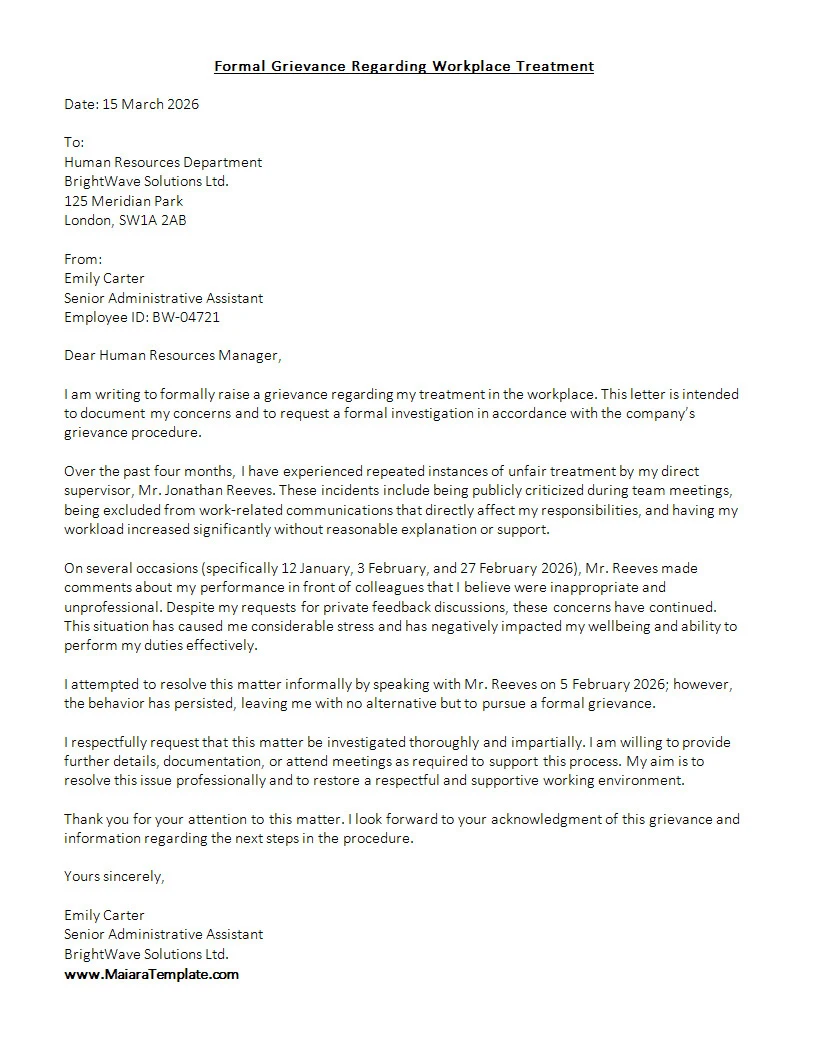
In today’s modern and diverse work environment, employees must have a formal channel through which they can address serious concerns and complaints. One effective way to do this is by writing a grievance letter.
A grievance letter serves as a documented record of the employee’s grievances and provides a structured approach to addressing issues such as unfair treatment, harassment, discrimination, or other serious workplace problems. By initiating a formal grievance process, employees can trigger an investigation and resolution process to address their concerns effectively.
What is a Grievance Letter?
A grievance letter is a formal document written by an employee to communicate significant workplace complaints to their employer. It is a crucial tool for employees to assert their rights and seek a resolution for any injustices they may have experienced.
The grievance letter typically outlines the specific concerns of the employee, detailing instances of mistreatment or discrimination and requesting action from the employer to address these issues promptly.
Why Write a Grievance Letter?
There are several compelling reasons why employees should consider writing a grievance letter when faced with serious workplace issues. One of the primary reasons is to ensure that their concerns are taken seriously by the employer. By putting their complaints in writing, employees demonstrate the seriousness of the issues they are facing and request prompt action to address them.
Demonstrating Assertiveness
Writing a grievance letter is an assertive way for employees to stand up for their rights in the workplace. By articulating their complaints clearly and formally, employees assert their position and assert that they will not tolerate mistreatment or discrimination. This demonstration of assertiveness can lead to a more proactive response from the employer in addressing the concerns raised.
Seeking Redress
Another key reason for writing a grievance letter is to seek redress for any injustices or mistreatment experienced in the workplace. By documenting their complaints and requesting action from the employer, employees seek a resolution for the problems they have faced. This pursuit of redress aims to rectify the harm caused by the mistreatment and ensure that similar issues do not recur in the future.
Promoting Accountability
When employees write a grievance letter, they promote accountability within the organization. By holding the employer responsible for addressing the complaints raised, employees foster a culture of accountability and transparency in the workplace. This accountability ensures that the employer takes the necessary steps to investigate and resolve the grievances in a fair and timely manner.
Protecting Rights
Writing a grievance letter is also a way for employees to protect their legal rights in the workplace. By documenting their concerns in writing, employees establish a formal record of the mistreatment or discrimination they have experienced. This documentation can be crucial in legal proceedings or negotiations, helping employees to protect their rights and seek appropriate remedies for any violations.
Preserving Evidence
In cases of workplace misconduct or discrimination, a grievance letter can serve as crucial evidence to support the employee’s claims. By detailing the specific incidents and providing supporting evidence, employees create a comprehensive record of the mistreatment they have faced. This evidence can be invaluable in proving the validity of the employee’s complaints and supporting their case in any legal proceedings.
Building a Case
Writing a grievance letter is an essential step in building a case against workplace misconduct or discrimination. By documenting their complaints and outlining the impact of the mistreatment, employees lay the foundation for a strong case against the employer. This careful documentation helps to establish the credibility of the employee’s claims and strengthens their position in seeking redress for the harm caused.
Empowering Employees
Submitting a grievance letter empowers employees to take control of their circumstances and advocate for change in the workplace. By expressing their concerns in writing and requesting action from the employer, employees assert their agency and demand a fair and respectful work environment. This empowerment encourages employees to speak up against injustice and work towards a positive change in their workplace culture.
Key Elements of a Grievance Letter
When writing a grievance letter, it is essential to include certain key elements to ensure that the concerns are communicated effectively and comprehensively. These key elements help to provide a clear and detailed account of the issues faced by the employee and guide the employer in addressing the grievances promptly and appropriately.
Details of the Issue
One of the critical elements of a grievance letter is outlining the specific details of the issue or complaint. Employees should provide a thorough description of the incidents or actions that have caused concern, including dates, times, locations, and individuals involved. By offering specific details, employees help the employer understand the nature and severity of the problems they are facing.
Impact on You
In a grievance letter, employees should describe how the issues raised have impacted them personally, professionally, or emotionally. By sharing the repercussions of the mistreatment or discrimination, employees emphasize the seriousness of the situation and the need for prompt action from the employer. Explaining the impact helps to convey the significance of the issues and the urgency of addressing them.
Supporting Evidence
If applicable, employees should provide any supporting evidence or documentation to substantiate their claims in the grievance letter. This evidence may include emails, messages, photos, witness statements, or other relevant materials that corroborate the employee’s account of the incidents. By presenting supporting evidence, employees strengthen their case and provide additional context for the employer to consider when investigating the complaints.
Resolution Sought
Employees should clearly state the outcome they are seeking in the grievance letter, whether it be an investigation, corrective action, policy change, or other forms of resolution. By articulating their desired outcome, employees guide the employer in taking the necessary steps to address the issues raised and prevent similar problems in the future. Clearly stating the resolution sought helps to align expectations and ensure that the employer understands the employee’s goals for addressing the grievances.
Timeline for Response
Including a timeline for response or resolution in the grievance letter is essential to ensure that the employer addresses the complaints on time. By specifying when they expect a reply or action from the employer, employees set clear expectations and hold the employer accountable for following up on the grievance promptly. Setting a timeline helps to expedite the resolution process and demonstrates the urgency of addressing the employee’s concerns.
How to Write a Grievance Letter
Writing a grievance letter requires careful planning, attention to detail, and a professional approach to effectively communicate the employee’s concerns to the employer. By following some key guidelines and best practices, employees can ensure that their grievance letter is clear, compelling, and persuasive in advocating for the resolution of their complaints.
Be Clear and Concise
When writing a grievance letter, it is essential to be clear and concise in expressing the concerns and complaints. Employees should avoid using vague or ambiguous language that could be misinterpreted by the employer. Instead, they should provide specific details and examples to illustrate the issues they are facing and ensure that their message is communicated effectively.
Stick to the Facts
In a grievance letter, employees should focus on presenting factual information and avoid making emotional or inflammatory statements that could detract from their message. By sticking to the facts and providing objective accounts of the incidents, employees strengthen the credibility of their complaints and make it
Use a Professional Tone
Maintaining a professional and respectful tone throughout the grievance letter is essential to convey the seriousness of the issues while demonstrating professionalism. Employees should avoid using accusatory language or making personal attacks in their letters. Instead, they should adopt a tone that is assertive yet diplomatic to ensure that their concerns are taken seriously by the employer.
Provide Context
When writing a grievance letter, employees should provide context for the issues they are facing to help the employer understand the background and circumstances surrounding the complaints. Providing context can help the employer gain a better understanding of the situation and make more informed decisions when investigating and resolving the grievances. By offering context, employees can ensure that their concerns are viewed in the appropriate light.
Be Solution-Oriented
In addition to outlining the problems and concerns in the grievance letter, employees should also be solution-oriented and suggest potential resolutions or actions to address the issues raised. By offering constructive suggestions for how the problems can be resolved, employees demonstrate their commitment to finding a positive outcome and working collaboratively with the employer to improve the situation. Being solution-oriented can help expedite the resolution process and foster a more productive dialogue between the employee and employer.
Tips for Handling a Grievance Letter
Handling a grievance letter effectively requires careful consideration, communication, and follow-up to ensure that the employee’s concerns are addressed promptly and appropriately. By following some key tips and best practices, employers can navigate the grievance process with professionalism and transparency, fostering a fair and respectful work environment for all employees.
Acknowledge Receipt
Upon receiving a grievance letter, employers should acknowledge receipt of the letter promptly and outline the steps that will be taken to investigate and address the employee’s concerns. Acknowledging receipt demonstrates respect for the employee’s grievances and sets a positive tone for the resolution process. Employers should communicate clearly with the employee about the next steps and provide regular updates on the status of the grievance investigation.
Investigate Thoroughly
Employers should conduct a thorough investigation into the issues raised in the grievance letter, gathering evidence and interviewing relevant parties to understand the full scope of the problem. A thorough investigation helps to uncover the root causes of the issues and determine appropriate actions to address the grievances. Employers should approach the investigation objectively and impartially, ensuring that all parties involved are treated fairly and their perspectives are considered.
Keep the Employee Informed
Throughout the grievance process, employers should keep the employee informed of the progress of the investigation and provide regular updates on the status of their grievance. Transparent communication helps to build trust and demonstrate accountability in addressing the employee’s concerns. Employers should be proactive in sharing information with the employee and ensuring that they are kept informed of any developments or decisions related to the grievance.
Take Appropriate Action
Once the investigation is complete, employers should take appropriate action to address the issues identified in the grievance letter. This may include disciplinary action, training, counseling, mediation, policy changes, or other forms of resolution to address the grievances effectively. Employers should act promptly and decisively to address the employee’s concerns and prevent similar issues from occurring in the future. Taking appropriate action demonstrates a commitment to fostering a positive and respectful work environment for all employees.
Follow Up
After resolving the employee’s grievance, employers should follow up with the employee to ensure that they are satisfied with the outcome and address any lingering concerns or issues that may arise. Following up demonstrates care and concern for the employee’s well-being and ensures that the resolution process is comprehensive and satisfactory. Employers should maintain open lines of communication with the employee and be willing to address any additional questions or concerns that may arise following the resolution of the grievance.
Grievance Letter Template – DOWNLOAD

- Free Printable Wedding Schedule Template - September 15, 2026
- Free Printable Weekly Employee Timesheet Template - September 15, 2026
- Printable Sign-in Sign-out Sheet Template - September 15, 2026
