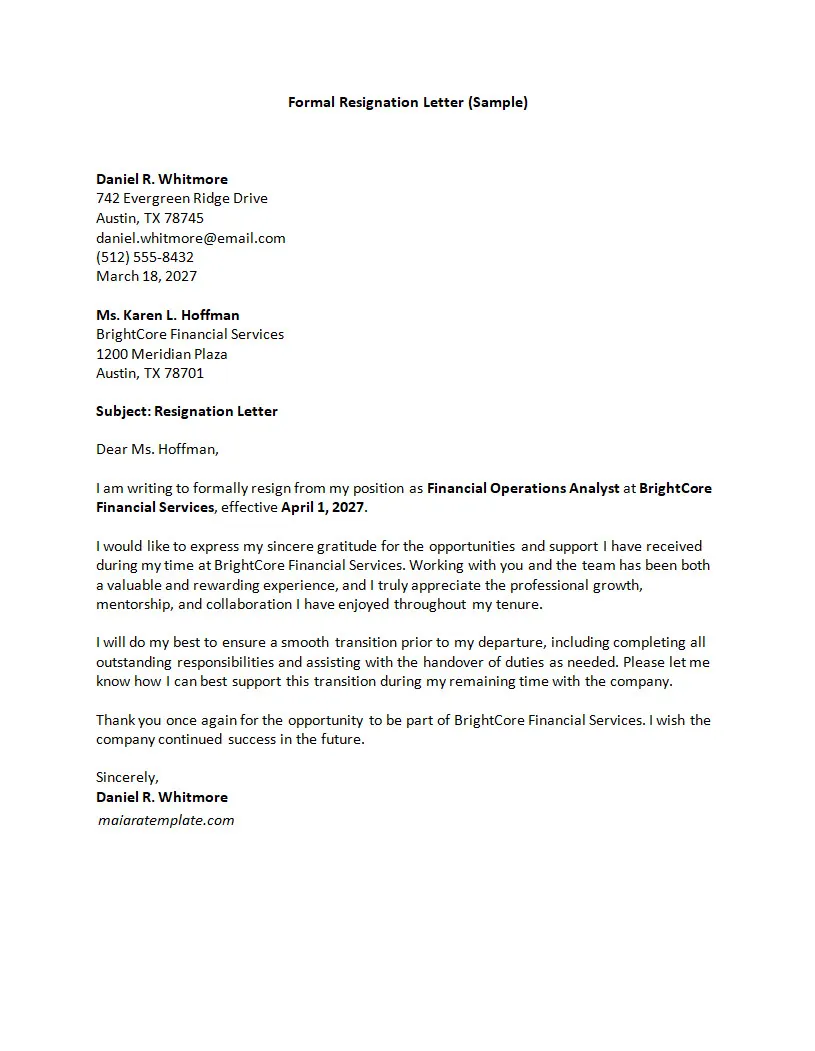
Are you considering leaving your job and need to provide official written notice to your employer? Writing a formal letter of resignation is an essential step in the process of departing from your current position. This document serves as a professional and official notification of your intention to leave the company, and it helps ensure a smooth transition for both you and your employer.
In this guide, we will walk you through the What, Why, What to Include, How to, and provide Tips for a Successful formal letter of resignation.
What is a Formal Letter of Resignation?
A formal letter of resignation is a written communication that notifies your employer of your decision to leave your job. It is a professional way to document your departure and clearly state your last day of employment.
This letter is an important part of the resignation process and helps maintain a positive relationship with your current employer.
Why Write a Formal Letter of Resignation?
There are several reasons why writing a formal letter of resignation is important:
Professionalism in Communication
When you choose to resign from your job, it is essential to do so in a professional manner. A formal resignation letter not only conveys your decision but also reflects your ability to communicate effectively in a business setting. This professionalism can leave a positive impression on your employer and colleagues, even as you prepare to depart.
Legal Compliance and Protection
In certain industries or companies, providing a formal written notice of resignation is a legal requirement. By adhering to these regulations, you protect yourself from any potential disputes or misunderstandings regarding your departure. Additionally, following the proper procedures can safeguard your rights and ensure a smooth transition out of the organization.
Documentation for Records
Your resignation letter serves as an official document that records the details of your departure. This document can be kept in your personnel file and serves as a reference for future inquiries regarding your employment history. Having a clear record of when you resigned and your intended last day of work can prevent any discrepancies in the future.
Smooth Transition Process
By submitting a formal resignation letter, you contribute to a smoother transition process for both yourself and the company. Providing adequate notice and outlining your departure date allows your employer to make necessary arrangements for your replacement. This proactive approach demonstrates your consideration for the organization’s needs and helps maintain productivity during the transition.
What to Include in a Formal Letter of Resignation?
When writing a formal letter of resignation, certain key elements should be included to make it effective and professional:
Contact Information and Date
Begin your resignation letter by including your contact information, such as your full name, address, phone number, and email address. This helps ensure that the recipient can easily reach out to you if needed. Additionally, include the date on which you are writing the letter to establish a timeline for your resignation.
Recipient’s Name and Company
Address your resignation letter to the appropriate recipient, whether it is your direct supervisor, manager, or the human resources department. Including the recipient’s name and the company’s name in the salutation adds a personal touch to your letter and ensures that it reaches the right individual within the organization.
Intention to Resign
Clearly state in the opening paragraph of your letter that you are resigning from your position. Be direct and unambiguous in expressing your decision to leave the company. This upfront approach sets the tone for the rest of the letter and leaves no room for confusion regarding your intentions.
Last Day of Employment
Specify the date on which you intend to end your employment with the company. This date should align with any notice period required by your employer or as stipulated in your employment contract. Providing a clear last day of work helps your employer plan for your departure and facilitates a smooth transition.
Thank You Message
Express your gratitude for the opportunities and experiences you have gained during your time with the company. A sincere thank you message acknowledges the support and growth you have experienced in your role. Even if you are leaving on less-than-ideal terms, showing appreciation can leave a positive impression.
Offer to Assist with the Transition
Demonstrate your commitment to ensuring a smooth transition by offering to assist with the handover process. Whether it involves training your replacement, documenting your responsibilities, or providing guidance to colleagues, your willingness to help eases the burden on your employer and maintains continuity within the organization.
Your Signature
Conclude your resignation letter with your signature, handwritten if submitting a physical copy or electronically if sending it via email. Your signature adds a personal touch and signifies your acknowledgment and agreement with the contents of the letter. It also serves as a formal authorization of your resignation.
How to Write a Formal Letter of Resignation
Writing a formal letter of resignation may seem daunting, but with the right guidance, it can be a straightforward process. Here are some steps to help you craft a professional resignation letter:
Opening with a Polite Greeting
Begin your resignation letter with a formal greeting addressed to the appropriate recipient. Whether you are addressing your supervisor, manager, or HR department, using a polite salutation sets a professional tone for the letter. Consider starting with “Dear [Recipient’s Name]” or “To Whom It May Concern” for a more general approach.
Clearly Stating Your Intention
After the salutation, clearly and concisely state your intention to resign from your position. Avoid beating around the bush or using vague language that may create confusion. Be direct in conveying your decision to leave the company. This clarity sets the tone for the rest of the resignation letter and ensures that your message is received loud and clear.
Specifying Your Last Day of Employment
Once you have expressed your intention to resign, it is essential to specify the date on which you will be officially leaving the company. This date should align with any notice period required by your employer or as per the terms of your contract. Providing a clear last day of employment helps your employer plan for your departure and make necessary arrangements for the transition.
Expressing Gratitude and Appreciation
In the body of your resignation letter, take a moment to express your gratitude and appreciation for the opportunities and experiences you have had during your time with the company. Acknowledge the support of your colleagues, mentors, and supervisors, and reflect on the professional growth and development you have experienced. This thank you message adds a personal touch to your letter and leaves a positive impression as you prepare to leave.
Offering Assistance for Transition
Show your commitment to a smooth transition by offering your assistance with the handover process. Whether it involves training your replacement, documenting your tasks and responsibilities, or providing guidance to colleagues, demonstrating your willingness to help can ease the transition for your employer and ensure continuity in your absence. This proactive approach showcases your professionalism and dedication to ensuring the company’s success even after you leave.
Closing on a Professional Note
Conclude your resignation letter with a professional closing that reaffirms your willingness to discuss further details if needed. Restate your appreciation for the opportunities provided and express your readiness to assist with the transition process. Sign off with a polite closing such as “Sincerely” or “Best regards,” followed by your handwritten or electronic signature. This closing paragraph should leave a positive and respectful final impression as you prepare to move on from your current role.
Tips for a Successful Resignation Letter
Clarity and Concise
When writing your resignation letter, aim to be clear and concise in your communication. Avoid using overly complex language or lengthy explanations. Stick to the main points of your resignation, such as your intention to leave, your last day of employment, and any offers of assistance. Keeping the letter brief and focused helps ensure that your message is easily understood by the recipient.
Maintaining a Positive Tone
Regardless of the circumstances surrounding your decision to resign, it is important to maintain a positive tone throughout your letter. Express gratitude for the opportunities provided, highlight the positive experiences you have had, and show appreciation for the support of your colleagues. A positive attitude can help leave a lasting impression and maintain goodwill as you transition out of the company.
Thorough Proofreading
Before finalizing and sending your resignation letter, take the time to thoroughly proofread it for any spelling or grammar errors. A well-written and error-free letter conveys professionalism and attention to detail. Consider asking a trusted colleague or friend to review the letter for additional feedback and catch any mistakes you may have missed.
Personal Delivery
If circumstances allow, consider delivering your resignation letter in person to your supervisor or HR manager. This personal touch demonstrates respect and professionalism and allows you to have a face-to-face conversation about your decision to leave. If an in-person delivery is not possible, opt for a formal email or postal mail to ensure that your letter reaches the intended recipient promptly.
Anticipating Responses
After submitting your resignation letter, be prepared for potential responses from your employer. This may include discussions about your reasons for leaving, possible counteroffers to retain you, or planning for the transition process. Anticipating these responses and preparing your own reactions can help you navigate any follow-up conversations with confidence and professionalism.
Following Up
Following the submission of your resignation letter, make an effort to follow up with your supervisor or HR department to discuss any next steps or clarify details about your departure. This proactive approach shows your commitment to ensuring a smooth transition and allows for open communication about the process. By staying engaged in the transition process, you can help facilitate a successful handover of your responsibilities and maintain a positive relationship with your employer.
Formal Resignation Letter Template
A Formal Resignation Letter helps you professionally and respectfully notify your employer of your decision to leave a position. It provides a clear structure for stating your resignation, final working day, and appreciation while maintaining a courteous and formal tone. With a well-prepared template, you can ensure your departure is handled smoothly and leave a positive, lasting impression.
Download our Formal Resignation Letter Template today to submit your resignation with clarity and professionalism.
Formal Letter of Resignation Template – DOWNLOAD

- New Grad Nursing Resume Template - April 2, 2026
- Non-competition Agreement Template - March 31, 2026
- Non-disclosure Agreement Template for Employees - March 30, 2026
