What is Gap Analysis?
Gap analysis is a strategic tool that allows businesses to compare their current state with their desired future state, highlighting areas that need improvement. This process involves evaluating performance, processes, capabilities, and resources to identify discrepancies and gaps that can be addressed for strategic growth.
By understanding the differences between where the organization is and where it wants to be, businesses can develop targeted action plans to bridge these gaps effectively.
Benefits of Gap Analysis for Businesses
Improved Decision-Making
Gap analysis provides valuable insights into the current state of the organization and areas that require improvement, empowering decision-makers to make informed choices based on data-driven analysis. By understanding the gaps between actual performance and desired outcomes, business leaders can prioritize initiatives, allocate resources strategically, and drive impactful changes that align with the organization’s goals and objectives. Improved decision-making leads to more effective resource utilization, better risk management, and enhanced overall performance.
Resource Optimization
Identifying gaps through gap analysis enables organizations to prioritize resources effectively, ensuring that budgets, manpower, and time are allocated to initiatives that drive maximum impact and value. By focusing on areas that require improvement and addressing key discrepancies, businesses can optimize resource allocation, avoid unnecessary expenses, and streamline operations for greater efficiency. Resource optimization through gap analysis allows organizations to invest strategically in initiatives that align with their objectives and deliver measurable results.
Enhanced Performance
One of the primary benefits of conducting gap analysis is the opportunity to enhance performance across various aspects of the organization. By pinpointing areas that need improvement and developing targeted action plans to bridge these gaps, businesses can optimize processes, workflows, and systems for better efficiency and productivity. Improved performance resulting from gap analysis can lead to increased customer satisfaction, higher profitability, and a stronger competitive position in the market. Addressing performance gaps proactively enables organizations to achieve their goals and drive sustainable growth.
Risk Mitigation
Gap analysis plays a crucial role in risk mitigation by helping organizations identify potential vulnerabilities, weaknesses, and challenges that may impact their operations and objectives. By conducting a thorough assessment of current performance and comparing it to desired outcomes, businesses can proactively address risks, uncertainties, and threats that could hinder their success. Through gap analysis, organizations can develop contingency plans, risk mitigation strategies, and resilience measures to navigate challenges effectively and ensure business continuity. By addressing gaps and vulnerabilities, businesses can strengthen their risk management practices and protect against adverse events.
Strategic Planning
Strategic planning is essential for organizations looking to achieve long-term success and sustainability. Gap analysis serves as a valuable tool for strategic planning by providing a clear roadmap for aligning resources, goals, and actions to achieve desired outcomes. By conducting a gap analysis, businesses can identify strategic priorities, allocate resources efficiently, and set realistic targets that guide decision-making and execution. Strategic planning supported by gap analysis enables organizations to adapt to changing market conditions, capitalize on opportunities, and stay focused on achieving their vision and mission.
Competitive Advantage
In today’s competitive business environment, organizations must continuously innovate, improve, and differentiate themselves to stay ahead of competitors. Gap analysis helps businesses gain a competitive advantage by identifying areas for improvement, streamlining operations, and enhancing performance. By addressing gaps in processes, products, services, or customer experience, organizations can differentiate themselves in the market, attract and retain customers, and outperform competitors. A strategic approach to gap analysis allows businesses to leverage their strengths, mitigate weaknesses, and capitalize on opportunities for growth and expansion, ultimately leading to a sustainable competitive advantage.
Employee Engagement
Engaging employees in the gap analysis process can have a significant impact on organizational culture, morale, and performance. By involving staff at all levels in identifying gaps, developing action plans, and implementing changes, businesses can boost employee engagement, motivation, and commitment to achieving organizational goals. Employee engagement fosters a culture of ownership, collaboration, and continuous improvement, where team members are empowered to contribute ideas, solve problems, and drive positive change. By emphasizing employee engagement in the gap analysis process, organizations can build a motivated, resilient workforce that is aligned with the company’s mission and values.
Types of Gap Analysis
- Performance Gap Analysis: Focuses on identifying discrepancies between current performance levels and desired outcomes.
- SWOT Analysis: Assesses strengths, weaknesses, opportunities, and threats to guide strategic decision-making.
- Benchmarking: Compares performance against industry standards or competitors to identify areas for improvement.
- Financial Gap Analysis: Evaluates financial performance and identifies opportunities for cost reduction or revenue enhancement.
- Operational Gap Analysis: Reviews operational processes to streamline workflows and enhance efficiency.
- Skills Gap Analysis: Assesses employee skills and training needs to improve performance and capabilities.
- Customer Gap Analysis: Analyzes customer expectations and experiences to enhance satisfaction and loyalty.
- Market Gap Analysis: Evaluates market trends and consumer behavior to identify opportunities for growth and innovation.
- Technology Gap Analysis: Reviews technology infrastructure and capabilities to drive innovation and competitiveness.
- Environmental Gap Analysis: Assesses environmental impact and sustainability practices to enhance corporate responsibility.
When to Use a Gap Analysis?
Strategic Planning
Strategic planning is a critical function for organizations looking to set long-term goals, allocate resources effectively, and achieve sustainable growth. Gap analysis plays a key role in strategic planning by providing a clear roadmap for aligning resources, capabilities, and actions with organizational objectives. By conducting gap analysis as part of the strategic planning process, businesses can identify strategic priorities, develop action plans, and monitor progress towards achieving their goals. Strategic planning supported by gap analysis ensures that organizations stay focused, agile, and responsive to changing market dynamics and competitive pressures.
Performance Evaluation
Performance evaluation is essential for businesses to assess the effectiveness of their operations, processes, and initiatives. Gap analysis can be used as a tool for performance evaluation by comparing actual performance against desired outcomes, goals, or benchmarks. By conducting performance gap analysis, organizations can pinpoint areas where performance falls short, identify root causes, and develop strategies to improve efficiency, productivity, and overall performance. Performance evaluation supported by gap analysis enables businesses to track progress, measure success, and drive continuous improvement across various functions and departments.
Process Improvement
Process improvement is a continuous effort for organizations to optimize operational processes, workflows, and systems for better efficiency and effectiveness. Gap analysis can be a valuable tool for process improvement by identifying bottlenecks, inefficiencies, and opportunities for streamlining. By conducting operational gap analysis, businesses can pinpoint areas where processes can be enhanced, resources can be optimized, and costs can be reduced. Process improvement supported by gap analysis leads to increased productivity, reduced waste, and enhanced customer satisfaction, positioning organizations for success in a competitive market environment.
Change Management
Change management is a critical function for organizations undergoing organizational changes, restructuring, or new initiatives. Gap analysis can support change management efforts by identifying gaps, risks, and opportunities that need to be addressed during the change process. By conducting gap analysis as part of change management, organizations can proactively assess potential challenges, develop mitigation strategies, and ensure a smooth transition to the new state. Change management supported by gap analysis enables businesses to navigate transitions effectively, minimize disruptions, and maximize the success of change initiatives.
Market Analysis
Market analysis is essential for businesses looking to enter new markets, launch new products, or expand their market presence. Gap analysis can be a valuable tool for market analysis by providing insights into market trends, customer needs, and competitive dynamics. By conducting market gap analysis, organizations can identify gaps in the market that represent opportunities for growth, innovation, or differentiation. Market analysis supported by gap analysis helps businesses develop market strategies, product offerings, and marketing campaigns that resonate with target customers and drive business success in competitive market environments.
Talent Management
Talent management is crucial for organizations looking to attract, retain, and develop top talent. Gap analysis can support talent management efforts by identifying skills gaps, training needs, and development opportunities for employees. By conducting skills gap analysis, organizations can pinpoint areas where employees lack the necessary skills or competencies to perform their roles effectively. Talent management supported by gap analysis enables businesses to develop training programs, mentorship initiatives, and career development plans that enhance employee performance, engagement, and satisfaction, leading to a skilled and motivated workforce that drives organizational success.
How to Perform Gap Analysis
Performing a gap analysis involves several key steps to ensure a systematic and structured approach to identifying and bridging gaps within an organization. The following detailed steps outline the process of conducting a comprehensive gap analysis:
1. Define the Objectives
The first step in performing a gap analysis is to define the objectives of the analysis clearly. Identify the goals, outcomes, and desired results that the organization aims to achieve through the gap analysis process. Clearly articulating the objectives provides a framework for the analysis and helps focus efforts on areas that require improvement.
2. Identify Key Performance Indicators
Determine the key performance indicators (KPIs) that will be used to assess the current state of the organization and measure progress towards the desired future state. Key performance indicators may include metrics such as revenue, profit margins, customer satisfaction scores, employee productivity, and operational efficiency. Selecting relevant KPIs ensures that the analysis is targeted and aligned with organizational goals.
3. Assess the Current State
Gather data, information, and performance metrics to evaluate the current state of the organization across relevant areas such as operations, finance, marketing, human resources, customer satisfaction, and technology. Conduct a comprehensive assessment of performance, processes, capabilities, and resources to gain a clear understanding of the organization’s strengths and weaknesses.
4. Set Future Goals
Establish specific, measurable, achievable, relevant, and time-bound (SMART) goals that define the desired future state and outcomes that the organization aims to achieve. Set clear objectives that align with the organization’s vision, mission, and strategic priorities. Future goals should be realistic and achievable within the defined timeframe to drive meaningful progress.
5. Identify Gaps
Compare the current state of the organization with the future goals to identify discrepancies, weaknesses, or areas that need improvement. Analyze the gaps between the current performance levels and the desired outcomes across key performance indicators and areas of focus. By identifying gaps, organizations can prioritize areas for improvement and develop targeted strategies to bridge these discrepancies effectively.
6. Develop Action Plans
Create actionable strategies, initiatives, and projects to address the identified gaps and drive progress towards achieving the desired future state. Develop detailed action plans that outline specific steps, tasks, responsibilities, timelines, and resources required to implement the strategies effectively. Action plans should be clear, actionable, and aligned with organizational objectives to ensure successful execution.
7. Allocate Resources
Assign resources, budgets, timelines, and responsibilities to the action plans to ensure successful implementation and monitoring of progress towards closing the identified gaps. Allocate financial resources, human resources, technology assets, and other necessary resources to support the implementation of the action plans. Resource allocation should be aligned with the priorities and objectives identified during the gap analysis process.
8. Monitor and Evaluate
Continuously monitor and evaluate the progress of the action plans, track key performance indicators, and adjust strategies as needed to stay on track towards achieving the desired outcomes. Implement a monitoring and evaluation framework to assess the effectiveness of the action plans, measure progress towards closing the identified gaps, and make data-driven decisions to drive continuous improvement. Monitoring and evaluation are essential for ensuring accountability, transparency, and success in implementing the strategies developed through the gap analysis process.
By following these detailed steps and engaging key stakeholders within the organization, businesses can effectively perform a comprehensive gap analysis that leads to actionable insights, informed decisions, and sustainable improvements across various aspects of the business.
Tips for Writing Your Gap Analysis
Writing a gap analysis report requires attention to detail, clarity, and structure to effectively communicate the findings, insights, and recommendations to stakeholders. Here are some tips for writing your gap analysis report:
Define Clear Objectives
Clearly articulate the purpose, goals, and objectives of the gap analysis to provide context and focus for the report. Define the scope of the analysis, the areas of focus, and the desired outcomes to guide the analysis process and ensure alignment with organizational goals.
Use Data and Evidence
Support your findings with data, metrics, and evidence gathered through the analysis process to provide credibility and reliability to your conclusions. Use relevant data sources, statistical analysis, and quantitative measures to validate your findings and substantiate your recommendations.
Be Concise and Specific
Avoid unnecessary jargon, complex language, or vague statements; instead, use clear, concise, and specific language to convey your points effectively. Use plain language, avoid technical terms, and ensure that your report is easily understandable to a wide audience.
Provide Actionable Recommendations
Offer practical, actionable recommendations based on the identified gaps and findings to guide decision-making and implementation of improvement strategies. Provide specific, detailed recommendations that address the root causes of the gaps and offer clear steps for closing them effectively.
Engage Stakeholders
Involve key stakeholders, decision-makers, and relevant teams in the gap analysis process to ensure buy-in, alignment, and commitment to the action plans and recommendations. Engaging stakeholders early on and throughout the process helps build consensus, gather diverse perspectives, and enhance the impact of the analysis.
Include Visuals and Graphics
Use charts, graphs, tables, and visuals to illustrate key findings, trends, and comparisons, making the report more engaging and easier to understand for the audience. Visual representations of data and analysis help convey complex information in a digestible format and enhance the overall readability of the report.
Follow a Structured Format
Organize the report into sections, with clear headings, subheadings, and a logical flow of information to guide readers through the analysis process and findings effectively. Use a structured format that presents information in a coherent, organized manner and helps readers navigate the report easily.
Review and Revise
Proofread the report for errors, inconsistencies, and clarity issues, and seek feedback from peers or colleagues to ensure the report is accurate, coherent, and impactful. Review the report for grammar, punctuation, formatting, and overall readability to ensure a high-quality final product.
Implement Feedback
Incorporate feedback, suggestions, and insights from stakeholders and reviewers to enhance the quality, relevance, and effectiveness of the gap analysis report. Address any feedback or recommendations provided by stakeholders to improve the accuracy, depth, and impact of the report.
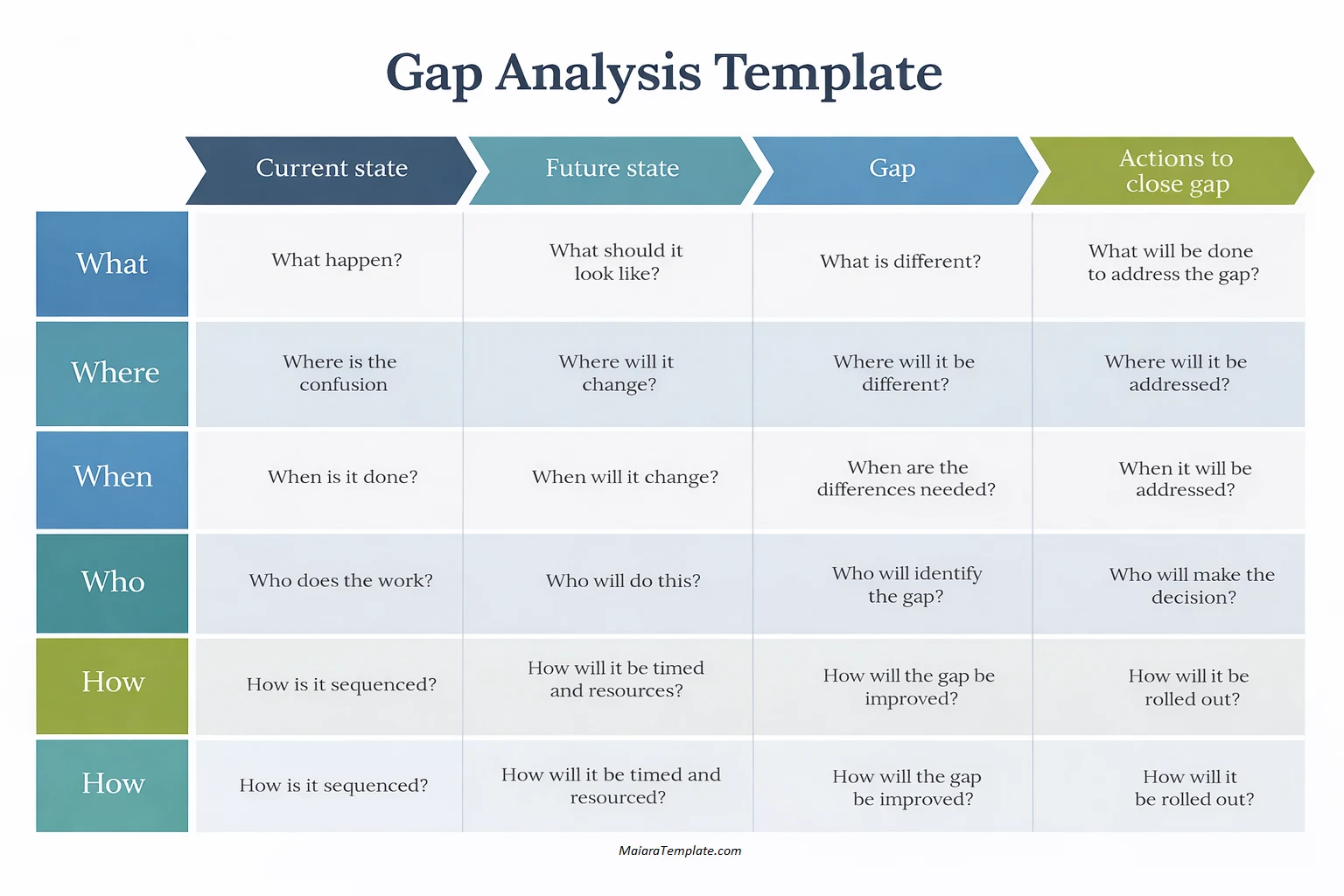
Free Gap Analysis Template
A Gap Analysis helps you identify the differences between your current performance and desired goals in a clear and organized format. It provides a structured approach to evaluating strengths, weaknesses, and areas for improvement, supporting informed decision-making and strategic planning. With a well-designed template, you can prioritize actions, close performance gaps, and drive continuous improvement.
Download our Gap Analysis Template today to assess performance and plan improvements with confidence.
Gap Analysis Template – DOWNLOAD

- Free Editable Nanny Agreement Template - April 9, 2026
- NDA Disclosure Agreement Template - April 8, 2026
- New Grad Nursing Resume Template - April 2, 2026
