When engaging in various activities, whether it be partaking in recreational sports, attending events, or using a service, there are inherent risks involved. To protect parties involved from potential lawsuits and legal claims, a general release of liability form is often used.
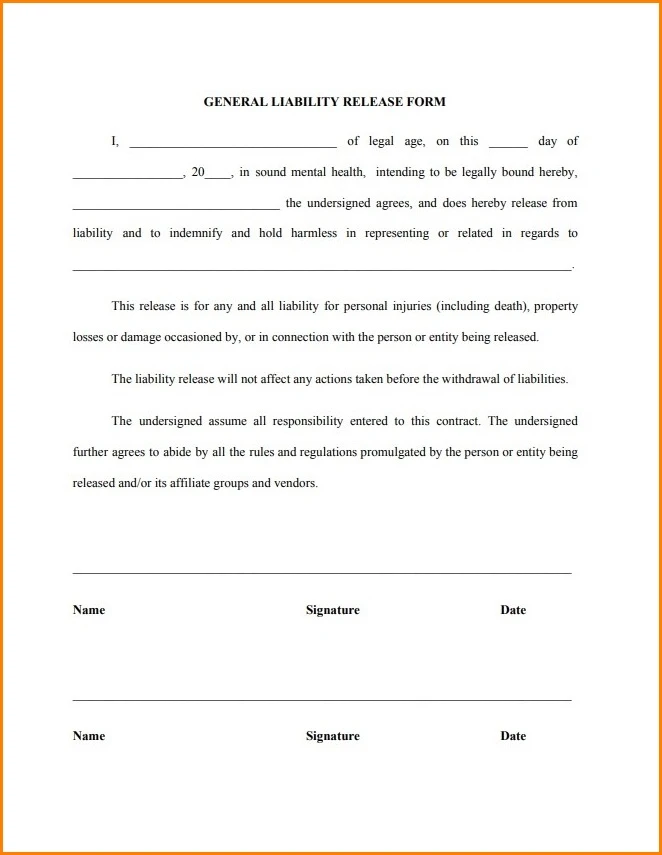
This legal document essentially allows one party to waive their right to legal action against another party for any injuries, damages, or losses that may occur during the activity or service. By signing this form, the participant acknowledges and assumes certain risks, releasing the host from legal responsibility for any negligence or potential claims that may arise.
What is a Release of Liability Form?
A release of liability form, also known as a waiver or release agreement, is a legal document that serves as a contract between two parties involved in an activity or service. The document outlines the risks associated with the activity and requires the participant to acknowledge and assume those risks.
By signing the form, the participant agrees not to hold the host or organizer liable for any injuries, damages, or losses that may occur as a result of their participation.
Types of Liability Release Forms
Various types of liability release forms can be used depending on the nature of the activity or service. Some common types include:
General Release of Liability
A general release of liability form is one of the most common types of waivers used in various activities. This form releases the host from legal responsibility for any injuries, damages, or losses that may occur during the activity or service. It typically covers a broad range of risks and liabilities associated with the activity, providing a blanket waiver for the host.
Parental Release of Liability
For activities involving minors, a parental release of liability form is often required. This form requires a parent or guardian to waive their right to legal action on behalf of the child participating in the activity. It ensures that the parent acknowledges the risks involved and agrees not to hold the host liable for any injuries or damages that may occur.
Medical Release of Liability
Medical release of liability forms are specific to healthcare services and treatments. These forms allow a healthcare provider to be released from legal responsibility in case of injury or harm during the course of treatment. Patients are required to sign these forms to acknowledge the risks involved and release the provider from liability for any adverse outcomes.
Event Release of Liability
Event release of liability forms are used for gatherings, parties, and other events where there may be risks involved. These forms release the event host from liability for any accidents, injuries, or incidents that may occur during the event. Attendees are typically required to sign these forms before participating in the event.
When to Use a Release Form?
A release of liability form should be used whenever there is a potential risk involved in an activity or service. Some common scenarios where these forms are necessary include:
Recreational Sports
Before participating in sports activities such as rock climbing, skiing, or surfing, a release of liability form is often required. These activities involve inherent risks, and participants must acknowledge and assume those risks by signing the form. The form protects the organizers and hosts from legal claims in case of injuries or accidents during the activity.
Events and Gatherings
When hosting events like concerts, festivals, or parties, event organizers may require attendees to sign a release of liability form. This form releases the organizers from legal responsibility for any incidents or accidents that may occur during the event. It ensures that attendees are aware of the risks involved and agree not to hold the host liable for any damages.
Rentals and Services
Before renting equipment or using services such as fitness classes or guided tours, participants may be asked to sign a release of liability form. These forms protect the service providers from legal claims in case of injuries or accidents during the rental or service. By signing the form, participants acknowledge the risks involved and waive their right to legal action against the provider.
Components of a General Release of Liability Form
A general release of liability form typically includes the following components:
Participant Information
The form should collect the participant’s information, including their name, contact details, and any relevant medical information. This information helps the host identify the participant and contact them if necessary.
Description of Risks
The form should outline the risks associated with the activity or service in detail. This may include physical risks, environmental risks, and any other potential hazards that participants should be aware of before engaging in the activity.
Waiver of Liability
The main purpose of the form is to waive the participant’s right to legal action against the host for any injuries, damages, or losses that may occur during the activity. The waiver of liability clause should be clearly stated in the form to ensure participants understand and agree to this provision.
Signature and Date
Both the participant and the host should sign and date the form to indicate their agreement to the terms and conditions outlined in the document. The signatures validate the contract and serve as proof that both parties have agreed to the terms of the release of liability.
Quick Tips and Things to Avoid
When drafting or signing a release of liability form, consider the following tips and things to avoid:
- Be Clear and Specific: Clearly outline the risks involved and the extent of liability being waived. Use simple language that participants can easily understand.
- Use Simple Language: Avoid legal jargon and use plain language that participants can easily understand. Make sure the terms are clear and straightforward.
- Consult Legal Counsel: If in doubt, seek legal advice to ensure the form is legally binding and protects all parties involved. A legal expert can help you draft a comprehensive and enforceable release of liability form.
- Avoid Ambiguity: Ensure that the terms of the release are unambiguous to prevent any misunderstandings. Ambiguous language can lead to disputes and legal challenges in the future.
- Provide Adequate Information: Include all relevant details about the activity, risks, and liabilities in the form to inform participants fully. Transparency is key to building trust with participants and protecting all parties involved.
- Review and Update Regularly: Periodically review and update the release forms to reflect any changes in the activity or service. Keep the forms up to date with current regulations and best practices to ensure they remain effective and legally compliant.
General Release of Liability Form – DOWNLOAD

- Free Editable Nanny Agreement Template - April 9, 2026
- NDA Disclosure Agreement Template - April 8, 2026
- New Grad Nursing Resume Template - April 2, 2026
