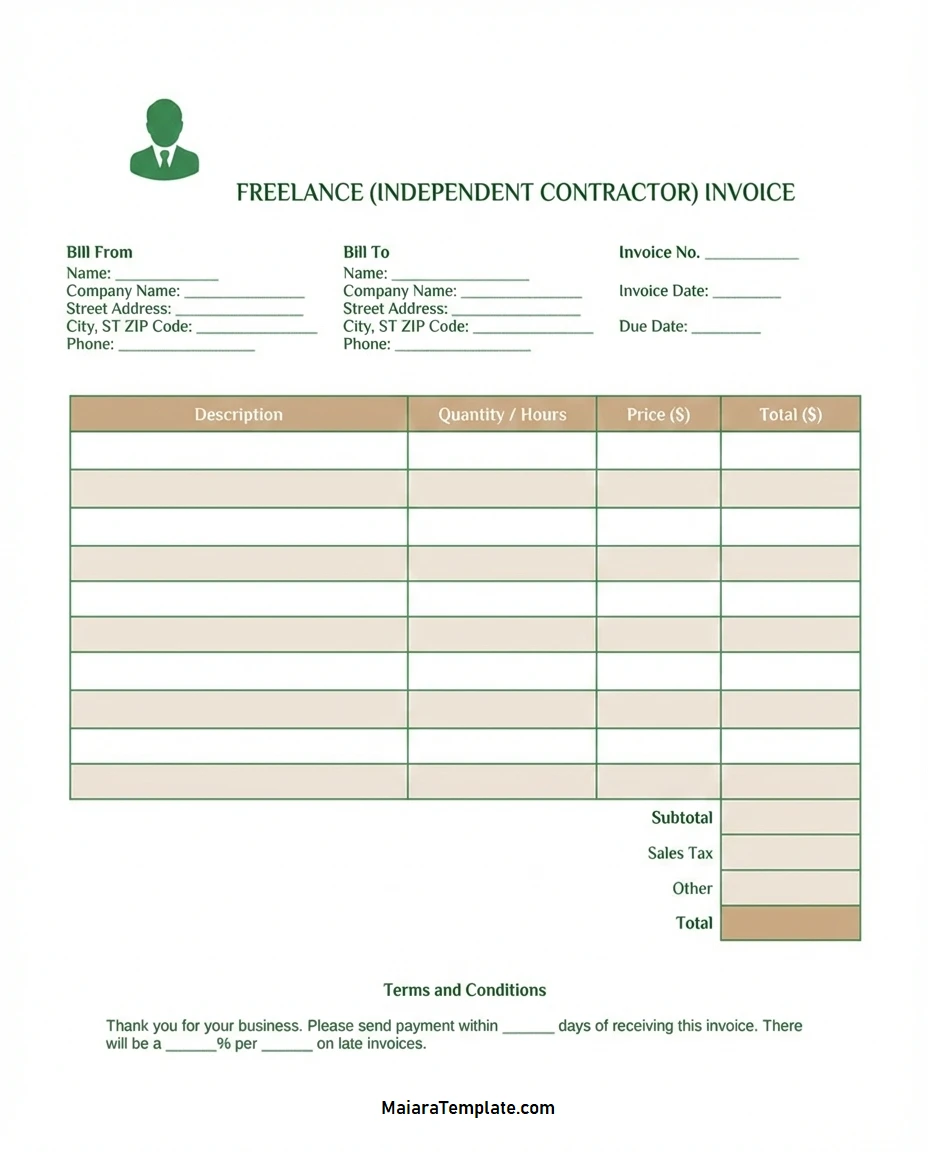
Whether you’re a freelance writer, graphic designer, or photographer, creating and managing invoices as an independent contractor is a crucial part of running your business. An invoice is a document that outlines the services you provided, the amount due, and the payment terms. It serves as a record of the work completed and helps ensure you get paid for your hard work on time.
In this comprehensive guide, we cover everything you need to know about independent contractor invoices, including their importance, what to include, how to create them, and tips for success.
What is an Independent Contractor Invoice?
An independent contractor invoice is a document that independent professionals use to bill their clients for services rendered. It serves as a formal request for payment, providing detailed information about the work completed, the amount owed, and the payment terms.
Invoices are essential for maintaining accurate financial records, tracking income, and ensuring timely payment from clients.
Why are Independent Contractor Invoices Important?
Creating and sending invoices is a crucial part of running a successful independent contracting business. In addition to serving as a record of the work completed and the amount owed, invoices help establish a professional relationship with your clients.
They also serve as a legal document that can be used in case of payment disputes. By creating and sending invoices promptly, you can ensure that you get paid for your work on time.
What to Include in an Independent Contractor Invoice
When creating an independent contractor invoice, it’s important to include all the necessary information to ensure timely and accurate payment. Here are some key elements to include in your invoice:
- Your contact information: Include your name, business name (if applicable), address, phone number, and email address.
- Client’s contact information: Include the name, address, and contact information of the client you are invoicing.
- Invoice number: Assign a unique invoice number to easily track and reference the invoice.
- Invoice date: Include the date the invoice was created.
- Description of services: Provide a detailed description of the services rendered, including the date of service, hours worked, and rate.
- Amount due: Clearly state the total amount owed for the services provided.
- Payment terms: Outline the payment terms, including the due date, accepted payment methods, and any late fees or discounts.
How to Create an Independent Contractor Invoice
Creating an independent contractor invoice is a straightforward process that can be done using a computer program or online invoicing software. Here are the steps to create an invoice:
1. Choose an invoice template or create your own using a word processing or spreadsheet program.2. Input your contact information and the client’s contact information.3. Assign a unique invoice number and include the invoice date.4. Provide a detailed description of the services rendered, including the date of service, hours worked, and rate.5. Calculate the total amount due and include any applicable taxes or fees.6. Outline the payment terms, including the due date and accepted payment methods.7. Review the invoice for accuracy and professionalism before sending it to the client.
Tips for Successful Independent Contractor Invoices
To ensure successful invoicing as an independent contractor, consider the following tips:
- Send invoices promptly: Send invoices as soon as possible after completing the work to expedite payment.
- Follow up on overdue payments: Send friendly reminders to clients with overdue invoices to encourage prompt payment.
- Keep detailed records: Maintain accurate records of all invoices sent and payments received for easy reference and tracking.
- Offer multiple payment options: Provide clients with various payment methods, such as credit card, bank transfer, or PayPal, to accommodate their preferences.
- Include late payment terms: Clearly communicate any late fees or penalties for overdue payments in your invoices to encourage timely payment.
- Set aside time for invoicing: Dedicate regular time each week to create and send invoices to stay on top of your billing cycle.
In conclusion, independent contractor invoices are a vital part of managing your business as a freelancer or independent professional. By creating detailed and professional invoices, you can ensure accurate payment for your services and maintain a positive relationship with your clients. Follow the tips outlined in this guide to streamline your invoicing process and improve your cash flow as an independent contractor.
Independent Contractor Invoice Template – DOWNLOAD

- New Grad Nursing Resume Template - April 2, 2026
- Non-competition Agreement Template - March 31, 2026
- Non-disclosure Agreement Template for Employees - March 30, 2026
