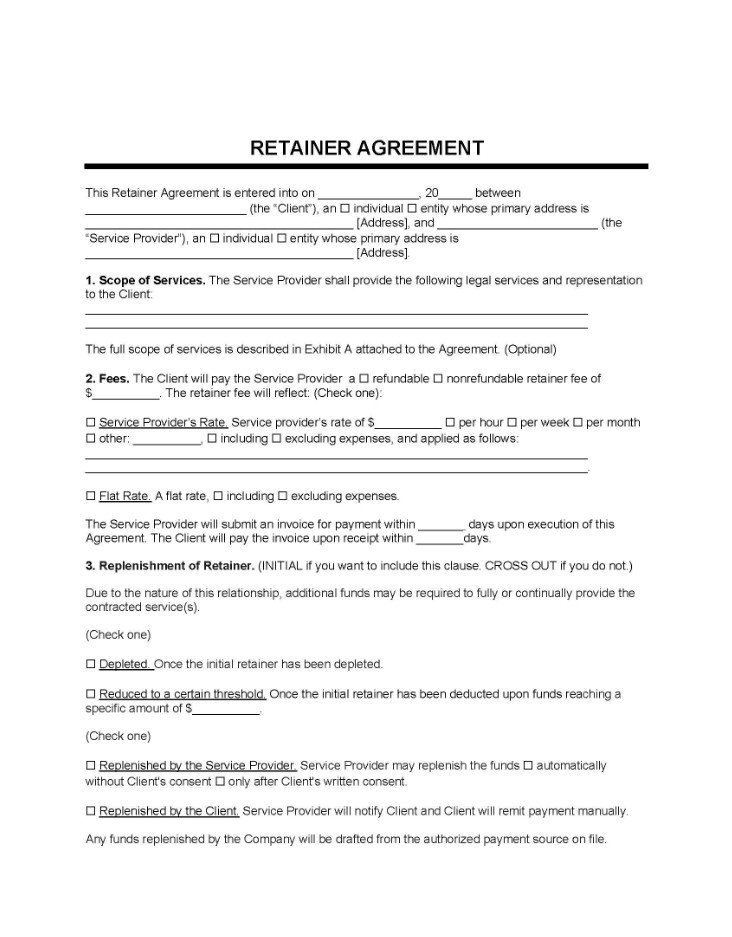
Retainer agreements are a common practice in many industries, from law firms to marketing agencies. But what exactly is a retainer agreement, and why is it important? In this article, we’ll dive into the details of retainer agreements, what they entail, and how to create a successful one.
What is a Retainer Agreement?
A retainer agreement is a contract between a client and a service provider that outlines the terms of their working relationship. Essentially, the client agrees to pay a set fee upfront to secure the services of the provider for a specified period of time. This fee is typically paid on a monthly basis and can vary depending on the scope of work agreed upon.
Retainer agreements are often used in industries where services are provided on an ongoing basis, such as legal representation, marketing services, or consulting. By entering into a retainer agreement, both parties have a clear understanding of the services to be provided, the fees involved, and the duration of the agreement.
Why Use a Retainer Agreement?
There are several benefits to using a retainer agreement for both clients and service providers. For clients, a retainer agreement provides peace of mind knowing that they have secured the services of a professional for a specific period of time. It also helps to establish a clear scope of work and pricing structure upfront, preventing any misunderstandings or disputes down the line.
For service providers, a retainer agreement ensures a steady stream of income and a guaranteed amount of work each month. This can help with financial planning and resource allocation, as well as building long-term relationships with clients.
What to Include in a Retainer Agreement
When creating a retainer agreement, it’s important to include the following key elements:
- Scope of Work: Clearly outline the services to be provided and any limitations or exclusions.
- Payment Terms: Specify the retainer fee, payment schedule, and any late payment penalties.
- Duration of Agreement: Define the length of the retainer agreement and any renewal terms.
- Termination Clause: Include provisions for terminating the agreement early and any associated fees.
- Confidentiality and Non-Disclosure: Protect sensitive information with confidentiality clauses.
How to Create a Successful Retainer Agreement
Creating a successful retainer agreement requires clear communication, mutual understanding, and attention to detail. Here are some tips for crafting an effective retainer agreement:
- Communicate Openly: Make sure both parties are on the same page about expectations, deliverables, and timelines.
- Be Specific: Clearly define the scope of work, including what is included and what is not.
- Set Realistic Goals: Establish achievable objectives and milestones to track progress.
- Review and Revise: Regularly review the retainer agreement to ensure it remains current and relevant.
- Seek Legal Advice: Consider consulting a lawyer to ensure your retainer agreement is legally sound and enforceable.
Conclusion
Retainer agreements are a valuable tool for both clients and service providers, offering clarity, security, and stability in their working relationships. By understanding the key components of a retainer agreement and following best practices for creating one, you can set yourself up for success and build long-lasting partnerships with your clients.

- Free Printable Wedding Schedule Template - September 15, 2026
- Free Printable Weekly Employee Timesheet Template - September 15, 2026
- Printable Sign-in Sign-out Sheet Template - September 15, 2026
