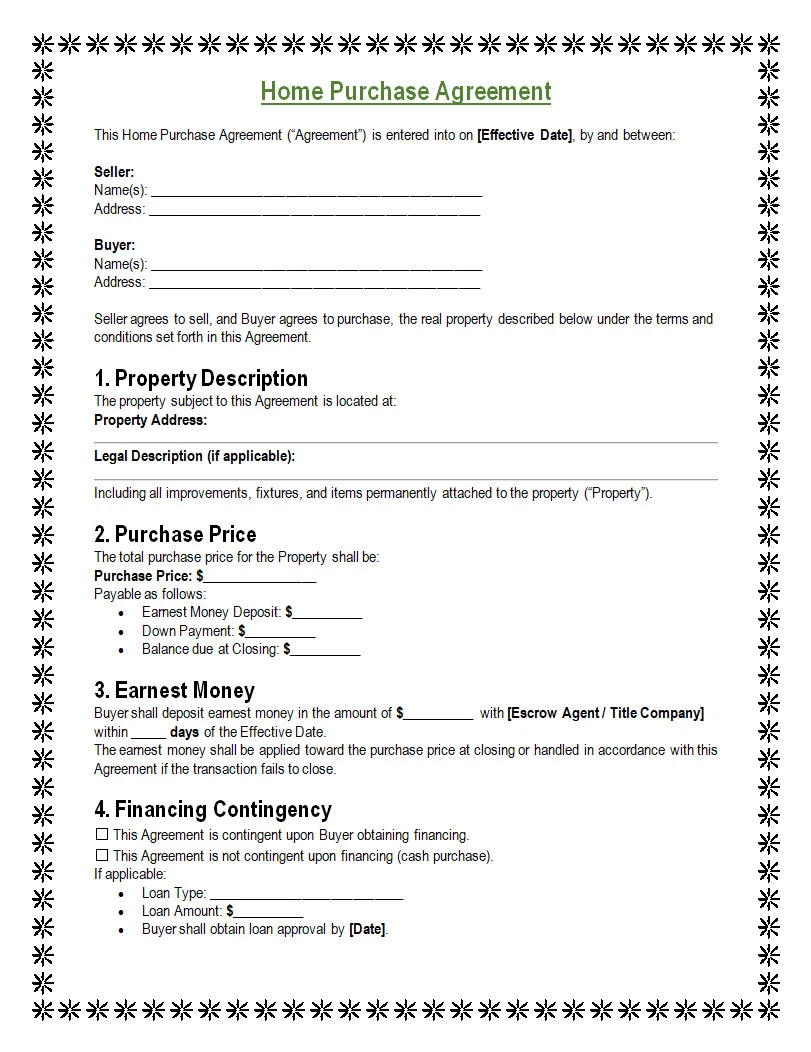
When buying a home, several key factors must be considered to ensure a smooth and successful transaction. One crucial element of the home-buying process is the home purchase agreement.
This legally binding contract outlines all the terms of the property sale, protecting both the buyer and the seller by clearly defining their responsibilities, conditions, price, and timelines. By transforming a verbal offer into a formal commitment, the home purchase agreement helps prevent misunderstandings, disputes, and breaches, providing a roadmap for a seamless and enforceable transaction from offer to closing.
What is a Home Purchase Agreement?
A home purchase agreement, also referred to as a purchase agreement or sales agreement, is a crucial document in the home-buying process. It serves as a legally binding contract that details all the terms of the property sale, protecting the interests of both the buyer and the seller.
This agreement outlines the responsibilities of each party, the conditions of the sale (such as inspections and financing), the agreed-upon price, and the timelines for the transaction. By creating a formal commitment, the home purchase agreement helps ensure clarity, prevent misunderstandings, and provide a framework for a successful and enforceable sale.
Key Elements of a Home Purchase Agreement
There are several key elements that should be included in a home purchase agreement to make it comprehensive and effective. These elements help protect the interests of both the buyer and the seller and provide a clear and detailed roadmap for the transaction:
- Identification of the Parties: The agreement should clearly identify the buyer and the seller, including their full names and contact information.
- Description of the Property: The agreement should include a detailed description of the property being sold, including the address, legal description, and any included or excluded items.
- Purchase Price: The agreed-upon purchase price for the property should be clearly stated in the agreement.
- Deposit Amount: The amount of the deposit or earnest money that the buyer will provide as a sign of good faith should be specified.
- Contingencies: Any contingencies, such as financing or inspection contingencies, should be clearly outlined in the agreement.
- Closing Date: The target closing date for the transaction should be included in the agreement.
- Responsibilities of the Parties: The agreement should outline the responsibilities of both the buyer and the seller throughout the transaction.
How to Create a Home Purchase Agreement
Creating a home purchase agreement requires careful consideration and attention to detail to ensure that all the necessary elements are included. Here are the steps to follow when creating a home purchase agreement:
- Consult with a Real Estate Professional: Before drafting the agreement, it is advisable to consult with a real estate professional or an attorney to ensure that all legal requirements are met.
- Include All Key Terms: Make sure to include all the key terms of the sale, such as the purchase price, deposit amount, contingencies, and closing date.
- Specify Responsibilities: Clearly outline the responsibilities of both the buyer and the seller to avoid any misunderstandings later on.
- Review and Revise: Once the agreement is drafted, carefully review it to ensure accuracy and completeness. Make any necessary revisions before finalizing the document.
- Sign and Date: Once both parties are satisfied with the agreement, sign and date the document to make it legally binding.
Tips for a Successful Home Purchase Agreement
To ensure a successful home purchase agreement and a smooth transaction, consider the following tips:
- Work with a Real Estate Professional: A real estate agent or attorney can provide valuable guidance throughout the process.
- Be Clear and Specific: Clearly define all terms, conditions, and responsibilities in the agreement to avoid misunderstandings.
- Include Contingencies: Consider including contingencies for financing, inspections, and other important factors to protect both parties.
- Stay Organized: Keep all documentation related to the sale in a safe and easily accessible location.
- Communicate Openly: Maintain open and transparent communication with the other party to address any concerns or issues promptly.
- Seek Legal Advice: If you have any questions or concerns about the agreement, don’t hesitate to seek advice from a legal professional.
Conclusion
A home purchase agreement is a crucial document in the home buying process, serving as a legally binding contract that protects the interests of both the buyer and the seller. By outlining all the terms of the property sale, including responsibilities, conditions, price, and timelines, the agreement helps prevent misunderstandings, disputes, and breaches, providing a roadmap for a smooth and enforceable transaction.
By following the key elements and tips outlined in this guide, you can create a comprehensive and successful home purchase agreement that sets the foundation for a successful home purchase.
Home Purchase Agreement Template – DOWNLOAD

- Printable Weekly Cleaning Schedule Template - September 17, 2026
- Free Printable Travel Budget Template - September 17, 2026
- Printable Weekly Lesson Planner Template - September 17, 2026
