A birth certificate is an important legal document that records a person’s birth and helps establish their identity. It typically contains essential information such as a person’s full name, date of birth, place of birth, and parentage. Throughout life, this document may be needed for official applications, school enrollment, passport applications, and other identity verification processes.
Whether you need to register a newborn, replace a lost document, or understand the information on an existing record, knowing how a birth certificate works can make the process easier. Requirements vary by country, state, and local authority, so it is important to understand which type of certificate you need and how to obtain an official copy.
This guide explains what a birth certificate is, the information it contains, common types of birth records, how to request a copy, and what to do if your certificate is lost or contains an error. It also includes practical tips for keeping your birth record secure and accessible when needed.
What Is a Birth Certificate?
A birth certificate is an official record documenting the birth of an individual. It is generally issued or maintained by a government agency responsible for vital records, civil registration, or population records. The document serves as an important source of evidence for a person’s birth details and, depending on the jurisdiction and document type, may help establish identity, age, and parentage.
A birth certificate is often one of the earliest identity documents created for a person. Information from the birth record may later be used when applying for other official documents, including a passport, national identification document, or certain government benefits.
However, a birth certificate does not automatically prove every aspect of a person’s legal status. For example, citizenship rules differ between countries, and a birth certificate alone may not be sufficient evidence of citizenship in every situation.
What Information Does a Birth Certificate Contain?
The exact information on a birth certificate depends on the issuing authority and the type of record. Most certificates include several basic details that help identify the person and document the birth.
- Full name: The name recorded at birth, which may be updated through an approved legal process in some jurisdictions.
- Date of birth: The recorded day, month, and year of birth.
- Place of birth: The city, town, county, province, or other location where the birth occurred.
- Parent information: The names of one or both parents, when recorded under the applicable rules.
- Registration details: Information such as the registration date, record number, or issuing authority.
- Official certification: Depending on the jurisdiction, an authorized signature, seal, stamp, or other security feature.
Some records may also include additional details, while others omit certain fields to protect privacy or meet specific administrative requirements. If you need a certificate for an official application, check which information the receiving organization requires before ordering a copy.
Types of Birth Certificates
Different authorities issue different versions of birth records. Understanding the distinction can help you request the correct document for your needs.
1. Standard or Short-Form Birth Certificate
A short-form birth certificate is generally a condensed version of the birth record. It may show the person’s name, date of birth, place of birth, and selected registration information. Whether this version is accepted depends on the organization requesting the document and the rules of the issuing jurisdiction.
2. Long-Form Birth Certificate
A long-form birth certificate usually contains more information than a short-form version. Depending on the jurisdiction, it may include additional parent information and details from the original birth registration.
Some passport applications, legal proceedings, or immigration processes may require a specific version of a birth record. Always confirm the document requirements with the agency handling your application.
3. Certified Copy of a Birth Certificate
A certified birth certificate is an authorized copy issued by the relevant government office or records agency. It may include a seal, certification statement, signature, or other feature confirming that it is an official copy of the record.
A printed sample or an image of a birth certificate is not a substitute for a certified document. If an organization requires an official record, obtain it directly from the appropriate government authority.
Birth Certificate Sample and Example
A birth certificate sample can help you understand the general layout and the types of information commonly found on a birth record. Samples may show where a person’s name, date of birth, place of birth, parent information, and registration details appear on the document.
Because birth certificates are official records, their appearance varies by jurisdiction. Some use a simple black-and-white layout, while others feature decorative borders, colored backgrounds, official seals, or security patterns.
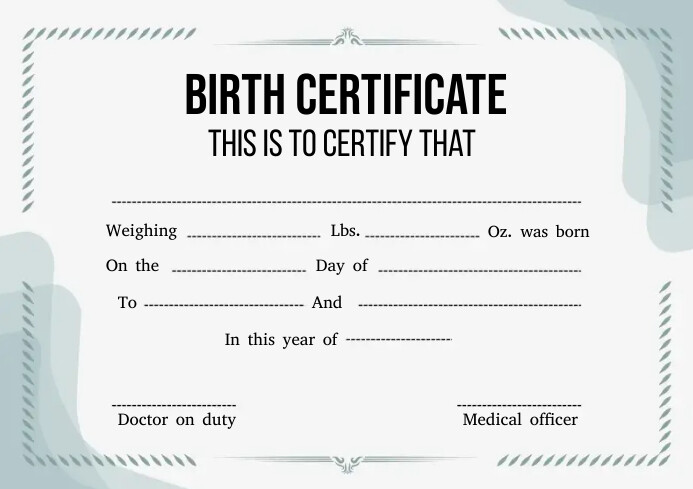
Use a sample for educational or reference purposes only. A sample image, printable design, or recreated document cannot replace an official birth certificate issued by a government agency. Avoid using sample documents to represent real government records or submit them for identity verification.
Why Is a Birth Certificate Important?
A birth certificate may be needed at different stages of life. Keeping an official copy accessible can help you complete administrative tasks and verify important personal information.
Identity and Age Verification
A birth certificate provides an official record of a person’s birth details. Government agencies, schools, and other organizations may request it as supporting evidence when verifying a person’s identity or age.
Passport and Travel Applications
Some passport applications require a birth certificate or another approved record to establish birth details or support a citizenship claim. Requirements differ by country and applicant circumstances, so check the official passport authority’s instructions before applying.
School Enrollment
Schools and educational institutions may request a birth certificate or another acceptable document to verify a child’s age and personal details during enrollment. The required documents vary by school system and location.
Government Benefits and Legal Matters
A birth record may be requested when applying for certain benefits, updating family records, or handling legal and administrative matters. Additional evidence may be necessary depending on the purpose of the application.
Family History and Genealogy
Birth records can also help people research family history. Depending on access rules, historical records may provide clues about relatives, dates, places, and family relationships.
How to Get a Birth Certificate
The process for obtaining a birth certificate depends on where the birth was registered and whether you are requesting an original registration, a certified copy, or a replacement. The following steps provide a general starting point.
1. Identify the Correct Issuing Authority
Contact the vital records office, civil registry, local registration office, or other government agency responsible for birth records in the place where the birth was registered. Use an official government website to find current application instructions.
2. Determine Which Document You Need
Check whether you need a certified copy, a short-form record, a long-form record, or another specific version. If the document is for a passport, immigration matter, school, or legal process, confirm the requirements with the organization receiving it.
3. Prepare the Required Information
You may need to provide details such as the person’s full name at birth, date and place of birth, parent names, and approximate registration date. Applicants may also need to provide identification and evidence of their eligibility to request the record.
4. Submit the Application
Depending on the jurisdiction, applications may be available online, by mail, or in person. Follow the instructions provided by the issuing authority and use only official application channels.
5. Pay Any Applicable Fee and Track the Request
Some agencies charge a fee for certified copies, expedited service, or delivery. Processing times vary, so check the current fee schedule and estimated waiting period before submitting your request.
What Should You Do If Your Birth Certificate Is Lost?
If your birth certificate is lost, damaged, or no longer available, you can usually request an official replacement or certified copy from the authority that maintains the record. You generally do not need to recreate the original document yourself.
- Find the official vital records or civil registration website for the place of birth.
- Check the eligibility requirements for requesting a replacement.
- Gather the required personal information and identification.
- Submit the application using an approved method.
- Store the replacement securely after it arrives.
If you suspect that someone has obtained your birth certificate details without permission, consider reviewing the identity protection guidance provided by the relevant government authority. Avoid sharing copies of sensitive documents unless the recipient has a legitimate need for them.
How to Correct an Error on a Birth Certificate
Errors on a birth certificate may include a misspelled name, incorrect date, or inaccurate parent information. The process for correcting a record depends on the type of error and the law in the jurisdiction where the birth was registered.
Start by contacting the issuing authority and asking which amendment procedure applies. You may be required to submit a correction form, supporting records, identification, or other evidence. Some changes are administrative, while others may require additional legal documentation.
Do not alter the certificate yourself. Handwritten changes, edited images, or unofficial modifications may cause the document to be rejected. Obtain an amended or replacement record through the authorized process instead.
Tips for Keeping Your Birth Certificate Safe
Because a birth certificate contains personal information, it should be stored carefully. These practical steps can help protect the document while keeping it available when needed.
- Store the original securely: Keep the official document in a safe, dry place protected from damage.
- Limit unnecessary copies: Provide copies only when an organization has a legitimate reason to request them.
- Use secure storage for digital copies: Choose a protected device or storage service and use a strong password.
- Check recipient requirements: Confirm whether an original, certified copy, or ordinary photocopy is required before sending anything.
- Keep a record of requests: Save application confirmations and correspondence when ordering official copies.
- Follow local privacy guidance: Handle other people’s birth records with care and respect applicable access restrictions.
Frequently Asked Questions
What is a birth certificate used for?
A birth certificate is used to document a person’s birth and may support identity and age verification, passport applications, school enrollment, government services, and legal matters. The exact requirements depend on the country and the organization requesting it.
Is a birth certificate proof of citizenship?
A birth certificate may support a citizenship claim, but it does not establish citizenship in every circumstance. Citizenship laws differ between countries, and additional documents may be required. Check the official requirements for your specific application.
What is the difference between a short-form and long-form birth certificate?
A short-form certificate generally contains a limited set of birth details, while a long-form certificate usually includes more information from the birth registration. The precise differences depend on the issuing authority.
Can I print a birth certificate sample online?
You can print an illustrative sample for educational or reference purposes, but it is not an official birth certificate. For legal or administrative use, request a certified record from the appropriate government agency.
How can I get a replacement birth certificate?
Contact the government office responsible for the original birth record. Follow its application process, provide the requested information and identification, and pay any applicable fee.
Can I correct a mistake on my birth certificate?
Yes, many jurisdictions have procedures for correcting eligible errors. Contact the issuing authority to learn which forms and supporting documents are required. Do not edit the certificate yourself.
How long does it take to receive a birth certificate?
Processing times vary by jurisdiction, application method, and service level. Check the issuing authority’s current processing estimates before submitting your request.
Conclusion
A birth certificate is an important personal record that documents essential details about a person’s birth. It may be needed for identity verification, education, passport applications, government services, and many other official processes.
Understanding the different types of birth certificates, knowing how to request an official copy, and keeping the document secure can make these tasks easier. If you need a sample birth certificate to understand its layout, use an illustrative example for reference only. For official purposes, always obtain the appropriate document directly from the authorized government agency.
Download: Birth Certificate Template

- Valentine’s Birthday Card Template - October 28, 2026
- Birth Certificate Template - October 28, 2026
- Rainbow Birth Announcement Card Template - October 28, 2026
