What is a Frayer Model?
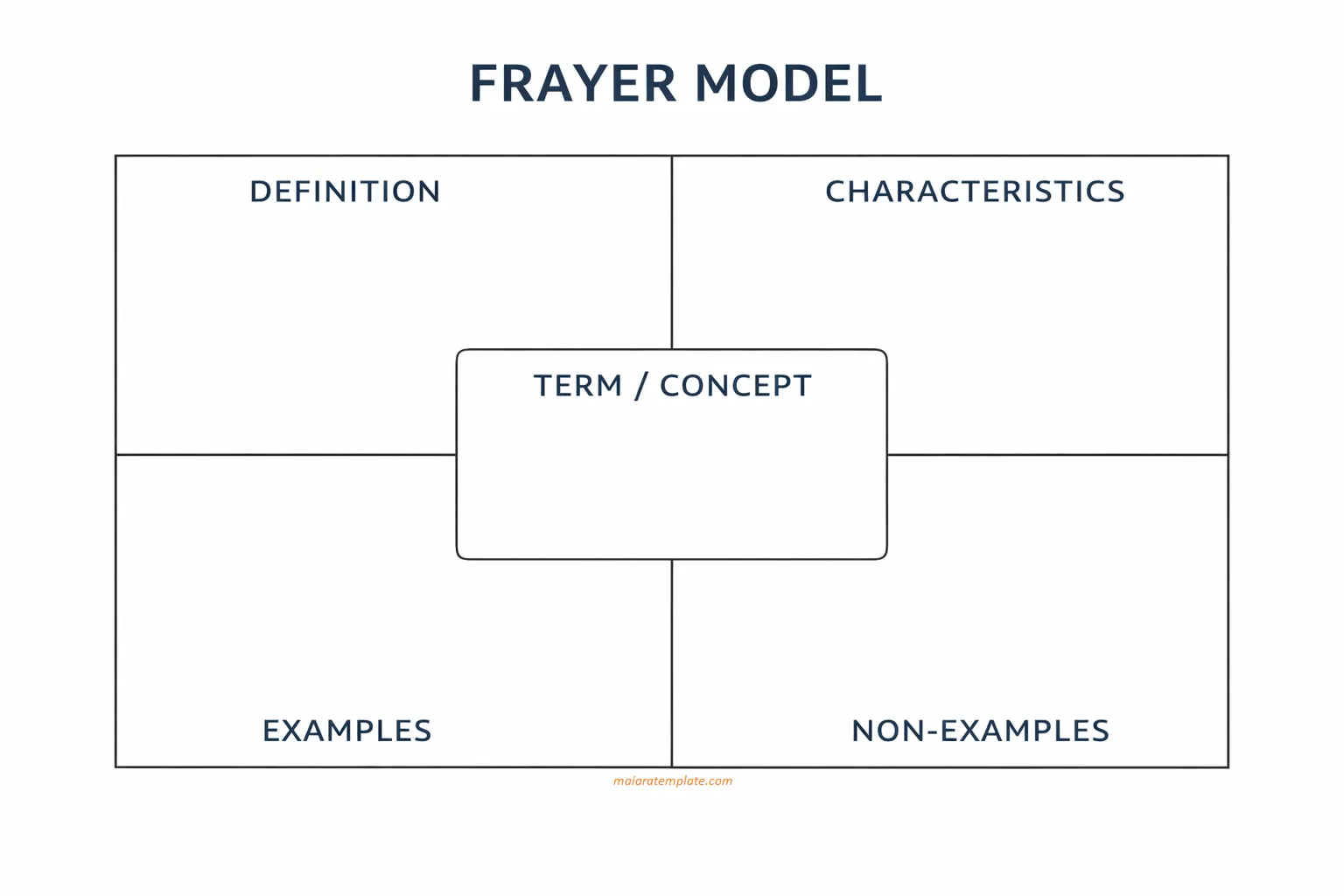
The Frayer Model is a versatile and effective graphic organizer that provides a structured framework for students to explore and deeply understand new vocabulary words and concepts. This model consists of four quadrants, each serving a specific purpose to aid in the comprehensive understanding of the word or concept being studied.
The first quadrant prompts students to define the word or concept in their own words, encouraging them to engage with the material on a deeper level. By articulating the definition in their own language, students can make connections and personalize their learning experience.
Characteristics
In the second quadrant of the Frayer Model, students are tasked with identifying the key characteristics or attributes of the word or concept. This step requires students to analyze the word or concept and determine what sets it apart from other similar terms. By focusing on the characteristics, students are able to gain a more nuanced understanding of the word and its implications. This process of identifying characteristics helps students develop critical thinking skills and enhances their ability to make connections between new vocabulary and existing knowledge.
Examples
The third quadrant of the Frayer Model prompts students to provide examples of how the word or concept is used in context. By offering real-world examples, students can see the word or concept in action, making it more tangible and relatable. Examples help students understand the practical application of the word and deepen their comprehension of its meaning. This step also encourages students to think critically about the word’s usage and explore its implications in various contexts.
Non-Examples
The final quadrant of the Frayer Model asks students to identify non-examples or instances where the word or concept does not apply. This part of the model challenges students to consider the boundaries and limitations of the word, helping them refine their understanding and avoid misconceptions. By exploring non-examples, students learn to differentiate between when the word is appropriate and when it is not, further enhancing their ability to use the word accurately and effectively.
Overall, the Frayer Model serves as a comprehensive tool that encourages students to engage with new vocabulary words and concepts in a structured and multi-faceted manner. By moving beyond rote memorization and instead encouraging analysis, synthesis, and application, the Frayer Model empowers students to deepen their understanding and develop critical thinking skills that will benefit them in all areas of their academic journey.
Benefits of Using a Frayer Model
There are numerous benefits to incorporating the Frayer Model into classroom instruction, both for students and educators. This graphic organizer offers a range of advantages that contribute to enhanced learning outcomes and a deeper understanding of vocabulary and concepts.
Deepens Understanding
One of the key benefits of using the Frayer Model is its ability to deepen students’ understanding of new vocabulary words and concepts. By engaging with the word or concept from multiple angles and exploring its definition, characteristics, examples, and non-examples, students are able to move beyond surface-level understanding and develop a more comprehensive grasp of the material. This deeper understanding not only enhances retention but also fosters critical thinking skills that are essential for academic success.
Promotes Critical Thinking
Another significant benefit of the Frayer Model is its promotion of critical thinking skills. As students engage with the model and analyze the various aspects of the word or concept, they are challenged to think critically about its meaning, usage, and implications. This process of analysis and synthesis encourages students to make connections, draw conclusions, and apply their knowledge in meaningful ways. By fostering critical thinking skills, the Frayer Model equips students with the tools they need to succeed academically and beyond.
Enhances Vocabulary Retention
By providing a structured approach to exploring new vocabulary words, the Frayer Model supports enhanced retention and recall of the material. When students engage with a word through its definition, characteristics, examples, and non-examples, they create multiple pathways to connect with and remember the word. This multi-faceted exploration helps solidify the word in students’ long-term memory, making it easier for them to recall and use the word accurately in future contexts. The Frayer Model’s emphasis on comprehensive understanding contributes to improved vocabulary retention over time.
Supports Differentiation
One of the strengths of the Frayer Model is its versatility and adaptability to meet the needs of diverse learners. Educators can easily tailor the model to accommodate different learning styles, abilities, and preferences, making it a valuable tool for differentiation in the classroom. Whether used with individual students, small groups, or the whole class, the Frayer Model can be customized to provide the support and challenge needed to help all students deepen their understanding of vocabulary and concepts. This flexibility makes the model accessible and effective for a wide range of learners.
How to Use a Frayer Model
Implementing the Frayer Model in the classroom involves several key steps that guide students through the process of exploring and understanding new vocabulary words and concepts. By following a structured approach, educators can effectively introduce the model to students and support their engagement with the material.
Introduce the Word
The first step in using the Frayer Model is to introduce the new vocabulary word or concept to students. This initial exposure lays the foundation for students to begin exploring the word’s definition, characteristics, examples, and non-examples. Educators can provide context for the word and discuss its relevance and importance in order to prepare students for the deeper exploration that will follow.
Model the Process
After introducing the word, educators should model the process of filling out each quadrant of the Frayer Model using a sample word. This demonstration helps students understand how to approach the model and what is expected of them in each section. By walking students through the steps of defining the word, identifying its characteristics, providing examples, and discussing non-examples, educators can clarify the purpose and value of the Frayer Model.
Guided Practice
Once students have observed the model being filled out, educators can provide opportunities for guided practice where students work on the Frayer Model in pairs or small groups. This collaborative approach allows students to discuss the word, share ideas, and support one another as they engage with the material. Educators can circulate among groups to offer guidance, answer questions, and provide feedback to ensure that students are on track and understanding the concepts being explored.
Independent Practice
After students have had the opportunity for guided practice, they can move on to independent practice where they apply the Frayer Model to new words or concepts on their own. This stage allows students to demonstrate their understanding and mastery of the model as they engage with unfamiliar vocabulary and deepen their comprehension of the material. Educators can assess students’ work and provide feedback to support continued growth and development.
Review and Reflect
As students complete their Frayer Models, educators can facilitate a review and reflection process where students discuss their learning and reflect on how the model helped them deepen their understanding of the vocabulary words and concepts. This reflective practice encourages students to think critically about their learning process, identify areas of growth, and make connections between new knowledge and existing understanding. By reviewing and reflecting on their work, students can internalize their learning and apply it to future learning experiences.
When to Use a Frayer Model?
The Frayer Model is a versatile tool that can be used in a variety of contexts to support vocabulary development and concept understanding across different subjects and grade levels. Educators can strategically incorporate the model into their instruction to enhance student learning and deepen understanding of key terms and concepts.
Introduction of New Vocabulary
One of the primary uses of the Frayer Model is when introducing new vocabulary words to students. By engaging with the word through its definition, characteristics, examples, and non-examples, students can build a strong foundation of understanding that supports future learning and retention. The model provides a structured approach to exploring new words that encourages students to think critically and make connections between the word and its context.
Content Area Learning
Incorporating the Frayer Model into content area learning helps students deepen their understanding of key terms and concepts specific to different subjects. Whether studying science, history, mathematics, or language arts, students can use the model to explore and engage with subject-specific vocabulary in a meaningful way. By applying the model across subjects, educators can support students’ overall academic growth and development of subject-specific knowledge and skills.
Review and Reinforcement
The Frayer Model can also be used as a review tool to reinforce previously learned vocabulary and concepts. By revisiting familiar words and exploring them through the model, students can solidify their understanding and retention of the material. This review process helps students connect new learning with prior knowledge, reinforcing key concepts and vocabulary terms
Test Preparation
As students prepare for assessments, the Frayer Model can be a valuable tool to help them study and review key terms and concepts. By creating Frayer Models for important vocabulary words, students can engage with the material in a structured and comprehensive manner, making connections and deepening their understanding. This process of active engagement with the material helps students prepare more effectively for tests and assessments, leading to improved performance and retention of the content.
Enrichment and Extension
For students who have already mastered basic vocabulary and concepts, the Frayer Model can be used as an enrichment or extension activity to deepen their understanding and challenge them to think more critically. Educators can provide advanced vocabulary words or complex concepts for students to explore using the model, encouraging them to delve into the nuances and intricacies of the material. This extension activity can help advanced learners continue to grow and expand their knowledge in a meaningful and engaging way.
Collaborative Learning
The Frayer Model can also be used as a collaborative learning tool, allowing students to work together to explore and understand new vocabulary words and concepts. By engaging in group activities where students discuss, debate, and fill out the model together, they can learn from one another, share ideas, and deepen their understanding through dialogue and collaboration. This collaborative approach not only fosters teamwork and communication skills but also provides students with multiple perspectives on the material, enhancing their overall learning experience.
Individualized Learning
Another way to use the Frayer Model is to provide students with opportunities for individualized learning, allowing them to explore new words and concepts at their own pace and in their own way. Educators can differentiate instruction by tailoring the model to meet the needs of individual students, providing support and challenges based on their abilities and preferences. This personalized approach helps ensure that all students have the opportunity to engage with the material in a way that is meaningful and relevant to their learning needs.
Free Frayer Model Template
A Frayer Model helps students and educators better understand new concepts by organizing key information into a clear, structured format. It breaks down definitions, characteristics, examples, and non-examples, making learning more engaging and effective. With a well-designed template, you can support critical thinking, vocabulary development, and deeper comprehension.
Download our Frayer Model Template today to enhance learning and make complex concepts easier to understand.
Frayer Model Template – DOWNLOAD

- New Grad Nursing Resume Template - April 2, 2026
- Non-competition Agreement Template - March 31, 2026
- Non-disclosure Agreement Template for Employees - March 30, 2026
