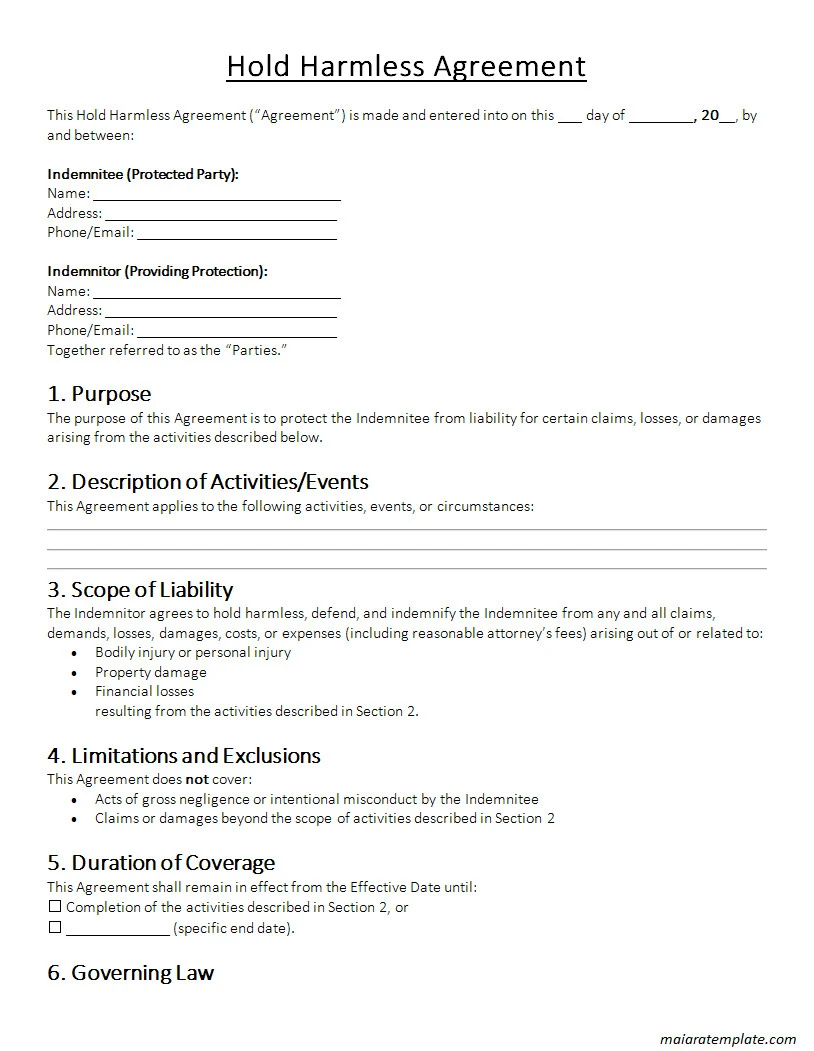
When entering into a contract, it’s crucial to protect yourself from potential legal liabilities that may arise from specific incidents such as bodily injury, property damage, or financial loss. This is where a hold harmless agreement comes into play.
This type of clause is commonly used in high-risk activities like events and construction, as well as in business contexts to define and allocate risks between parties.
What is a Hold Harmless Agreement?
A hold harmless agreement, also known as an indemnity agreement, is a legal contract between two parties where one party agrees not to hold the other party responsible for any risks associated with the agreement.
This agreement is designed to shield one or both parties from legal liability in case of specific incidents outlined in the contract.
Why are Hold Harmless Agreements Important?
Hold harmless agreements are essential for protecting both parties involved in a contract from potential legal disputes and financial losses. By clearly defining the responsibilities and risks of each party, these agreements help prevent misunderstandings and legal battles in the future. They provide a sense of security and clarity in situations where there is a high level of risk involved.
Key Elements of a Hold Harmless Agreement
Hold harmless agreements typically include the following key elements:
- Identification of Parties: Clearly identify the parties involved in the agreement.
- Description of Risks: Specify the risks that are being waived by the signing party.
- Scope of Protection: Define the extent to which the signing party is shielded from liability.
- Insurance Requirements: Determine whether the signing party is required to maintain specific insurance coverage.
- Severability Clause: Include a provision that allows the agreement to remain valid even if certain parts are deemed unenforceable.
- Signatures: Both parties must sign the agreement to make it legally binding.
How to Draft a Hold Harmless Agreement
When drafting a hold harmless agreement, it’s important to be clear and specific about the risks involved and the extent of protection being provided. Here are some tips to keep in mind:
- Consult with Legal Counsel: It’s advisable to seek guidance from a legal professional to ensure that the agreement is legally sound and enforceable.
- Use Clear and Concise Language: Avoid using complex legal jargon and make sure the terms of the agreement are easily understood by both parties.
- Include all Necessary Details: Be thorough in outlining the risks, responsibilities, and protections provided in the agreement.
- Review and Revise: Before finalizing the agreement, review it carefully to ensure that all parties are in agreement and make any necessary revisions.
Benefits of Using Hold Harmless Agreements
There are several benefits to using hold harmless agreements, including:
- Risk Allocation: Clearly defining and allocating risks between parties helps prevent disputes and legal conflicts.
- Protection from Liability: Shielding parties from legal liability can save time and money in the event of a lawsuit.
- Clarity and Security: Providing clarity on responsibilities and risks can help ensure a smooth working relationship between parties.
Conclusion
Hold harmless agreements play a vital role in protecting parties from legal liabilities and financial losses in high-risk activities and business contexts. By clearly defining the responsibilities and risks of each party, these agreements help establish a sense of security and clarity in contractual relationships. It’s important to draft these agreements carefully, with the guidance of legal counsel, to ensure that all parties are adequately protected.
Hold Harmless Agreement Template – DOWNLOAD

- Monthly Work Schedule Template (Excel) - March 10, 2026
- Mortgage Letter of Explanation Template (Word) - March 8, 2026
- Free Motorcycle Bill of Sale Template (Word) - March 4, 2026
