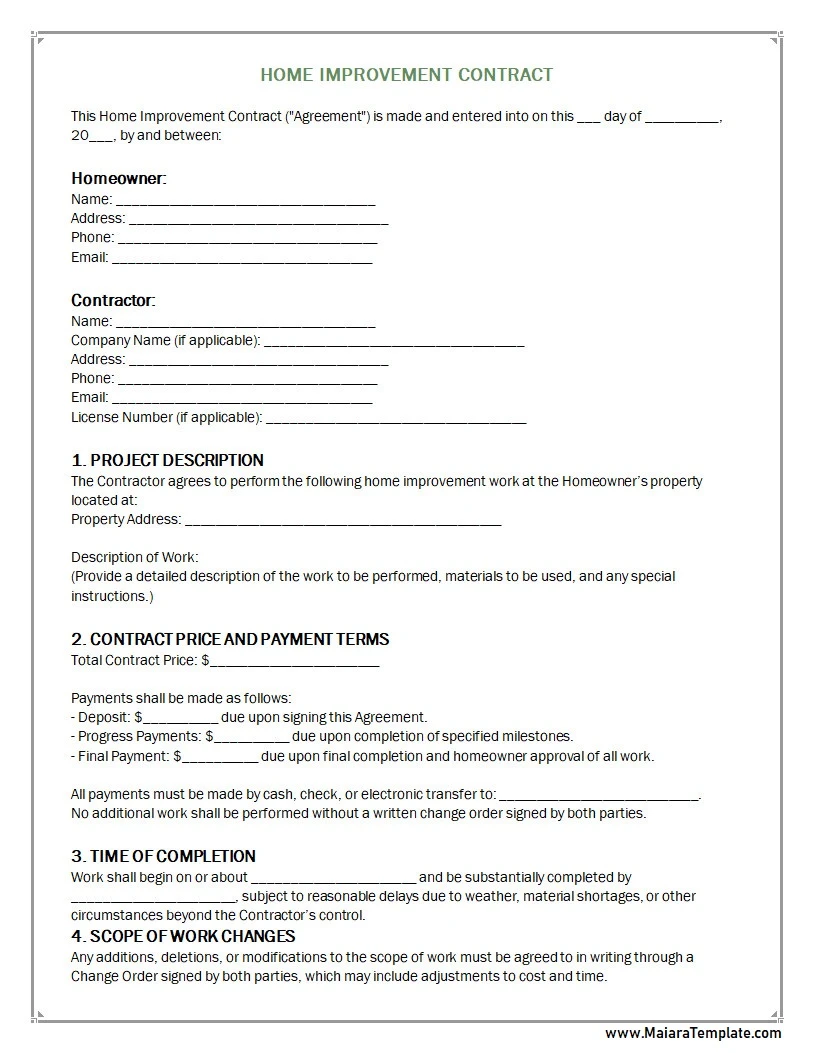
Embarking on a home improvement project can be an exciting but daunting task. Whether you are planning a kitchen remodel, bathroom renovation, or a full home makeover, it is crucial to have a clear understanding of the project details before any work begins.
This is where a home improvement contract comes into play, serving as a legally binding agreement that protects both the homeowner and the contractor.
What is a Home Improvement Contract?
A home improvement contract is a written agreement between the homeowner and the contractor that outlines the scope of work, the cost, the timeline, and the responsibilities of each party.
It serves as a blueprint for the renovation project, ensuring that both parties are on the same page and helping to prevent misunderstandings and potential disputes.
Why is a Home Improvement Contract Important?
A well-defined home improvement contract is essential for a successful project for several reasons. Firstly, it provides clarity on the project details, including the work to be done, materials to be used, and the project’s cost. This helps to prevent any surprises or unexpected expenses down the line.
Secondly, a contract establishes a timeline for the project, outlining key milestones and deadlines. This ensures that the project stays on track and is completed on time. It also holds the contractor accountable for meeting the agreed-upon deadlines.
Lastly, a home improvement contract defines each party’s responsibilities, including who is responsible for obtaining permits, managing subcontractors, and handling any unforeseen issues that may arise during the renovation. This clarity helps to avoid confusion and potential disputes.
What to Include in a Home Improvement Contract
When drafting a home improvement contract, several key elements should be included to protect both the homeowner and the contractor:
- Project Details: Clearly outline the scope of work to be done, including specific tasks and materials to be used.
- Cost: Specify the total cost of the project, payment schedule, and any fees or additional costs that may arise.
- Timeline: Establish a timeline for the project, including start and end dates, as well as key milestones.
- Responsibilities: Define each party’s responsibilities, including who is responsible for obtaining permits, managing subcontractors, and resolving any issues that may arise.
- Change Orders: Include provisions for any changes to the original scope of work, including how changes will be approved and any additional costs involved.
How to Draft a Home Improvement Contract
When drafting a home improvement contract, it is essential to be thorough and detail-oriented. Here are some tips for creating a comprehensive and legally sound contract:
- Be Specific: Clearly outline the scope of work, including specific tasks, materials, and finishes to be used.
- Include Payment Terms: Specify the total cost of the project, payment schedule, and any penalties for late payments.
- Establish a Timeline: Define start and end dates for the project, as well as key milestones along the way.
- Include Legal Protections: Include provisions for dispute resolution, warranties, and liability insurance to protect both parties in case issues arise.
- Review with Legal Counsel: Before signing the contract, have it reviewed by a legal professional to ensure that it complies with local laws and regulations.
Tips for Successful Home Improvement Contracts
To ensure a successful home improvement project, follow these tips when creating and executing a home improvement contract:
- Communicate Clearly: Maintain open communication with your contractor throughout the project to address any concerns or changes promptly.
- Document Everything: Keep detailed records of all communications, changes, and payments related to the project to protect yourself in case of disputes.
- Stay Involved: Stay involved in the project to ensure that the work is being done to your satisfaction and that any issues are addressed promptly.
- Get Everything in Writing: Any changes to the original contract should be documented in writing and signed by both parties to avoid misunderstandings.
- Review the Final Product: Before making final payments, thoroughly inspect the completed work to ensure it meets your expectations and any agreed-upon standards.
By following these guidelines and creating a well-defined home improvement contract, you can protect yourself and your investment while ensuring a successful and stress-free renovation project.
Home Improvement Contract Template – DOWNLOAD

- Free Editable Nursing Resume Template (Word) - March 12, 2026
- Monthly Work Schedule Template (Excel) - March 10, 2026
- Mortgage Letter of Explanation Template (Word) - March 8, 2026
