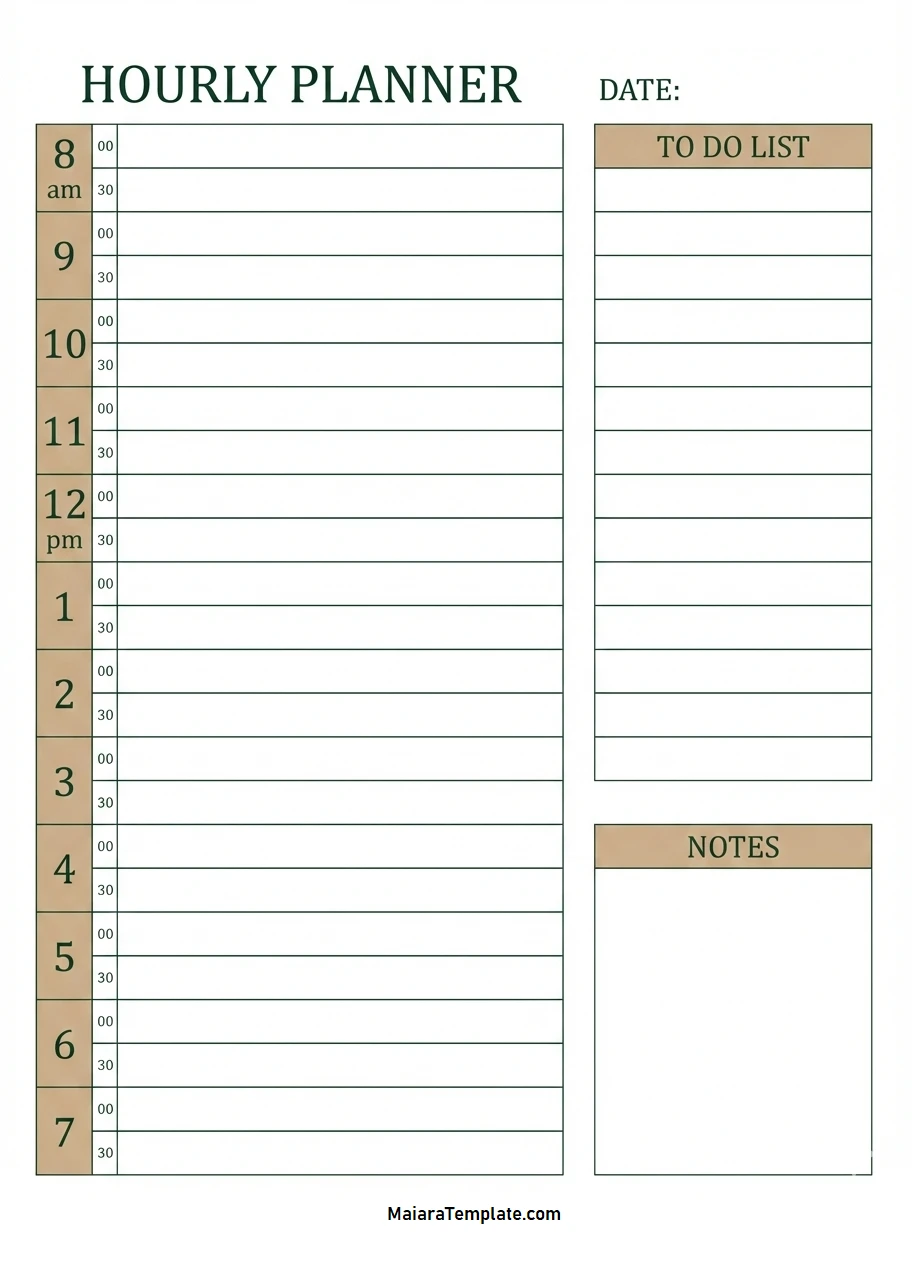
In today’s fast-paced world, managing our time effectively has become more important than ever. With numerous tasks, appointments, and activities vying for our attention, it can be easy to feel overwhelmed and struggle to stay on top of everything. This is where an hourly planner comes in handy. By breaking down your day into hourly segments, you can schedule your time in detail, allocate specific blocks for tasks, and ensure you make the most out of every hour.
Let’s explore how using an hourly planner can help you structure your day effectively, prioritize tasks, and boost your productivity.
What Is an Hourly Planner?
An hourly planner is a tool that enables you to organize your day into hourly segments, allowing you to allocate specific time slots for various tasks, appointments, and activities. It typically consists of a daily or weekly layout with columns representing each hour of the day.
This visual representation allows you to see your schedule at a glance and make adjustments as needed. Hourly planners can be physical notebooks, digital apps, or printable templates, depending on your preference.
The Benefits of Using an Hourly Schedule
There are several benefits to using an hourly planner to structure your day. Some of the key advantages include:
1. Improved Time Management: By planning your day in hourly increments, you can ensure that you make the most of your time and avoid wasting it on unproductive activities.
2. Enhanced Productivity: Having a detailed schedule can help you stay focused and motivated throughout the day, leading to increased productivity and efficiency.
3. Reduced Stress: Knowing exactly what you need to do and when can help alleviate the feeling of being overwhelmed by a long to-do list.
4. Better Work-Life Balance: By allocating time for both work and personal activities, you can achieve a better balance and prevent burnout.
5. Increased Accountability: Using an hourly planner can help you hold yourself accountable for completing tasks on time and meeting deadlines.
6. Improved Organization: A structured schedule can help you keep track of important deadlines, appointments, and commitments, reducing the likelihood of forgetting or missing them.
7. Enhanced Focus: With a clear plan in place, you can prioritize tasks and focus on what needs to be done, leading to better concentration and results.
8. Efficient Task Management: Breaking down your day into hourly segments allows you to allocate time for specific tasks, ensuring that each one gets the attention it deserves.
9. Flexibility: While hourly planners provide structure, they also allow for flexibility in case unexpected events or priorities arise during the day.
10. Goal Achievement: By allocating time for tasks that align with your goals and priorities, you can make steady progress towards achieving them.
How to Set Up Your Weekly Hourly Planner for Maximum Productivity
Setting up your weekly hourly planner for maximum productivity involves a few key steps:
1. Choose the Right Format: Decide whether you prefer a physical planner, a digital app, or a printable template that best suits your needs and preferences.
2. Identify Your Priorities: Determine your top priorities for the week and allocate specific time slots in your planner to focus on them.
3. Block Out Time for Essential Tasks: Allocate time for essential tasks that need to be completed each day, such as work, exercise, meals, and self-care.
4. Schedule Breaks and Rest Periods: Make sure to include short breaks and rest periods in your schedule to recharge and prevent burnout.
5. Set Realistic Goals: Be realistic about how much you can accomplish in a day and avoid overloading your schedule with too many tasks.
6. Review and Adjust: Regularly review your planner to see if you are staying on track with your schedule and make adjustments as needed to optimize your time.
7. Practice Time Blocking: Use the technique of time blocking to allocate specific time slots for different tasks, projects, and activities throughout the day.
8. Include Buffer Time: Factor in buffer time between tasks to account for unexpected delays or interruptions that may arise.
9. Use Color Coding: Consider using color-coding to categorize tasks, appointments, and activities in your planner for easy visual reference.
10. Celebrate Your Achievements: At the end of each day, take a moment to reflect on what you have accomplished and celebrate your achievements, no matter how small.
By following these steps and incorporating an hourly planner into your daily routine, you can effectively manage your time, prioritize tasks, and enhance your productivity. Remember that consistency is key, so make it a habit to use your planner regularly and adjust your schedule as needed to stay on track with your goals and commitments. With a structured approach to managing your time, you can maximize the potential of each day and achieve greater success in both your personal and professional life.
Hourly Planner Template – DOWNLOAD

- Free Editable Nursing Resume Template (Word) - March 12, 2026
- Monthly Work Schedule Template (Excel) - March 10, 2026
- Mortgage Letter of Explanation Template (Word) - March 8, 2026
