A table card is a small printed card designed to communicate information clearly at a table or dining area. Depending on the setting, a table card can identify a guest’s assigned seat, display a table number, communicate dietary information, or promote a product, service, special offer, or upcoming event.
Table cards are especially useful at weddings, receptions, dinners, conferences, restaurants, corporate events, and promotional gatherings. A well-designed card can make an event easier to navigate while also adding a polished and organized appearance to the table setting.
In this guide, you will learn what a table card is, how it is used, the difference between a place card and a table tent, what information to include, and how to create an effective table card template for different occasions.
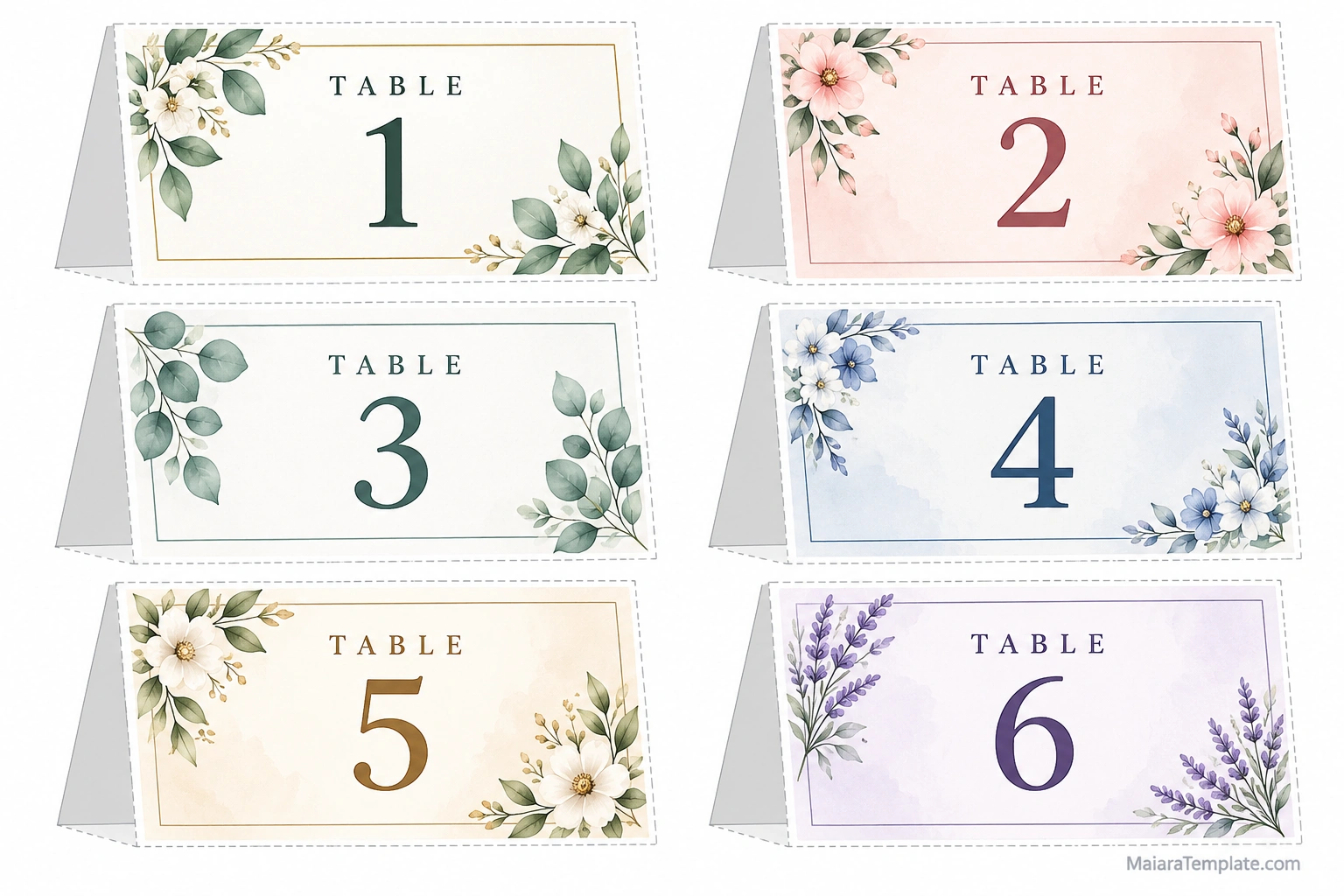
What Is a Table Card?
A table card is a printed card placed on or near a table to communicate useful information to guests or customers. The exact purpose depends on the event or business.
At a wedding or formal dinner, a table card may display a guest’s name or table number to help direct people to their assigned seating. At a restaurant or business event, a table card may instead advertise a special offer, promote a service, provide instructions, or highlight an upcoming event.
Table cards are sometimes confused with place cards and table tents. Although these terms can overlap, each format typically serves a slightly different purpose.
What Is a Table Card Used For?
A table card can serve several functions. Choosing the right format depends on what you want guests or customers to see and do.
Wedding and Event Seating
At weddings and formal events, table cards can help guests locate their assigned table. A numbered table card can be placed in the center of each table so guests can quickly identify their destination.
For events with assigned individual seats, a personalized place card can include the guest’s name. This approach provides more precise seating information and can help catering staff identify special meal requirements.
Dietary and Meal Information
Table cards can also communicate dietary requirements or meal selections. For example, a card might identify a vegetarian, vegan, gluten-free, or allergy-sensitive meal.
When using cards for dietary information, the wording should be clear and easy for catering staff to understand. Sensitive dietary information should be handled according to the event organizer’s privacy and service procedures.
Restaurant Promotions
Restaurants can use table cards to promote daily specials, seasonal menus, loyalty programs, new dishes, or upcoming events. Because the card is positioned directly where customers are seated, it can provide useful information without requiring a large display.
Business and Corporate Events
At conferences, networking events, seminars, and corporate dinners, table cards can display table numbers, discussion topics, schedules, sponsor information, or event instructions.
Product and Service Promotion
A promotional table card can introduce a product or service and encourage customers to take a specific action. This might include scanning a QR code, visiting a website, signing up for an offer, or asking staff for more information.
Table Card vs. Place Card vs. Table Tent
These terms are often used interchangeably, but understanding the differences can help you choose the right format.
Table Card
A table card is a broad term for a card placed on a table to communicate information. It can be used for seating, identification, instructions, menus, promotions, or event information.
Place Card
A place card is generally used to identify a specific guest’s assigned seat. It commonly displays the guest’s name and is placed at or near the designated seat.
Table Tent
A table tent is usually a folded card designed to stand upright on a table. It is commonly used for restaurant promotions, menus, advertisements, announcements, and event information.
The best format depends on the purpose. Use a place card when identifying individual guests is the priority, a numbered table card when directing guests to tables is important, and a table tent when you want information to remain highly visible from multiple directions.
What Should a Table Card Include?
The information on a table card should match its purpose. Avoid filling a small card with unnecessary text. Instead, prioritize the information guests need most.
- Table number: Useful for weddings, dinners, conferences, and other assigned seating events.
- Guest name: Appropriate for individual place cards.
- Event name: Helps establish context and branding.
- Date: Useful for special events or temporary promotions.
- Meal information: Can help communicate dietary selections when appropriate.
- Short message: Useful for greetings, instructions, or promotional copy.
- Business name: Important for promotional table cards.
- Call to action: Tells customers what to do next.
- QR code: Can direct guests to menus, websites, registration pages, or promotions.
- Brand elements: Logos, colors, and typography can reinforce a business or event identity.
How to Create a Table Card
Creating a table card is straightforward when you start with a clear purpose and a practical layout.
1. Determine the Purpose
First, decide what the card needs to accomplish. Is it identifying a guest, directing guests to a table, providing meal information, or promoting a business?
The purpose determines the content, size, layout, and visual style.
2. Choose the Card Format
Decide whether you need a flat card, folded place card, numbered table card, or standing table tent. Consider how the card will be positioned and viewed by guests.
3. Select the Information
Include only the information that is relevant to the card’s purpose. A wedding table number may need only the word “Table” and a large number, while a restaurant promotional card may require a headline, short description, offer, and call to action.
4. Choose Appropriate Typography
Make the most important information easy to read. Large numbers and names should have enough visual emphasis to be recognized quickly.
For formal events, elegant serif fonts can create a traditional appearance. Modern sans-serif fonts can provide a cleaner and more contemporary look.
5. Add Supporting Design Elements
Use borders, decorative lines, botanical elements, subtle patterns, or simple icons when they support the design. Avoid excessive decoration that makes the important information difficult to read.
6. Print and Test the Card
Before printing a complete set, print one sample and place it on a table. Check whether the text is readable from the expected viewing distance and make sure the card can stand securely if it is designed as a tent card.
Table Card Ideas for Weddings
Wedding table cards can be both functional and decorative. Because they are part of the overall reception design, their appearance can coordinate with the wedding theme.
- Numbered table cards: Use large numbers for quick table identification.
- Floral table cards: Add botanical illustrations that match the wedding flowers.
- Minimalist table cards: Use simple typography and generous white space.
- Elegant table cards: Combine refined typography with subtle borders and neutral colors.
- Theme-based cards: Use design elements related to the wedding destination, season, or overall theme.
- Personalized place cards: Add each guest’s name to indicate the assigned seat.
Table Card Ideas for Businesses
Businesses can use table cards as compact marketing tools. The card should communicate one clear message rather than attempting to advertise everything at once.
Restaurant Table Cards
Restaurants can promote daily specials, new menu items, seasonal dishes, happy hour information, reservation reminders, or loyalty programs.
Hotel Table Cards
Hotels can use table tents to promote amenities, dining options, spa services, special packages, or guest activities.
Corporate Events
Corporate event table cards can display sponsor information, session details, discussion topics, event schedules, or networking instructions.
Tips for Designing an Effective Table Card
A successful table card should be attractive without sacrificing clarity. Keep the following principles in mind:
- Keep the message focused: One card should communicate one primary idea.
- Make important information prominent: Names, table numbers, offers, and calls to action should stand out.
- Use sufficient contrast: Text should be easy to read against the background.
- Leave enough white space: Crowded layouts can make a small card look difficult to read.
- Match the event style: Coordinate fonts and colors with the broader event design.
- Consider viewing distance: A promotional table tent may need larger text than an individual place card.
- Check spelling carefully: Names and event information should be proofread before printing.
- Test the physical format: Make sure folded cards stand properly and fit the intended table setting.
How to Use a Table Card Template
A table card template can simplify the design process by providing a ready-made layout. Instead of creating every card from a blank page, you can customize the text, numbers, colors, and decorative elements to match your event or business.
For a wedding, you might create one design and change only the table number for each card. For individual seating, replace the table number with each guest’s name. For business promotions, modify the headline, promotional message, branding, and call to action.
Always check the template’s print dimensions before producing multiple copies. Make sure the layout matches the paper size and that important text remains inside the printable area.
Common Table Card Mistakes to Avoid
Small design mistakes can make a table card less effective. Avoid the following issues:
- Using text that is too small to read easily.
- Adding too many decorative elements.
- Using colors with insufficient contrast.
- Leaving out important table or guest information.
- Printing without checking names and numbers.
- Using inconsistent designs across the same event.
- Making promotional copy too long.
- Failing to test how the card looks when placed on an actual table.
FAQ About Table Cards
What is the purpose of a table card?
A table card can identify a guest’s seat or table, provide event information, communicate meal details, or promote a product, service, or special offer. Its purpose depends on how and where it is used.
What is the difference between a table card and a place card?
A place card generally identifies a specific guest and their assigned seat. A table card is a broader term that can identify a table, provide information, or serve a promotional purpose.
What is a table tent?
A table tent is a folded card designed to stand upright on a table. It is commonly used for restaurant promotions, advertisements, menus, event information, and calls to action.
What should be written on a wedding table card?
A wedding table card commonly displays the word “Table” along with a large table number. Depending on the seating arrangement, you may also use individual place cards with guest names.
Can table cards include dietary information?
Yes. Table cards or place cards can be used to communicate meal selections or dietary requirements when appropriate. The information should be clear enough for event and catering staff to understand.
How big should a table card be?
The ideal size depends on its purpose, viewing distance, and table arrangement. A compact place card can be smaller, while a promotional table tent may need more space for a headline, supporting information, and call to action.
Can I use the same table card template for different events?
Yes. A flexible table card template can be customized for weddings, parties, conferences, restaurants, corporate events, and promotional displays. Change the text, colors, graphics, and branding to suit each occasion.
Conclusion
A table card is a simple but versatile tool for organizing events and communicating information. It can guide wedding guests to their assigned tables, identify individual seats, communicate meal information, or promote products and services in restaurants and business settings.
The key to creating an effective table card is to keep the purpose clear, make important information easy to see, and choose a design that fits the occasion. Whether you need numbered wedding table cards, personalized place cards, or promotional table tents, a well-designed table card template can make the process faster and more consistent.
With the right layout, readable typography, appropriate colors, and carefully checked information, table cards can provide both practical value and a polished finishing touch to any event or table setting.
Download: Table Card Template

- Printable Wedding Guest List Template - October 1, 2026
- Free Printable Trip Schedule Template - October 1, 2026
- Free Printable Table Card Template - October 1, 2026
