Keeping track of your blood pressure is an important part of understanding your cardiovascular health. A single reading only shows your blood pressure at one moment. However, recording readings over time can reveal patterns that may help you and your healthcare professional make better-informed decisions.
A blood pressure log sheet provides a simple way to record your systolic pressure, diastolic pressure, pulse, measurement time, and other relevant notes. Whether you monitor your blood pressure at home or follow a doctor’s recommendation, a consistent record can make your health information easier to review.
In this guide, you will learn what a blood pressure log sheet includes, why it is useful, how to measure your blood pressure correctly, and how to maintain an accurate daily blood pressure record. You can also use the printable blood pressure tracker designs to organize your readings.
What Is a Blood Pressure Log Sheet?
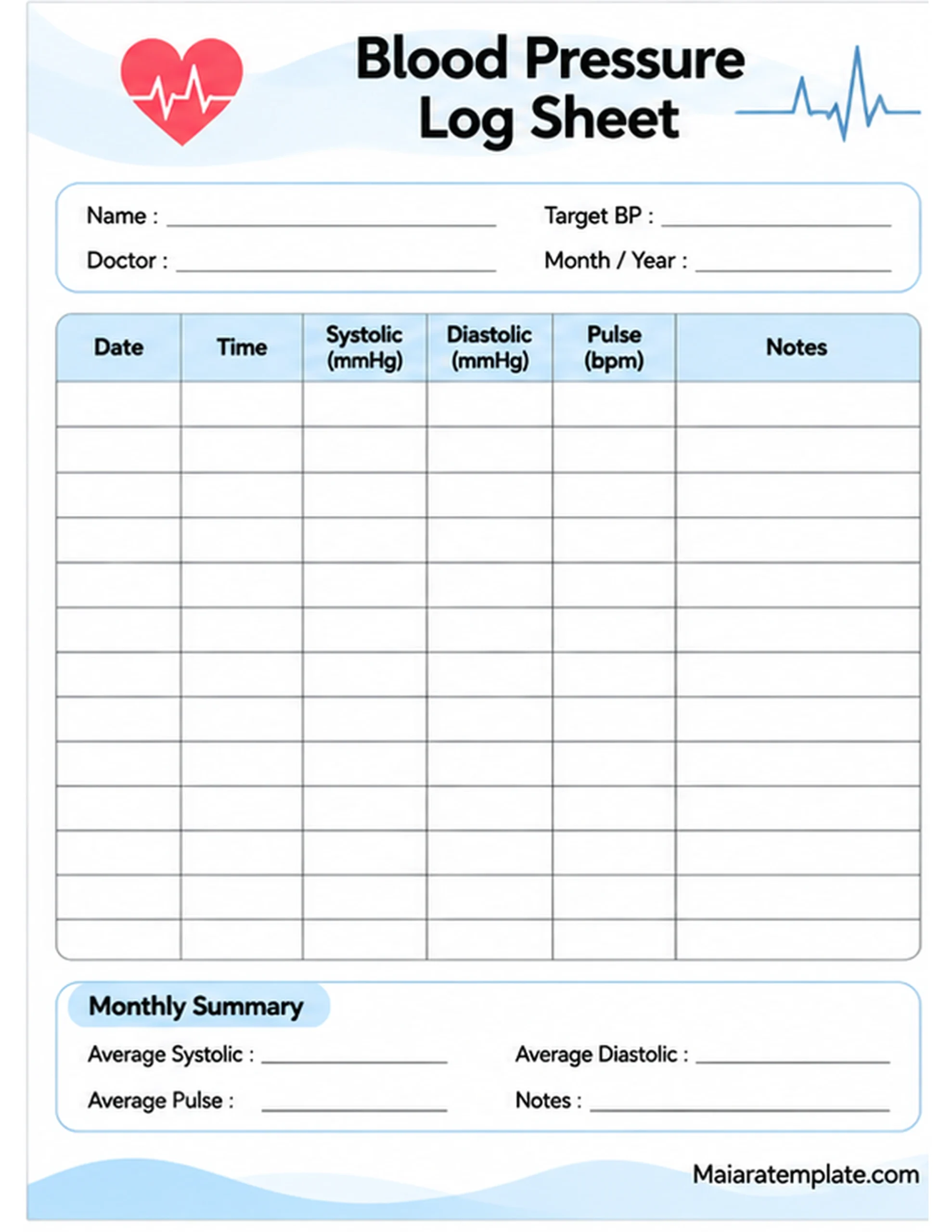
A blood pressure log sheet is a tracking document used to record blood pressure measurements over a period of time. It usually includes spaces for the date, time, systolic reading, diastolic reading, pulse rate, and additional notes.
Many people use a printable blood pressure log to monitor their readings at home. The information can help healthcare professionals understand changes in blood pressure and evaluate how well a treatment plan is working.
A typical blood pressure tracking sheet may include:
- Date and time: Records when each measurement was taken.
- Systolic pressure: The upper number, which measures pressure in the arteries when the heart beats.
- Diastolic pressure: The lower number, which measures pressure in the arteries between heartbeats.
- Pulse rate: The number of heartbeats per minute.
- Notes: Space for medication timing, symptoms, activities, or other details.
- Summary section: A place to review averages or discuss patterns with a healthcare professional.
Why Is Keeping a Blood Pressure Log Important?
Regular blood pressure tracking provides more information than relying on occasional measurements. A written record can help you recognize patterns and share useful details during medical appointments.
Monitor Blood Pressure Over Time
Blood pressure can change throughout the day. Stress, physical activity, sleep, caffeine, and other factors may influence individual readings. Recording measurements consistently helps create a clearer picture of your usual blood pressure levels.
Support High Blood Pressure Monitoring
People with diagnosed hypertension may be asked to monitor their blood pressure at home. A blood pressure diary helps document readings between appointments and gives healthcare professionals additional information about blood pressure control.
Evaluate Treatment Effectiveness
When someone starts or changes a blood pressure treatment plan, regular measurements can help the healthcare team evaluate the response. A log may show whether readings are changing over time and whether further clinical review is needed.
Prepare for Doctor Appointments
Bringing a completed blood pressure record to an appointment can make discussions more productive. Instead of relying on memory, you can show the actual readings, measurement times, and notes about relevant changes.
What Information Should a Blood Pressure Tracker Include?
A useful blood pressure recording chart should be easy to read and provide enough space for consistent entries. The following fields are commonly recommended.
Date and Measurement Time
Record the date and exact time of each reading. If your healthcare professional recommends morning and evening measurements, keep those entries clearly separated.
Systolic and Diastolic Readings
Write both numbers in millimeters of mercury (mmHg). For example, a reading of 120/80 mmHg means the systolic pressure is 120 and the diastolic pressure is 80. Record the numbers exactly as displayed by your monitor.
Pulse Rate
Some blood pressure monitors also display pulse rate in beats per minute (bpm). Recording this number can provide additional information for your healthcare professional, particularly when they have asked you to monitor it.
Medication and Health Notes
Use the notes section to record details that may help explain changes in your readings. Examples include medication timing, missed doses, symptoms, unusual stress, exercise, or changes in your daily routine.
How to Measure Blood Pressure Correctly at Home
Accurate measurements are essential when using a home blood pressure log. Incorrect positioning, an unsuitable cuff, or measuring immediately after physical activity can affect the results.
Choose a Suitable Blood Pressure Monitor
Use a validated automatic monitor with an upper-arm cuff. Make sure the cuff fits your arm correctly. A cuff that is too small or too large may produce inaccurate readings. Ask your healthcare professional or pharmacist for help choosing an appropriate device.
Prepare Before Taking a Reading
Follow a consistent routine before each measurement. For more reliable results:
- Avoid smoking, caffeine, and exercise for at least 30 minutes beforehand.
- Empty your bladder before measuring.
- Sit quietly for at least five minutes.
- Use a chair with your back supported.
- Keep both feet flat on the floor and avoid crossing your legs.
- Place the cuff on your bare upper arm, not over clothing.
- Support your arm on a flat surface at heart level.
Take and Record Your Readings
Remain still and avoid talking during the measurement. Take at least two readings, approximately one minute apart, and record both results. Follow your healthcare professional’s instructions about how often and when to measure your blood pressure.
Try to measure at consistent times each day. A regular schedule makes it easier to compare readings and identify possible patterns.
How to Use a Printable Blood Pressure Log Sheet
A printable blood pressure tracker can make daily monitoring easier. Follow these steps to keep your records organized and useful.
Step 1: Complete Your Personal Information
If the worksheet includes personal information fields, enter your name, monitoring period, healthcare professional’s name, and any target blood pressure range provided by your care team.
Step 2: Follow Your Measurement Schedule
Use the schedule recommended by your healthcare professional. Some monitoring plans involve morning and evening readings, while others may require a different frequency.
Step 3: Enter Every Reading
Write the date, time, systolic pressure, diastolic pressure, and pulse rate in the appropriate columns. If you take two readings during one session, record both rather than choosing only the lower number.
Step 4: Add Relevant Notes
Document relevant information such as medication timing, unusual symptoms, changes in routine, or circumstances that may help explain a reading. Keep notes factual and concise.
Step 5: Review the Completed Log
Look for missing entries and make sure the numbers are readable. Bring the completed blood pressure record and, when possible, your home monitor to your medical appointment so your healthcare professional can review your technique and results.
Understanding Blood Pressure Readings
Blood pressure readings contain two numbers, and both are important. The systolic number appears first, while the diastolic number appears second.
Systolic Blood Pressure
Systolic pressure measures the force of blood against artery walls when the heart contracts and pumps blood. It is the upper number in a blood pressure reading.
Diastolic Blood Pressure
Diastolic pressure measures the force of blood against artery walls while the heart rests between beats. It is the lower number.
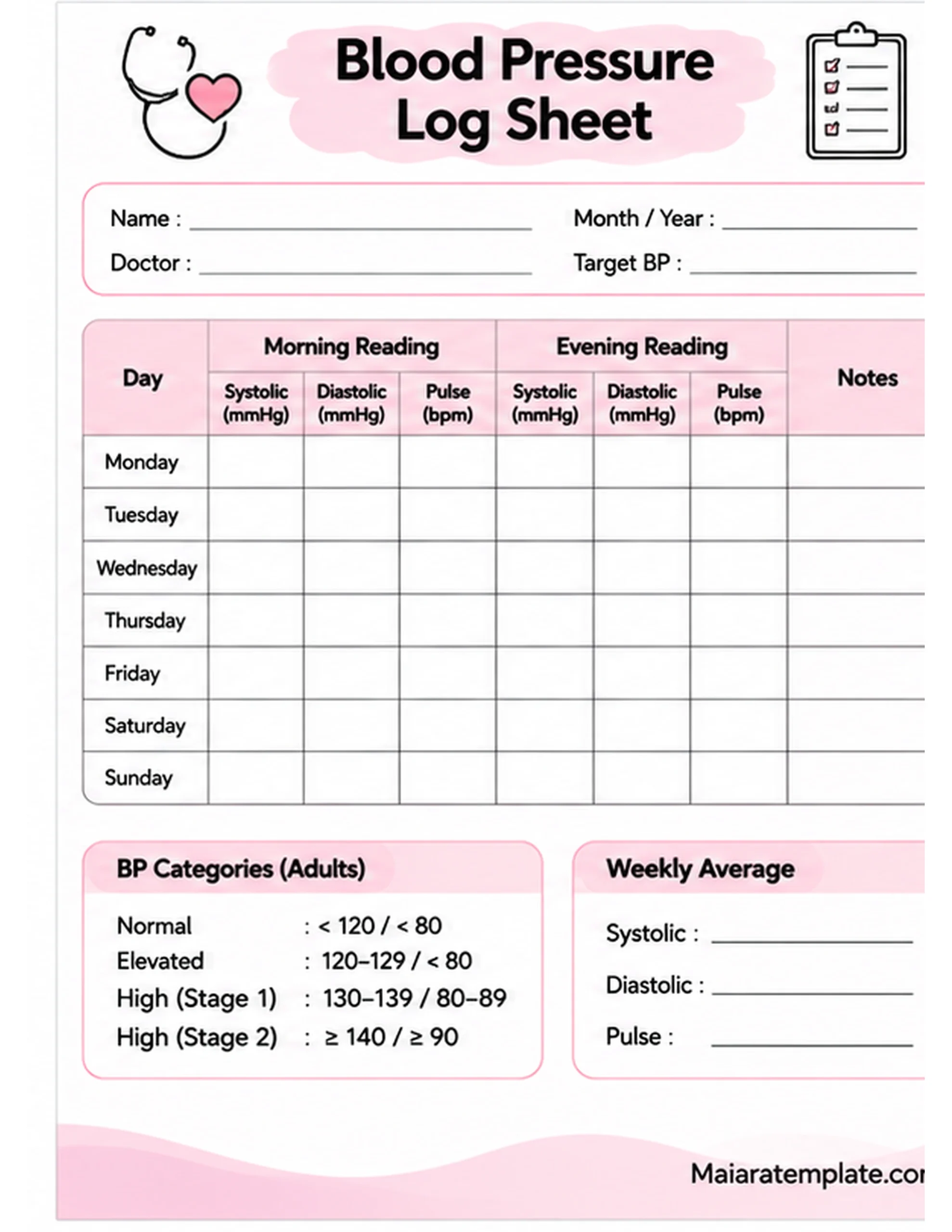
Blood Pressure Categories for Adults
The American Heart Association uses the following categories for adult blood pressure readings. These categories are general reference information, not a substitute for an individual medical assessment.
- Normal: Systolic below 120 mmHg and diastolic below 80 mmHg.
- Elevated: Systolic between 120 and 129 mmHg and diastolic below 80 mmHg.
- High blood pressure, Stage 1: Systolic between 130 and 139 mmHg or diastolic between 80 and 89 mmHg.
- High blood pressure, Stage 2: Systolic 140 mmHg or higher or diastolic 90 mmHg or higher.
When the systolic and diastolic numbers fall into different categories, the higher category is generally used. A healthcare professional must evaluate your readings and medical history to determine whether you have hypertension and what treatment is appropriate.
Tips for Maintaining an Accurate Blood Pressure Diary
Consistency is more important than creating a complicated tracking system. These practical habits can help you maintain a useful blood pressure record.
- Measure at consistent times: Follow the schedule recommended by your healthcare professional.
- Use the same monitor: A consistent device can make comparisons easier.
- Record all readings: Avoid deleting or ignoring results simply because they seem unusual.
- Check your entries: Make sure systolic and diastolic numbers are written in the correct columns.
- Keep the log accessible: Store your printable tracker near your monitor or in a health folder.
- Bring it to appointments: Share the log with your healthcare professional for review.
- Follow your treatment plan: Do not change or stop medication based only on home readings without professional guidance.
When Should You Contact a Healthcare Professional?
A blood pressure log sheet helps organize information, but it cannot diagnose a medical condition or determine treatment on its own. Contact your healthcare professional if your readings are repeatedly outside your recommended range, change unexpectedly, or cause concern.
If a reading is higher than 180 systolic and/or higher than 120 diastolic, wait at least one minute and measure again. If the repeat reading remains that high, contact a healthcare professional immediately. If you also experience symptoms such as chest pain, shortness of breath, back pain, numbness, weakness, vision changes, or difficulty speaking, seek emergency medical help immediately.
Do not wait for your log to be complete before seeking urgent care when serious symptoms occur.

Frequently Asked Questions
How often should I record my blood pressure?
The frequency depends on your health situation and your healthcare professional’s instructions. Some monitoring plans recommend readings in the morning and evening, while others use a different schedule. Follow the plan provided for you.
Should I take more than one blood pressure reading?
Many home monitoring instructions recommend taking at least two readings, one minute apart, during each measurement session. Record both readings so your healthcare professional can review them.
What is the difference between systolic and diastolic pressure?
Systolic pressure is the force against artery walls when the heart beats. Diastolic pressure is the force when the heart rests between beats. Both numbers are needed to understand a blood pressure measurement.
Can a blood pressure log sheet help diagnose hypertension?
A blood pressure log can provide useful information for diagnosing and monitoring hypertension. However, a log alone cannot confirm a diagnosis. A qualified healthcare professional must evaluate the readings and other relevant health information.
What should I write in the notes section?
You can record medication timing, symptoms, unusual stress, changes in activity, or other relevant circumstances. Include only information that may help your healthcare professional understand your readings.
Can I use a blood pressure tracker for medication monitoring?
Yes. A tracker can include a medication checklist or notes section to document whether medication was taken and when. Use it to support discussions with your healthcare professional, not to make medication changes independently.
What should I do if one reading is unusually high?
Remain calm, check your measurement technique, and repeat the reading after at least one minute if it is higher than 180 systolic and/or 120 diastolic. Follow the urgent-care guidance above and contact your healthcare professional when necessary. Do not ignore concerning symptoms.
Is a printable blood pressure log better than a digital tracker?
Both formats can be useful. A printable blood pressure log is easy to write on and bring to appointments. A digital tracker may offer automatic storage and charts. Choose the format that helps you record measurements consistently.
Conclusion
A blood pressure log sheet is a practical tool for recording measurements and understanding changes over time. By tracking systolic pressure, diastolic pressure, pulse, and relevant notes, you can create a clearer record to share with your healthcare professional.
Choose a simple printable blood pressure tracker, follow a consistent measurement routine, and record every reading accurately. Most importantly, use your log as a communication tool with your healthcare team. Consistent monitoring and professional guidance can help you make informed decisions about your cardiovascular health.
Download: Blood Pressure Log Sheet Template PDF
