A baseball lineup card is an essential tool for organizing a team’s batting order, defensive positions, substitutes, and pitching staff before a game. It helps coaches prepare their players, communicate lineup decisions to umpires, and maintain an accurate record of the players eligible to participate.
Whether you coach a youth baseball team, manage a high school roster, or organize a recreational league, a clear lineup card helps game-day operations run smoothly. It reduces confusion, makes substitutions easier to track, and gives coaches and officials a shared reference when questions arise about the batting order or player eligibility.
In this guide, you will learn what a baseball lineup card includes, how to fill one out, how batting orders and defensive positions are recorded, and how to manage substitutions. You will also find practical tips for using a printable baseball lineup card effectively.
What Is a Baseball Lineup Card?
A baseball lineup card is a written or printed record of a team’s planned batting order and player assignments for a game. Depending on the league and the card’s design, it may include player names, uniform numbers, defensive positions, substitutes, pitchers, and other game information.
Coaches commonly prepare lineup cards before the game and provide them to the plate umpire or other designated officials according to league procedures. The opposing team may also receive a copy where required by the competition rules.
A lineup card is useful for more than listing the starting nine players. It can help teams organize available substitutes, communicate changes, and maintain a clear record of lineup decisions during the game.
Why Is a Baseball Lineup Card Important?
A properly completed lineup card supports communication, organization, and game management. It helps coaches and officials work from consistent information instead of relying on memory or informal instructions.
1. Establishes the Batting Order
The card identifies the order in which players are scheduled to bat. Recording the lineup clearly helps the team follow the correct sequence and reduces the risk of batting out of order.
2. Records Defensive Positions
Each starting player can be assigned a defensive position, such as pitcher, catcher, first baseman, or center fielder. This gives coaches and players a clear reference for their planned field assignments.
3. Helps Manage Substitutions
Substitute players can be listed in advance, making it easier to track available options and document changes. Coaches should record substitutions according to the rules and procedures of their specific league.
4. Improves Communication With Officials
A clear lineup card helps the umpire verify the starting lineup and understand reported changes. If a dispute arises about batting order or a substitution, the card and the official game record may help clarify what was reported.
5. Supports Consistent Game Administration
By recording player information before the first pitch, coaches can reduce last-minute confusion and focus on preparation, strategy, and player development.
What Information Does a Baseball Lineup Card Include?
The exact layout varies by league, but a practical baseball lineup sheet usually contains the following information.
Game Details
The top section identifies the game and the teams involved. Common fields include:
- Date and scheduled game time
- Field or game location
- League, tournament, or division
- Home team and visiting team
- Game number, when applicable
- Coach or manager details, if required
Starting Lineup and Batting Order
The main roster table lists the players in their intended batting order. A typical card includes numbered slots for the starting lineup, with columns for the player’s name, uniform number, and defensive position.
Some leagues use designated hitter rules, extra hitters, continuous batting orders, or other lineup formats. Make sure the card reflects the rules used in your competition rather than assuming every league follows the same format.
Defensive Positions
Common defensive position labels include:
- P: Pitcher
- C: Catcher
- 1B: First baseman
- 2B: Second baseman
- 3B: Third baseman
- SS: Shortstop
- LF: Left fielder
- CF: Center fielder
- RF: Right fielder
These abbreviations are widely used in baseball, although lineup requirements and position-reporting procedures can differ by league.
Substitutes and Pitching Staff
Many lineup cards include additional spaces for bench players and pitchers. These sections help coaches identify available players and organize pitching options before the game.
Listing a player as a substitute does not replace the requirement to report and record a substitution properly. Follow the applicable rules for eligibility, re-entry, pitching changes, and lineup modifications.
Printable Baseball Lineup Card Template
A printable baseball lineup card template gives coaches a convenient way to organize both teams’ lineups, game details, bench players, and pitching staff on one sheet. A well-designed card should be easy to read, quick to complete, and practical to use in the dugout or at the scorer’s table.
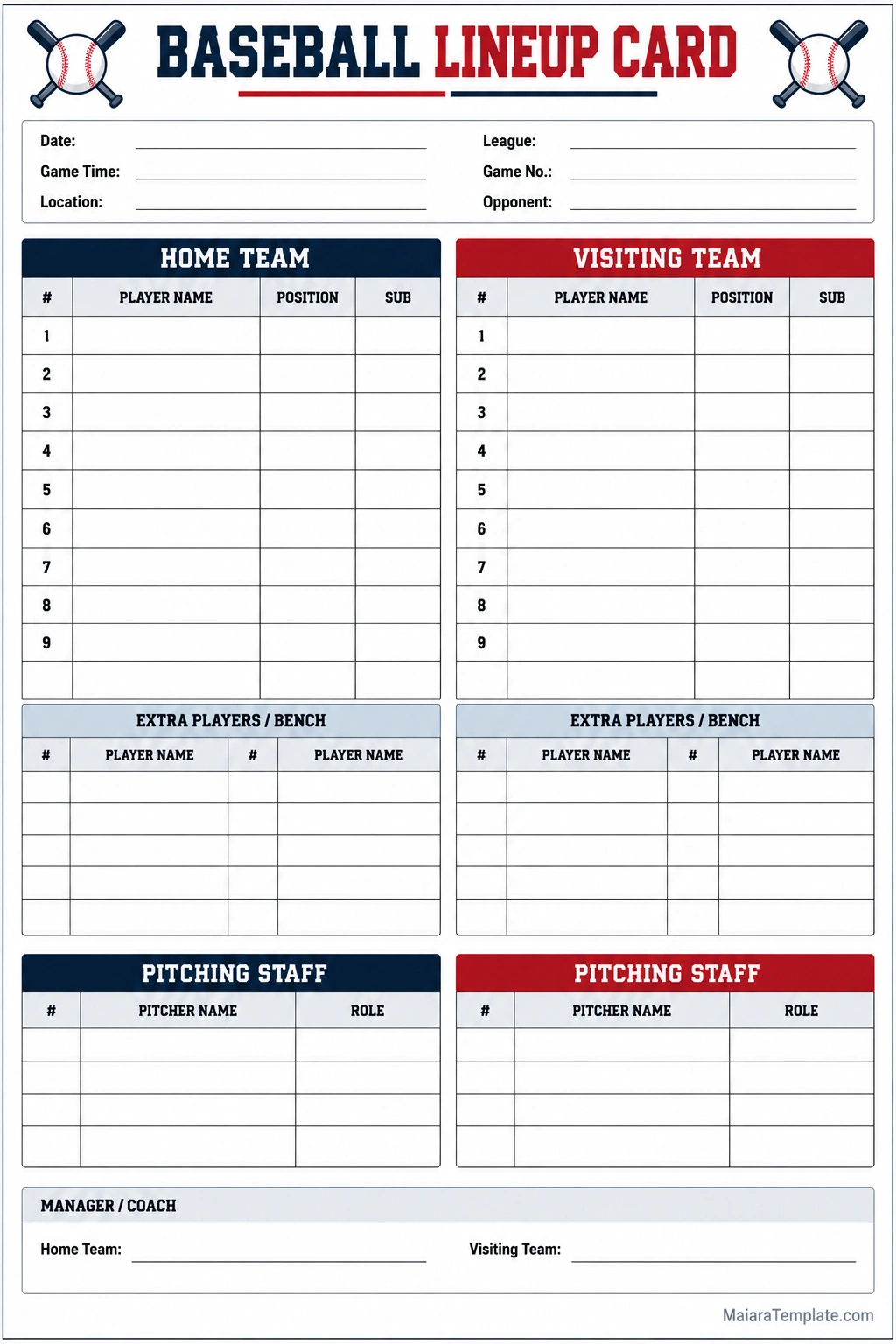
Before printing, confirm that the card has enough space for the number of players allowed by your league. You may also want to add columns for uniform numbers, designated hitters, or other roster details required by your competition.
How to Fill Out a Baseball Lineup Card Step by Step
Step 1: Enter the Game Information
Write the date, game time, location, league, and opponent in the designated fields. Confirm the home and visiting teams so the correct lineup is submitted to the appropriate official.
Step 2: Confirm the Available Players
Check attendance and eligibility before assigning players to the lineup. Verify uniform numbers and any league-specific roster requirements, especially for tournaments or games with restrictions on player participation.
Step 3: Set the Batting Order
Place each starting batter in the intended order. Review the sequence carefully and make sure every player is entered in the correct slot. If your league uses a continuous batting order or extra hitters, use the appropriate lineup format.
Step 4: Record Defensive Positions
Enter the planned defensive position for each player using full names or commonly accepted abbreviations. Check that the assignments match your defensive plan and any relevant league requirements.
Step 5: List Available Substitutes
Record bench players in the designated section. Include their names and uniform numbers where appropriate so coaches and officials can identify them easily when a substitution is needed.
Step 6: Review the Pitching Plan
Identify the pitchers available for the game and any information required by your league. For youth baseball, confirm applicable pitch-count restrictions, rest requirements, and eligibility rules using the official league guidance.
Step 7: Check and Submit the Card
Review all names, numbers, batting positions, and defensive assignments before submitting the card. Provide it to the umpire or designated official according to the league’s pregame procedure. Keep a copy for your own records if permitted.
How to Manage Substitutions During a Game
Substitutions can affect the batting order, defensive assignments, and player eligibility. The correct procedure depends on the rules of the governing organization and the type of substitution being made.
Record the Change Clearly
When a player enters or leaves the game, document the change using the method required by your league. Record the incoming player’s identity, the player being replaced, and any new position or batting-order information when applicable.
Notify the Appropriate Official
Do not assume that a substitution is officially recognized simply because a coach has written it on a personal copy of the lineup card. Follow the applicable reporting procedure and make sure the umpire or designated official is informed.
Understand Re-Entry Rules
Some leagues allow certain starting players to re-enter under specific conditions, while others apply different substitution restrictions. Check the current rules before making a change, especially in youth, school, tournament, or recreational competitions.
Keep the Game Record Consistent
Make sure the coach’s copy, official lineup record, and scorekeeping information remain consistent where the league requires it. Accurate documentation helps prevent confusion if a question about player eligibility or batting order arises later.
Tips for Creating an Effective Baseball Lineup
A lineup card records your decisions, but creating the lineup requires thoughtful planning. Consider these practical tips before game time:
- Know your players. Consider hitting ability, speed, defensive skills, experience, and confidence when assigning roles.
- Balance the batting order. Build a sequence that suits your team’s strengths instead of relying on one rigid formula.
- Plan defensive coverage. Assign positions based on player ability and the team’s needs for the upcoming game.
- Prepare substitute options. Identify alternatives for key positions and plan for injuries or unexpected absences.
- Check league rules. Confirm requirements for batting order, extra hitters, substitutions, re-entry, and pitching eligibility.
- Use readable handwriting. If completing a printed card by hand, write player names and numbers clearly.
- Keep a backup copy. Where permitted, retain a copy to help with communication and game management.
Common Baseball Lineup Card Mistakes to Avoid
Small errors on a lineup card can cause avoidable delays or rule questions. Review the card carefully to reduce these problems.
- Listing a player in the wrong batting-order slot
- Writing an incorrect uniform number or player name
- Leaving required game details blank
- Using a lineup format that does not match league rules
- Forgetting to report a substitution properly
- Failing to update the official record when required
- Assuming pitching or re-entry rules are identical across leagues
- Submitting a card that is difficult for officials to read
A short pregame review can catch many of these issues before they affect the game. Coaches should also check the latest rulebook and any league-specific lineup instructions rather than relying only on a generic template.
Frequently Asked Questions
What is a baseball lineup card used for?
A baseball lineup card records the batting order, starting players, defensive positions, and other roster details required for a game. It helps coaches communicate with umpires and manage lineup changes according to league procedures.
How many players are listed on a baseball lineup card?
A traditional lineup usually lists nine batting positions, but the number of players and lineup slots can vary by league. Some competitions allow extra hitters, continuous batting orders, or other formats, so use a card that matches your rules.
Who receives the lineup card before a game?
The coach or manager typically submits the lineup to the plate umpire or designated official according to the league’s procedures. Some competitions also require a copy for the opposing team or scorekeeper.
When should a baseball lineup card be completed?
It is generally prepared and reviewed before the game, then submitted according to the official pregame procedure. Check your league’s rules for the exact timing and any required lineup exchange.
Can a baseball lineup card be changed after the game starts?
Lineups can be changed during a game when the applicable rules permit it. However, substitutions, re-entry, batting-order changes, and pitching changes must follow the governing rules and reporting procedures.
What is the difference between a lineup card and a scorecard?
A lineup card primarily records the planned batting order, player positions, and lineup changes. A scorecard records what happens during the game, including plate appearances, runs, hits, outs, and other game events.
Can I use the same baseball lineup card template for youth and adult teams?
A general template can be used as a starting point for both youth and adult teams. However, you should adapt it to the league’s roster rules, lineup format, substitution procedures, pitching requirements, and any other required information.
Does a lineup card serve as an official record?
A submitted lineup card can form part of the official game documentation, depending on league procedures. Its status and role in resolving disputes depend on the governing rules and the official scorekeeping record.
Conclusion
A baseball lineup card is a practical game-management tool that helps coaches organize batting order, defensive positions, substitutes, and pitching options. When completed accurately, it improves communication with umpires, supports consistent recordkeeping, and reduces avoidable lineup confusion.
Use a printable baseball lineup card template to prepare your roster, check player information, and organize game details before the first pitch. Most importantly, follow the rules of your league, report substitutions correctly, and keep the necessary records updated throughout the game.
Download: Baseball Lineup Card Template

- Free Printable Baseball Scorecard Template - October 25, 2026
- Free Printable Baseball Schedule Template - October 25, 2026
- Baseball Lineup Card Template - October 25, 2026
