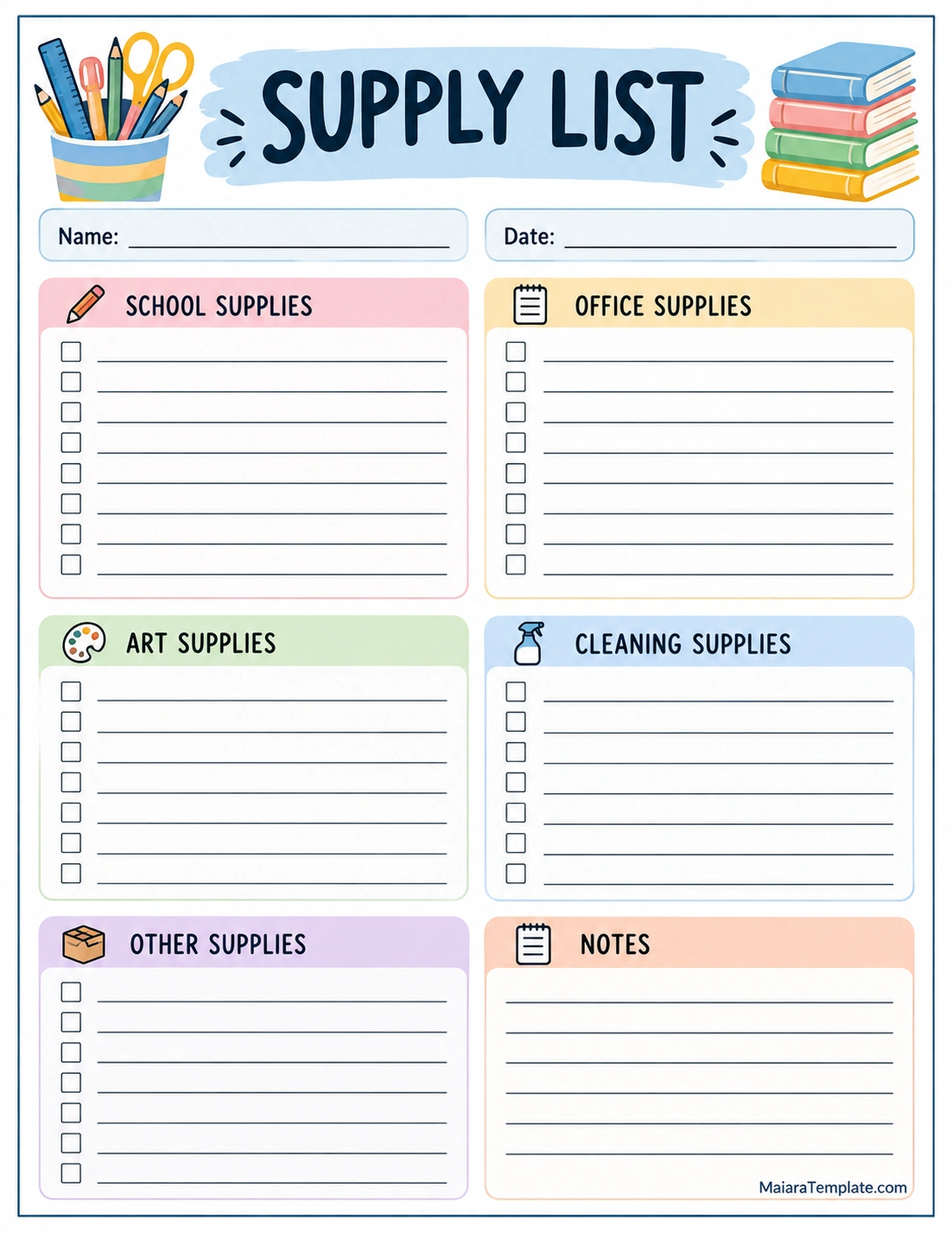
A supply list is a simple organizational tool used to identify the items needed for a specific activity, project, event, classroom, workplace, or period of time. By listing necessary supplies in advance, individuals and organizations can prepare more efficiently, avoid missing essential items, and control unnecessary spending.
A well-organized supply list can do more than record what needs to be purchased. It can help you track quantities, compare available items with needed items, estimate costs, assign responsibilities, and determine what should be purchased or restocked. This makes it useful for everyday planning as well as larger projects.
Whether you are preparing school supplies, office materials, craft products, event equipment, cleaning products, or household essentials, a printable supply list provides a practical way to keep everything organized.
What Is a Supply List?
A supply list is a written checklist of materials, products, tools, equipment, or other items needed for a particular purpose. It can be as simple as a short shopping checklist or as detailed as a multi-column inventory planning document.
The information included depends on the situation. A student may need a list of school supplies, while an event organizer may need decorations, equipment, stationery, and refreshments. A business may use a supply list to plan office purchases or maintain essential materials.
The main purpose is to make sure the right supplies are identified before they are needed. This can improve preparation, reduce last-minute purchases, and make spending easier to manage.
Why Is a Supply List Important?
Preparing supplies without a written plan can lead to forgotten items, duplicate purchases, unnecessary expenses, and wasted time. A structured list provides a simple reference that can be reviewed before, during, and after preparation.
A supply list can help you:
- Stay organized: Keep required items together in one easy-to-review document.
- Save time: Know what needs to be purchased or gathered before starting an activity.
- Control costs: Estimate quantities and prices before making purchases.
- Avoid missing items: Identify essential supplies in advance.
- Prevent duplicate purchases: Check what you already have before buying more.
- Track inventory: Record available quantities and items that need replenishment.
- Improve efficiency: Give individuals or teams a clear preparation checklist.
What Should a Supply List Include?
A useful supply list should contain enough information to make preparation straightforward. The exact format can be adjusted according to the activity or organization using it.
Item Name
Start by identifying each required item. Use clear names so that everyone understands what needs to be purchased or collected.
Quantity
Record how many units are needed. Including quantities helps prevent both shortages and unnecessary purchases.
Category
For larger lists, group items into categories such as stationery, cleaning supplies, food, equipment, decorations, classroom materials, or office supplies.
Priority
A priority column can distinguish essential items from optional supplies. This is particularly helpful when working with a limited budget.
Estimated Cost
Adding an estimated price allows you to calculate an approximate budget before purchasing. It also makes it easier to identify expensive items that may require additional planning.
Source or Store
For purchasing lists, you may include the preferred store, supplier, website, or location where each item can be obtained.
Status
A status field can indicate whether an item is needed, ordered, purchased, received, available, or complete. This is especially useful for larger projects.
Notes
A notes section can be used for product specifications, size requirements, color preferences, substitutes, storage instructions, or other useful details.
Common Types of Supply Lists
Supply lists can be adapted for almost any situation where multiple items need to be prepared, purchased, or tracked.
School Supply List
A school supply list helps students and families prepare materials before the school year or semester begins. Common items may include notebooks, folders, pencils, pens, paper, binders, art materials, calculators, and other classroom supplies.
Classroom Supply List
Teachers can use a classroom supply checklist to organize materials needed for lessons and daily activities. It may include writing materials, teaching aids, craft supplies, storage products, cleaning items, and student materials.
Office Supply List
Businesses can use an office supply list to track items such as printer paper, pens, folders, labels, envelopes, notebooks, toner, and other workplace materials.
Event Supply List
An event supply checklist can help organizers prepare decorations, tables, chairs, signage, name tags, serving items, equipment, stationery, and other event materials.
Craft Supply List
Craft projects often require several materials that are easy to overlook. A project-specific list can identify everything needed before work begins, including tools, adhesives, fabrics, paper, paint, and decorative materials.
Cleaning Supply List
A cleaning supply checklist can organize products and equipment required for household, office, school, or facility cleaning. It can also be used as a restocking tool.
Camping Supply List
A camping supply list helps campers prepare essential equipment and personal supplies before a trip. Items can be grouped into categories such as shelter, cooking, clothing, food, safety, and personal care.
How to Create a Supply List
Creating a useful supply list does not have to be complicated. Start with the activity or project and work through each stage of preparation.
1. Identify the Purpose
Determine exactly what the supplies are needed for. A specific purpose makes it easier to identify the correct materials and avoid unnecessary items.
2. Brainstorm Required Items
Write down everything you expect to need. At this stage, focus on completeness rather than formatting.
3. Group Similar Items
Organize related items into categories. Grouping supplies makes longer lists easier to scan and helps you shop more efficiently.
4. Determine Quantities
Estimate how many units are required. Consider the number of people, duration of the activity, size of the project, or expected usage.
5. Check Existing Supplies
Before purchasing anything, check what you already have. This simple step can prevent duplicate purchases and reduce costs.
6. Estimate the Budget
For purchasing lists, add estimated prices to identify the expected total. If the budget is limited, prioritize essential items first.
7. Add a Completion Status
Mark items as purchased, collected, ordered, or complete as preparation progresses. This prevents you from repeatedly checking the same items.
Supply List Organization Ideas
The best format depends on how the list will be used. A short personal checklist may only need item names and quantities, while a business purchasing list may require additional tracking fields.
Useful columns can include:
- Item: Name of the required supply.
- Category: Group or type of supply.
- Quantity Needed: Number of units required.
- Quantity Available: Number currently on hand.
- Quantity to Buy: Amount that still needs to be purchased.
- Priority: Essential, important, or optional.
- Estimated Cost: Expected purchase price.
- Status: Needed, ordered, purchased, or complete.
- Notes: Additional information or specifications.
Supply List for Better Cost Control
A supply list can be especially useful for managing spending. Instead of purchasing items as they come to mind, you can plan purchases in advance and compare them against a defined budget.
Start by identifying essential supplies. Then estimate the cost of each item and calculate the expected total. If the total exceeds the available budget, review optional items first and consider whether suitable alternatives are available.
For recurring purchases, keep previous lists as references. Historical information can help you estimate future quantities and identify supplies that are frequently purchased.
Supply List vs. Shopping List
A supply list and a shopping list can look similar, but they often serve different purposes.
A shopping list is generally focused on items that need to be purchased during a particular shopping trip. A supply list can have a broader purpose and may include items that are already available, items that need to be purchased, quantities, inventory levels, priorities, and other planning information.
For example, a classroom supply list might show that 20 notebooks are needed, 12 are already available, and 8 still need to be purchased. A basic shopping list might simply say “8 notebooks.”
This makes a supply list useful for planning as well as purchasing.
Tips for Maintaining an Effective Supply List
A list becomes more useful when it is kept current. If the same document is used repeatedly, update it whenever supplies are purchased, consumed, replaced, or discontinued.
- Review the list regularly: Remove items that are no longer needed.
- Update quantities: Adjust inventory when supplies are used or received.
- Separate essentials from extras: This makes budget decisions easier.
- Use consistent categories: Consistent organization makes recurring lists faster to update.
- Record product specifications: Include size, type, brand, or other requirements when necessary.
- Set reorder points: For frequently used supplies, decide when additional stock should be purchased.
- Review costs: Compare estimated and actual spending to improve future planning.
Common Supply List Mistakes
A supply list should make preparation easier rather than create additional confusion. Avoid these common problems when creating one.
- Listing items without quantities.
- Using vague item descriptions.
- Failing to separate essential and optional supplies.
- Ignoring supplies that are already available.
- Forgetting to update the list after purchases.
- Combining unrelated categories without clear organization.
- Leaving out important product specifications.
- Creating an overly complicated list for a simple activity.
How to Use a Supply List Template
A supply list template provides a ready-made structure for organizing the items required for an activity, project, event, or period. Instead of starting with a blank page, you can enter your supplies into clearly labeled sections.
Begin by adding the purpose of the list and the date if needed. Enter each item, then record the quantity, category, priority, cost, and status according to your needs. Remove columns that are unnecessary and add fields that are important for your particular situation.
A printable template is particularly useful when you prefer to check items manually while shopping, preparing an event, organizing a classroom, or managing physical inventory.
Frequently Asked Questions About Supply Lists
What is a supply list used for?
A supply list is used to identify and organize the items needed for a specific activity, project, event, workplace, classroom, or period. It helps improve preparation, efficiency, organization, and cost control.
What should be included in a supply list?
A basic supply list can include item names and quantities. More detailed lists may also include categories, available quantities, estimated costs, priority levels, purchasing sources, status, and notes.
What is the difference between a supply list and a checklist?
A supply list focuses primarily on materials, products, tools, or equipment that are needed. A checklist can cover a broader range of tasks, actions, or items that need to be completed or verified.
Can a supply list include prices?
Yes. Including estimated prices can help create a basic purchasing budget and identify items that may require additional cost planning.
Can I use a supply list for inventory management?
Yes. A detailed supply list can include quantities available, quantities needed, reorder levels, and status information. This makes it useful for tracking frequently used materials.
What is a school supply list?
A school supply list identifies the materials students need for a class, semester, or school year. It may include notebooks, writing supplies, folders, binders, art materials, and other classroom requirements.
Can I customize a supply list template?
Yes. A supply list template can be customized according to the activity or organization. You can add categories, quantities, costs, priorities, inventory information, or other fields that make the list more useful.
Conclusion
A supply list is a practical tool for preparing the materials needed for almost any activity or project. By identifying items, quantities, priorities, and other useful details in advance, you can reduce forgotten supplies, avoid unnecessary purchases, and improve overall organization.
Whether you are preparing classroom materials, office products, event supplies, craft materials, household essentials, or project equipment, a structured list provides a simple way to keep preparation on track.
For recurring activities, maintaining an updated supply list can also improve cost control and inventory planning. A printable supply list template makes the process even easier by providing a consistent format that can be reused whenever new supplies are needed.
Download: Supply List Template

- Ship Chart Template - October 5, 2026
- Free Printable Table Tent Template - October 5, 2026
- Free Printable Supply List Template - October 5, 2026
