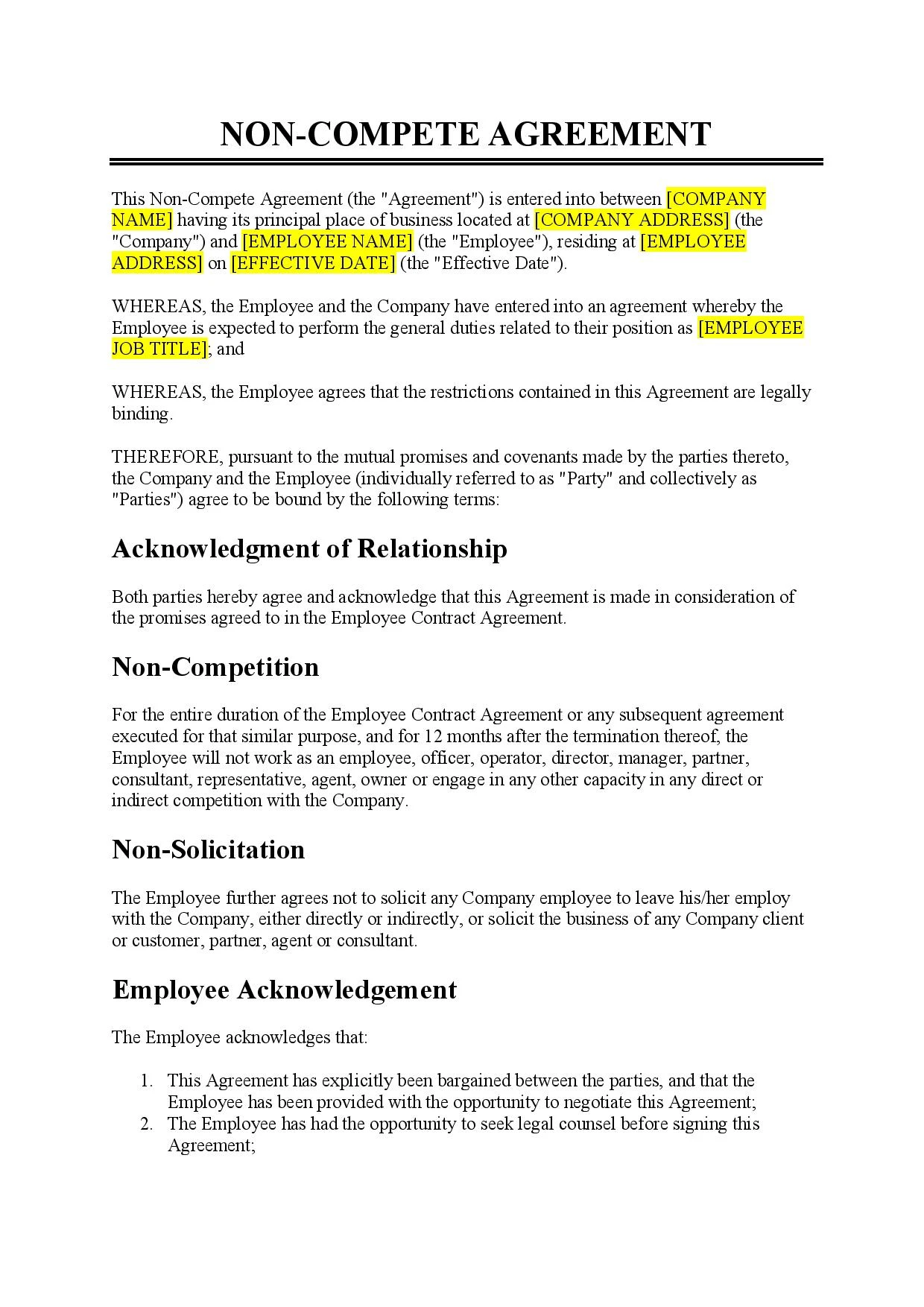
When it comes to the world of business, non-competition agreements are a common topic of discussion. These agreements, also known as non-compete clauses or covenants not to compete, are contracts between employers and employees that restrict the employee from engaging in competitive activities against the employer for a certain period of time after the employment relationship ends.
In this article, we will delve into the details of non-competition agreements, exploring what they are, why they are used, what to include in them, how to navigate them, and providing some tips for both employers and employees.
What is a Non-competition Agreement?
A non-competition agreement is a legal contract between an employer and an employee that restricts the employee from engaging in competitive activities that may harm the employer’s business interests. These agreements typically specify the time period and geographic location in which the employee is prohibited from competing with the employer.
Non-competition agreements are often used in industries where confidential information, trade secrets, or customer relationships are at stake.
Why Use Non-competition Agreements?
Employers use non-competition agreements to protect their business interests and investments. By restricting employees from working for competitors or starting their own competing businesses for a certain period of time after leaving the company, employers can safeguard their proprietary information, trade secrets, and customer relationships.
Non-competition agreements also help maintain a competitive advantage and prevent employees from taking advantage of their insider knowledge.
What to Include in a Non-competition Agreement
When drafting a non-competition agreement, it is important to include specific details to make the contract enforceable. Here are some key elements to consider including in a non-competition agreement:
- Duration: Clearly specify the duration of the non-compete restriction, including the start date and end date.
- Scope: Define the scope of activities that the employee is prohibited from engaging in during the restricted period.
- Geographic Limitations: Specify the geographic locations where the employee is restricted from competing with the employer.
- Consideration: Provide consideration, such as continued employment or monetary compensation, in exchange for the employee’s agreement to the restrictions.
- Confidentiality: Include provisions on maintaining the confidentiality of the employer’s proprietary information and trade secrets.
- Severability: Add a severability clause to ensure that if any part of the agreement is deemed unenforceable, the rest of the agreement remains valid.
How to Navigate Non-competition Agreements
For employees, navigating non-competition agreements can be tricky, especially when considering new job opportunities. Here are some tips to help employees navigate non-competition agreements:
- Read Carefully: Carefully review the terms of the non-competition agreement before signing it to understand the restrictions imposed.
- Seek Legal Advice: Consult with an attorney to review the agreement and provide guidance on its enforceability.
- Negotiate Terms: If possible, negotiate the terms of the non-competition agreement to make them more favorable to you as an employee.
- Understand Consequences: Be aware of the potential consequences of breaching the non-competition agreement, such as legal action or financial penalties.
Tips for Employers
For employers, drafting enforceable non-competition agreements is crucial to protecting their business interests. Here are some tips for employers when creating non-competition agreements:
- Be Specific: Clearly define the restrictions and scope of the non-compete agreement to avoid ambiguity.
- Consider State Laws: Familiarize yourself with the laws governing non-competition agreements in your state to ensure compliance.
- Update Agreements: Regularly review and update non-competition agreements to reflect changes in the business environment or employee roles.
- Provide Training: Educate employees on the importance of protecting confidential information and complying with non-compete agreements.
In Conclusion
Non-competition agreements play a vital role in safeguarding business interests and maintaining a competitive edge in the marketplace. By understanding what these agreements entail, why they are used, what to include in them, how to navigate them, and following some useful tips, both employers and employees can ensure a smooth and compliant transition when it comes to non-competition agreements.
Non-competition Agreement Template – Word

- Non-competition Agreement Template - March 31, 2026
- Non-disclosure Agreement Template for Employees - March 30, 2026
- Free Editable Notarized Letter Template - March 30, 2026
