A vendor agreement is a written contract that defines the terms, responsibilities, and expectations between a buyer and a vendor. It provides a structured framework for a business relationship by explaining what products or services will be provided, how payment will work, when the agreement begins and ends, and what each party is expected to do.
A well-written vendor agreement can help both parties understand their obligations before work begins. It can also reduce misunderstandings, establish accountability, support compliance with applicable requirements, and provide a clear process for handling changes or disputes.
Whether you are hiring a vendor for professional services, purchasing products, outsourcing business activities, or establishing an ongoing supplier relationship, a clear agreement can provide an important foundation for the relationship.
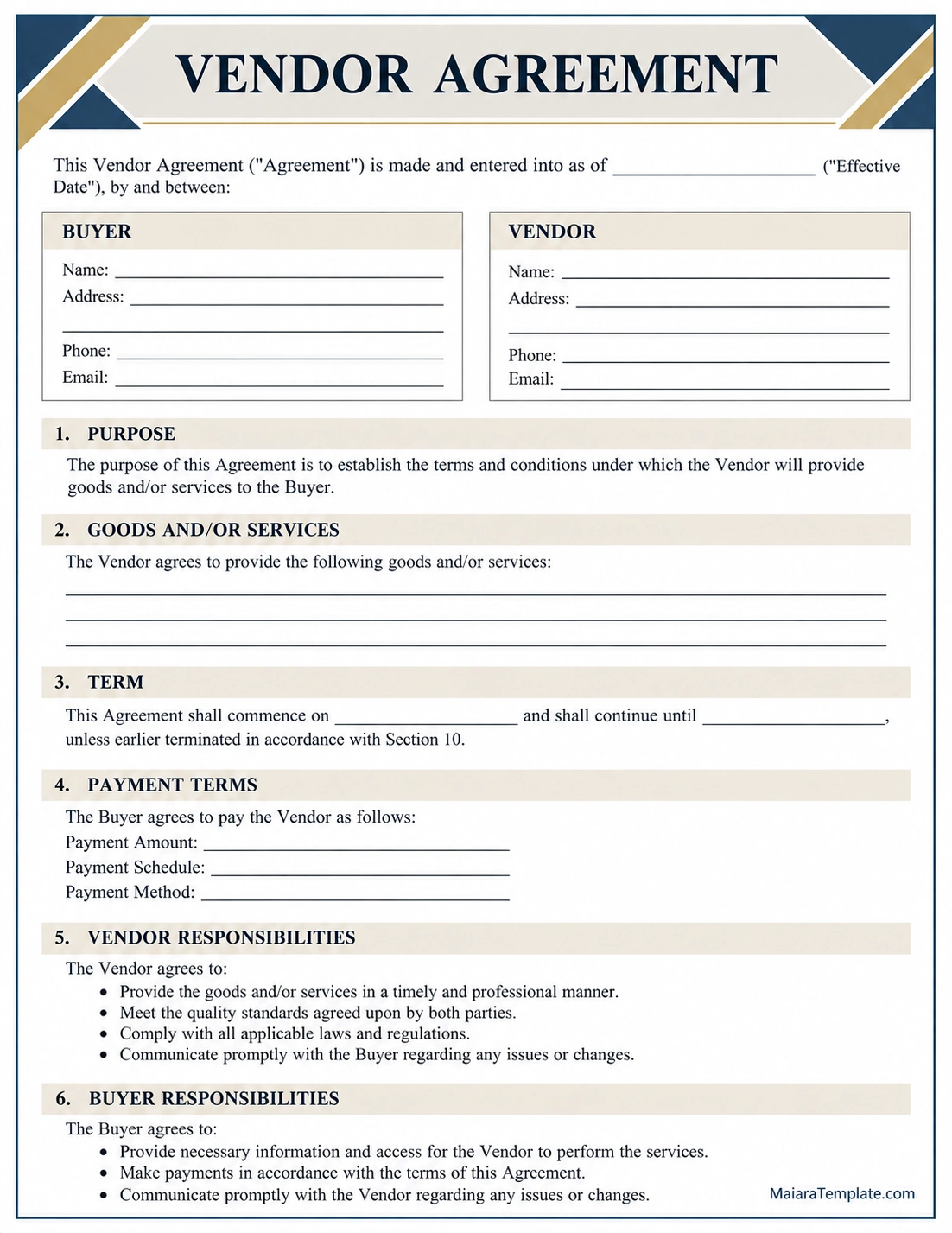
What Is a Vendor Agreement?
A vendor agreement is a formal contract between a business or individual purchasing goods or services and the vendor providing them. The agreement establishes the conditions under which the vendor will perform its obligations.
Depending on the business relationship, a vendor contract may cover the purchase of physical products, professional services, technology solutions, maintenance, consulting, marketing, logistics, catering, manufacturing, or other business activities.
The agreement should clearly describe what both parties have agreed to do. It can also establish procedures for payment, delivery, quality standards, confidentiality, changes, termination, and dispute resolution.
Because contract requirements can vary by jurisdiction and transaction, important or high-value agreements should be reviewed by a qualified legal professional before signing.
Why Is a Vendor Agreement Important?
Business relationships can become complicated when expectations are not documented. A verbal understanding may not provide enough detail when questions arise about payment, deadlines, product quality, or responsibilities.
A written vendor agreement helps establish a shared understanding from the beginning. Common benefits include:
- Clear expectations: Both parties can understand what has been agreed upon.
- Defined responsibilities: The buyer and vendor know their respective obligations.
- Payment clarity: Pricing, invoices, due dates, and payment methods can be documented.
- Risk management: The contract can address potential problems before they occur.
- Accountability: Written obligations make it easier to evaluate whether commitments have been met.
- Operational efficiency: Clear procedures can reduce unnecessary communication and confusion.
- Dispute prevention: Specific terms can reduce disagreements caused by different interpretations.
What Should a Vendor Agreement Include?
The exact terms depend on the transaction and the needs of the parties. However, most vendor agreements benefit from covering several important areas.
1. Buyer and Vendor Information
Identify both parties at the beginning of the agreement. Include the legal name of each party and relevant business information, such as addresses and contact details.
If a company is entering the contract, make sure the agreement identifies the correct legal entity rather than simply using a brand or trade name.
2. Scope of Goods or Services
Clearly explain what the vendor will provide. A detailed description can help prevent disagreements about what is included in the arrangement.
Depending on the relationship, this section may identify products, quantities, specifications, deliverables, service levels, project milestones, or performance requirements.
3. Contract Term
State when the agreement begins and how long it will remain in effect. Some agreements have a specific end date, while others automatically renew unless one party provides notice.
If renewal is possible, explain how renewal works and whether the pricing or terms can change during a renewal period.
4. Payment Terms
Payment provisions should explain how and when the vendor will be paid. Include information such as the agreed price, billing schedule, invoice requirements, payment deadlines, and accepted payment methods.
If late payment fees, deposits, reimbursements, taxes, or other charges apply, address them clearly in the agreement.
5. Vendor Responsibilities
Describe the vendor’s primary obligations. These may include meeting delivery deadlines, maintaining agreed quality standards, providing qualified personnel, protecting confidential information, and complying with applicable laws and regulations.
6. Buyer Responsibilities
The buyer may also have obligations that are necessary for the vendor to perform successfully. These could include providing information, approving deliverables, providing access to facilities or systems, and making payments according to the agreed schedule.
7. Delivery and Performance Standards
For products, explain delivery requirements, shipping responsibilities, inspection procedures, and acceptance standards when relevant. For services, specify performance expectations, deadlines, milestones, or service levels.
8. Confidentiality
If the vendor will have access to sensitive business information, consider including confidentiality requirements. The agreement can identify the types of information that must be protected and explain how that information may be used.
9. Termination
Explain the circumstances under which either party may terminate the agreement. The section may address termination for convenience, material breach, nonpayment, failure to perform, insolvency, or other agreed circumstances.
10. Dispute Resolution
A dispute resolution provision can establish how disagreements should be handled. Depending on the agreement, the parties may specify negotiation, mediation, arbitration, litigation, or another legally appropriate process.
Common Types of Vendor Agreements
Vendor agreements can take different forms depending on the products, services, industry, and duration of the business relationship.
Product Vendor Agreement
This type of contract is commonly used when a vendor supplies physical goods. It may address product specifications, quantities, pricing, delivery schedules, inspections, warranties, and returns.
Service Vendor Agreement
A service agreement defines the professional or operational services that a vendor will provide. It can include project scope, milestones, deadlines, service standards, fees, and deliverables.
Supplier Agreement
A supplier agreement is often used for an ongoing purchasing relationship. It can establish recurring orders, pricing arrangements, delivery requirements, quality standards, and other commercial terms.
Independent Contractor Vendor Agreement
Businesses may use this type of agreement when engaging an independent contractor or outside provider. The contract should clearly define the services and relationship while addressing applicable legal and tax considerations.
Technology Vendor Agreement
Technology contracts may cover software, cloud services, hosting, technical support, data processing, cybersecurity requirements, service levels, and access to business information.
How to Write a Vendor Agreement
Creating a vendor contract is easier when you first identify the practical details of the relationship. The agreement should reflect the actual transaction rather than relying on vague or unnecessary provisions.
Start With the Business Relationship
Identify who is buying and who is providing the goods or services. Confirm the correct legal names and contact information before drafting the agreement.
Define the Scope Clearly
Describe exactly what the vendor is expected to provide. If the scope is complex, consider using a separate statement of work, product specification, service schedule, or other attachment.
Document Financial Terms
Write down the agreed pricing and payment process. Avoid relying on informal conversations or assumptions about when invoices should be submitted or paid.
Establish Deadlines
Include important delivery dates, project milestones, response times, or completion deadlines. Clear timing requirements can make performance easier to measure.
Address Potential Problems
Consider what happens if the vendor misses a deadline, provides defective products, fails to meet service requirements, or needs to change the scope. Addressing foreseeable issues in advance can reduce uncertainty.
Review Before Signing
Both parties should carefully review the agreement before signing. Confirm that names, prices, dates, deliverables, responsibilities, and other important terms are accurate.
Vendor Agreement vs. Purchase Order
A vendor agreement and a purchase order can serve different purposes. A vendor agreement generally establishes the broader terms governing the business relationship, while a purchase order typically identifies a specific order for products or services.
For example, a company may enter into a long-term vendor agreement with a supplier and then issue individual purchase orders for specific quantities of products. The agreement provides the overall framework, while each purchase order can document the details of a particular transaction.
The exact relationship between these documents depends on the contract structure and applicable law. Businesses should make sure that their documents clearly explain which terms control if there is a conflict.
Tips for Creating an Effective Vendor Agreement
A contract does not need to be unnecessarily complicated to be useful. The most effective agreements are generally clear, specific, and appropriate for the relationship.
- Use clear language: Avoid unnecessary jargon and ambiguous wording.
- Define important terms: Explain specialized terms that could have multiple meanings.
- Be specific about deliverables: Describe what the vendor must provide and when.
- Document payment requirements: State prices, billing procedures, and payment deadlines clearly.
- Assign responsibilities: Identify what each party must do to fulfill the agreement.
- Address changes: Explain how modifications to the scope or pricing must be approved.
- Protect confidential information: Include appropriate confidentiality provisions when necessary.
- Keep records: Store the signed agreement and related documents in an organized location.
- Review important contracts: Consider professional legal review for complex, high-value, or high-risk arrangements.
Common Vendor Agreement Mistakes
Even a basic contract can become difficult to enforce or administer when important details are missing or unclear. Reviewing common mistakes can help you create a more useful agreement.
- Using incorrect legal names for the parties.
- Leaving the scope of work too vague.
- Failing to specify payment deadlines.
- Omitting delivery or performance standards.
- Not explaining how contract changes will be approved.
- Ignoring confidentiality or data protection concerns when they are relevant.
- Failing to explain termination procedures.
- Using conflicting terms in different sections of the contract.
- Signing the agreement before all important commercial terms are finalized.
How to Use a Vendor Agreement Template
A vendor agreement template can provide a useful starting structure for documenting a buyer-vendor relationship. Instead of creating the entire document from a blank page, you can begin with standard sections and customize them for the specific transaction.
Start by entering the legal names and contact information of both parties. Then describe the goods or services, contract term, pricing, payment schedule, responsibilities, delivery requirements, and other applicable conditions.
Review every section carefully before signing. A template should not be treated as a substitute for legal advice, particularly when the agreement involves substantial financial commitments, intellectual property, confidential information, regulated activities, international transactions, or significant liability.
Frequently Asked Questions About Vendor Agreements
What is the purpose of a vendor agreement?
The purpose of a vendor agreement is to establish clear terms for a business relationship between a buyer and a vendor. It defines responsibilities, payment terms, deliverables, performance expectations, and other conditions that help both parties understand their obligations.
What should a vendor agreement include?
A vendor agreement commonly includes information about the parties, scope of goods or services, contract term, pricing, payment terms, responsibilities, delivery requirements, confidentiality, termination, dispute resolution, and applicable legal provisions.
Is a vendor agreement legally binding?
A properly formed contract can be legally binding, but enforceability depends on factors such as applicable law, contract formation, the terms of the agreement, and the circumstances surrounding the transaction. For important contracts, professional legal advice is recommended.
What is the difference between a vendor agreement and a supplier agreement?
The terms are sometimes used interchangeably, but a supplier agreement often refers specifically to an ongoing arrangement for supplying products or materials. A vendor agreement can be broader and may cover either goods or services.
Can a vendor agreement be used for services?
Yes. A vendor agreement can be used to establish the terms for professional, technical, maintenance, consulting, marketing, administrative, or other services, provided the contract accurately describes the services and applicable requirements.
Can I use a vendor agreement template?
Yes. A template can provide a useful starting point for organizing the contract. However, it should be customized to reflect the actual transaction and reviewed carefully before signing. A template does not automatically make an agreement appropriate or legally sufficient for every situation.
Should both parties sign a vendor agreement?
Generally, both parties should sign the agreement to demonstrate their acceptance of the contractual terms. The appropriate signing requirements can vary depending on the parties, transaction, and applicable law.
When should a vendor agreement be signed?
Ideally, the agreement should be finalized and signed before the vendor begins performing significant work or supplying goods. This gives both parties a clear understanding of their obligations before the business relationship begins.
Conclusion
A vendor agreement provides a structured foundation for a business relationship by defining what the vendor will provide, what the buyer must do, how payment will work, and how important issues will be handled.
A clear agreement can improve accountability, reduce misunderstandings, support operational efficiency, and help both parties manage potential risks. The most useful contract is one that accurately reflects the actual relationship and addresses the issues that matter to the transaction.
Whether you are creating a vendor contract for products, professional services, technology, or an ongoing supplier relationship, a well-organized template can make the drafting process easier. For complex or high-risk agreements, have the final document reviewed by a qualified attorney to ensure it meets the applicable legal requirements.
Download: Vendor Agreement Template

- Ship Chart Template - October 5, 2026
- Free Printable Table Tent Template - October 5, 2026
- Free Printable Supply List Template - October 5, 2026
