A Weekly Cleaning Chart is a simple tool for organizing household chores throughout the week. Instead of trying to clean the entire home at once, you can divide cleaning tasks into smaller, manageable activities and assign them to specific days. This creates a clear routine and makes it easier to keep your home consistently clean.
A weekly cleaning schedule can also reduce the mental effort of deciding what needs to be cleaned every day. With a written plan, you can quickly see which tasks are finished, which ones still need attention, and what should be done next.
Whether you live alone, share a home with a partner, or manage a busy family household, a printable cleaning chart can help create a more organized routine. It can also make it easier for household members to share responsibilities instead of leaving all the chores to one person.
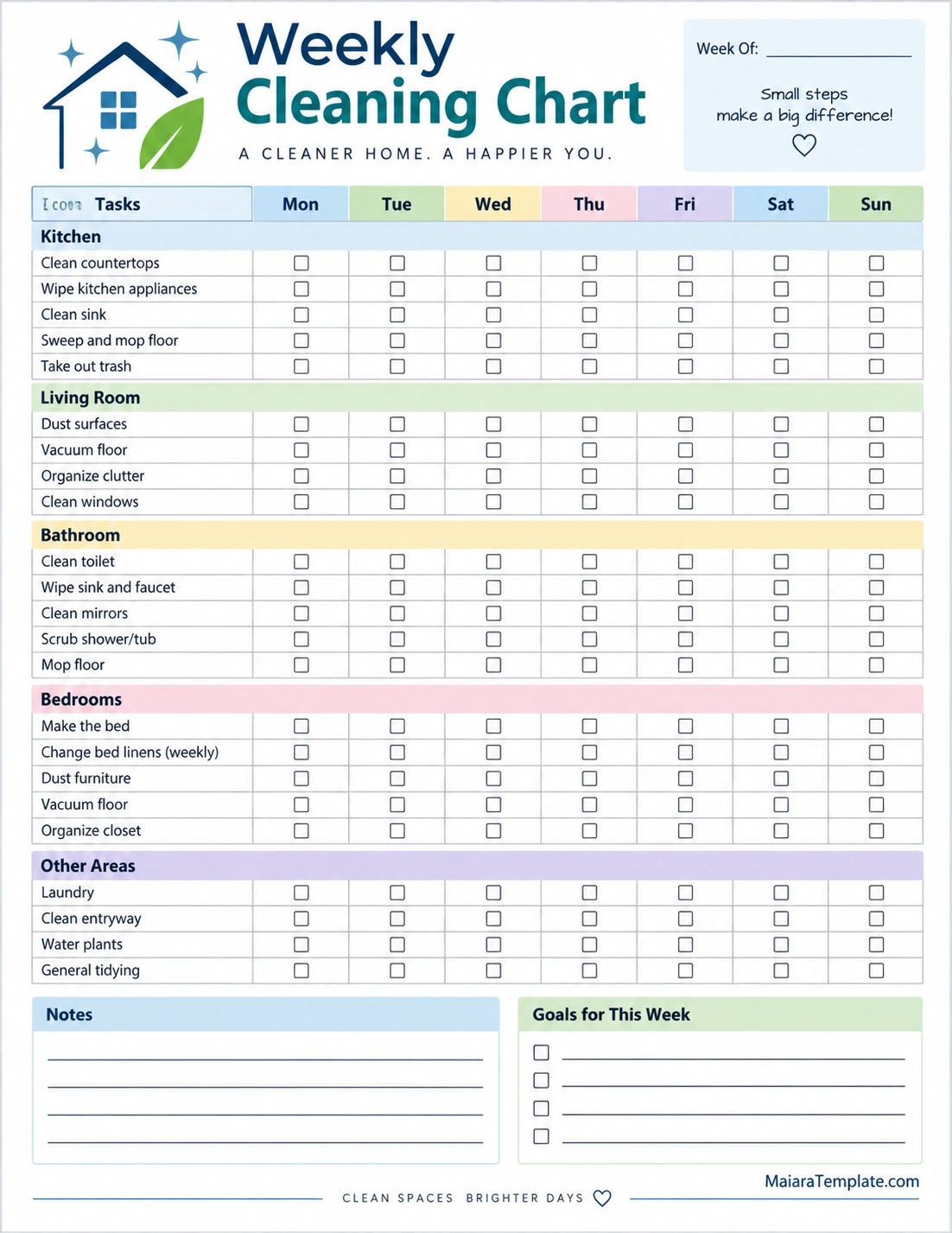
What Is a Weekly Cleaning Chart?
A weekly cleaning chart is a schedule that organizes cleaning and household maintenance tasks across seven days. It can include everyday chores as well as tasks that only need to be completed once or twice during the week.
Instead of having a long and overwhelming list of chores, the chart breaks the workload into smaller sections. Each task can be checked off after completion, providing a simple visual record of progress.
A typical chart may organize tasks by rooms or categories such as:
- Kitchen
- Living room
- Bathroom
- Bedrooms
- Laundry
- Entryway and other areas
- General household tasks
The exact structure can be customized according to the size of your home, your schedule, and the amount of cleaning required.
Why Use a Weekly Cleaning Chart?
Cleaning becomes easier to manage when you know what needs to be done and when you plan to do it. A weekly cleaning chart provides structure without requiring an overly complicated routine.
Prevents Cleaning Tasks From Piling Up
When chores are postponed repeatedly, dust, clutter, laundry, dishes, and other household tasks can accumulate. Spreading chores throughout the week helps prevent a small amount of cleaning from becoming a large weekend project.
Reduces Daily Decision-Making
One of the benefits of a cleaning schedule is that you do not have to decide what to clean every time you have a few minutes available. The chart provides a simple plan that you can follow.
Makes Cleaning More Manageable
A long household cleaning list can feel overwhelming. Breaking it into smaller daily tasks makes the workload easier to approach and can make it more realistic for busy households.
Creates a Consistent Routine
Consistency is often more useful than trying to achieve a perfect deep clean every day. A weekly routine encourages regular maintenance so that dirt and clutter are addressed before they become more difficult to manage.
Encourages Shared Responsibility
A visible cleaning chart can help household members understand which chores need to be completed. Families or roommates can assign different tasks to different people and use the chart to track progress.
What Should Be Included in a Weekly Cleaning Chart?
A useful weekly cleaning chart should be detailed enough to provide direction but simple enough to use regularly. You do not need to list every possible household chore.
Daily Cleaning Tasks
Some chores may need attention every day, depending on your household. Examples include washing dishes, wiping frequently used surfaces, putting items away, and handling household clutter.
These tasks can be included as recurring items or handled separately from the main weekly chart.
Weekly Cleaning Tasks
Weekly chores can include activities that do not necessarily need to be completed every day. Common examples include vacuuming floors, cleaning bathrooms, changing bed linens, dusting furniture, and cleaning kitchen surfaces.
Room or Area Categories
Organizing tasks by room makes the chart easier to scan. For example, you might have separate sections for the kitchen, living room, bathroom, bedrooms, and other areas.
Checkboxes
Checkboxes provide a simple way to mark completed tasks. They also create a visual sense of progress, which can make a routine feel more manageable.
Notes and Weekly Goals
A notes section can be useful for recording special tasks, reminders, or areas that need additional attention. A weekly goals section can also help you identify a few priorities without adding unnecessary chores to the schedule.
How to Create a Weekly Cleaning Schedule
Creating a weekly cleaning routine does not require assigning dozens of chores to every day. Start with the tasks that matter most and build a schedule that fits your available time.
Make a List of Regular Chores
Begin by writing down the cleaning tasks that your household normally needs. Consider both routine maintenance and tasks that are occasionally forgotten.
For example, your list might include:
- Cleaning kitchen countertops
- Wiping appliances
- Cleaning the sink
- Dusting surfaces
- Vacuuming floors
- Cleaning toilets and sinks
- Scrubbing showers or tubs
- Changing bed linens
- Doing laundry
- Cleaning the entryway
Estimate How Often Each Task Is Needed
Not every task needs to appear every day. Determine whether each chore is best handled daily, several times a week, weekly, or less frequently.
This prevents your cleaning chart from becoming unnecessarily crowded.
Divide Tasks Across the Week
Spread the chores across Monday through Sunday according to your schedule. Try to avoid assigning too many demanding tasks to one day.
For example, kitchen maintenance can be scheduled earlier in the week, bedrooms can receive attention on another day, and larger tasks can be distributed rather than concentrated on the weekend.
Leave Room for Flexibility
A cleaning schedule should help your household rather than become another source of pressure. If an unexpected event prevents you from completing a task, move it to another day instead of abandoning the entire routine.
Example of a Weekly Cleaning Routine
There is no single schedule that works for every home. However, a simple routine can distribute common tasks throughout the week.
Monday
Start the week with kitchen maintenance and general tidying. Wipe countertops, clean the sink, organize surfaces, and take out accumulated trash.
Tuesday
Focus on the living room and shared spaces. Dust furniture, vacuum the floor, organize clutter, and clean frequently used surfaces.
Wednesday
Use the middle of the week for bathroom cleaning. Clean the toilet, sink, mirror, shower or tub, and floor.
Thursday
Focus on bedrooms. Make the beds, dust furniture, vacuum floors, and change bed linens when needed.
Friday
Handle laundry and smaller household tasks. This can also be a good time to tidy areas that were missed earlier in the week.
Saturday
Use Saturday for tasks that require a little more time, such as deeper cleaning, organizing storage areas, or cleaning windows when necessary.
Sunday
Keep Sunday flexible. You can use it for light tidying, catching up on unfinished tasks, or preparing the cleaning chart for the next week.
How to Avoid Feeling Overwhelmed by Cleaning
The purpose of a cleaning chart is to simplify household maintenance, not to create an unrealistic list of responsibilities. A few practical adjustments can make the routine easier to maintain.
Break Large Tasks Into Smaller Steps
Instead of writing “clean the kitchen,” divide the task into manageable actions such as wiping countertops, cleaning the sink, wiping appliances, and sweeping the floor.
Smaller tasks are easier to start and easier to track.
Prioritize High-Use Areas
Focus your regular cleaning efforts on areas that receive the most daily use. Kitchens, bathrooms, living areas, and entryways may need more frequent attention than rooms that are rarely used.
Use Short Cleaning Sessions
You do not always need a long cleaning session. A short period of focused work can be enough to complete one or two tasks on your chart.
Do Not Aim for Perfection
A practical cleaning routine should be sustainable. If your schedule is too demanding, simplify it. Completing a smaller number of important tasks consistently is often more manageable than creating an ambitious schedule that is difficult to follow.
Using a Printable Weekly Cleaning Chart
A printable weekly cleaning chart can be placed somewhere visible, such as on a refrigerator, home office board, cleaning cabinet, or household command center.
Having a physical chart makes the routine easy to reference throughout the week. You can mark completed tasks with a pen or pencil and reset the chart at the beginning of the next week.
A printable format is also useful for households that prefer a simple paper-based system rather than managing household chores through a phone or computer.
How Families Can Share Cleaning Responsibilities
A weekly chore chart can make household responsibilities more visible. Instead of assuming that one person will notice and complete every task, responsibilities can be divided among household members.
When assigning chores, consider each person’s available time, age, abilities, and other responsibilities. Tasks can be rotated from week to week so that one person is not always responsible for the same chores.
- Assign specific tasks rather than general responsibilities.
- Use checkboxes to show completed chores.
- Rotate less desirable tasks when appropriate.
- Keep the number of assigned chores realistic.
- Review the routine and make adjustments when household needs change.
Weekly Cleaning Chart vs. Daily Cleaning Checklist
A weekly cleaning chart and a daily cleaning checklist can serve different purposes. A daily checklist is usually focused on tasks that need to be completed during one particular day.
A weekly cleaning chart provides a broader view of the entire week. It allows you to distribute chores across several days and see how the overall cleaning routine fits together.
Some households may benefit from using both. A weekly chart can provide the overall plan, while a smaller daily checklist can provide more detailed instructions for the current day.
Tips for Maintaining Your Cleaning Routine
Once you have created a cleaning schedule, the key is to make it practical enough to continue using. Consider these simple strategies:
- Keep your cleaning chart somewhere visible.
- Start with essential chores instead of trying to include everything.
- Group similar tasks together when convenient.
- Set realistic expectations for busy days.
- Use checkboxes to track completed tasks.
- Review the chart at the end of each week.
- Adjust tasks when your household schedule changes.
- Add occasional deep-cleaning tasks separately from routine chores.
Final Thoughts on Weekly Cleaning Charts
A Weekly Cleaning Chart can turn an overwhelming list of household chores into a simple, organized routine. By dividing cleaning tasks across the week, you can reduce clutter, prevent chores from accumulating, and create a more predictable approach to maintaining your home.
The most effective schedule is not necessarily the most detailed one. It is the schedule that fits your household and is realistic enough to follow consistently. Start with essential tasks, distribute them across the week, and adjust the routine as your needs change.
Whether you use a handwritten chart, a digital schedule, or a printable weekly cleaning chart, having a clear plan can make household cleaning easier to manage and can leave more time for the activities that matter to you.
Download: Weekly Cleaning Chart Template

- Printable Weekly Cleaning Schedule Template - September 17, 2026
- Free Printable Travel Budget Template - September 17, 2026
- Printable Weekly Lesson Planner Template - September 17, 2026
