Postnuptial agreements have become increasingly popular in recent years as couples seek to protect their assets and clarify financial responsibilities in the event of a divorce. A postnuptial agreement is a legal document that outlines how assets, debts, and other financial matters will be divided in the event of a divorce or separation. While prenuptial agreements are signed before marriage, postnuptial agreements are signed after the wedding has taken place.
In this comprehensive guide, we will explore the what, why, and how of postnuptial agreements, as well as provide tips for successful negotiation and drafting.
What is a Postnuptial Agreement?
A postnuptial agreement is a legally binding document that outlines how assets, debts, and other financial matters will be divided in the event of a divorce or separation. This agreement is signed after the marriage has taken place, unlike a prenuptial agreement, which is signed before the wedding.
Postnuptial agreements can cover a wide range of financial issues, including property division, spousal support, and inheritance rights. These agreements are often used to protect assets that were acquired before or during the marriage, and to clarify financial responsibilities between spouses.
Why Consider a Postnuptial Agreement?
There are many reasons why couples may choose to enter into a postnuptial agreement. Some common reasons include:
- Asset protection: A postnuptial agreement can help protect assets that were acquired before or during the marriage, ensuring that each spouse’s property rights are clearly defined.
- Financial clarity: By outlining how assets, debts, and other financial matters will be divided in the event of a divorce, a postnuptial agreement can provide financial clarity and reduce uncertainty.
- Spousal support: Postnuptial agreements can also address issues related to spousal support, including the amount and duration of support payments in the event of a divorce.
Overall, a postnuptial agreement can provide peace of mind and security for both spouses by clearly outlining financial expectations and responsibilities.
What to Include in a Postnuptial Agreement
When drafting a postnuptial agreement, it is important to include the following key elements:
- Identification of assets: The agreement should clearly identify all assets owned by each spouse, including any property, investments, or businesses.
- Debt allocation: The agreement should outline how any debts or liabilities will be divided between the spouses.
- Property division: The agreement should specify how property will be divided in the event of a divorce, including any real estate, vehicles, or personal belongings.
- Spousal support: The agreement should address the issue of spousal support, including the amount and duration of any support payments.
It is important to work with a qualified attorney when drafting a postnuptial agreement to ensure that all necessary elements are included and that the agreement is legally enforceable.
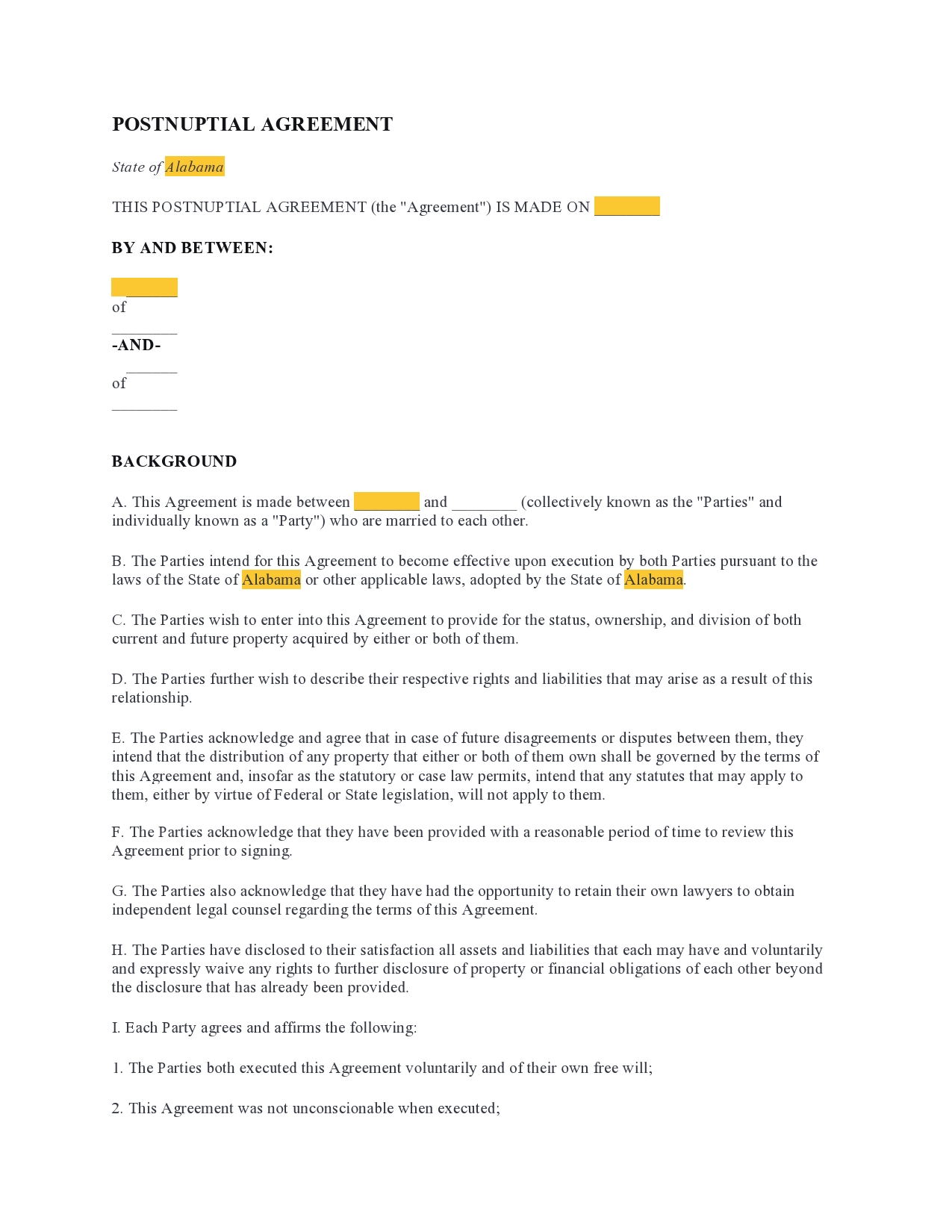
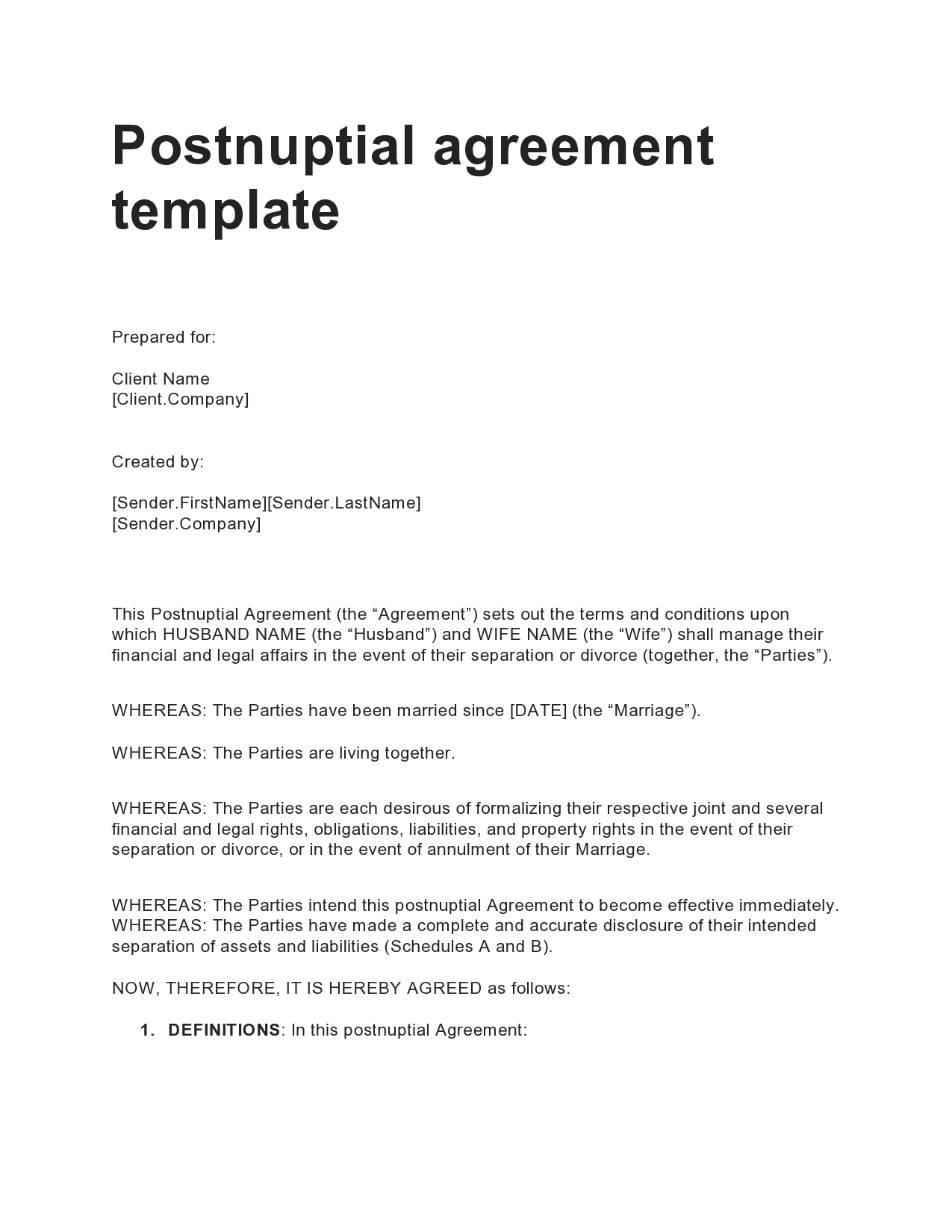
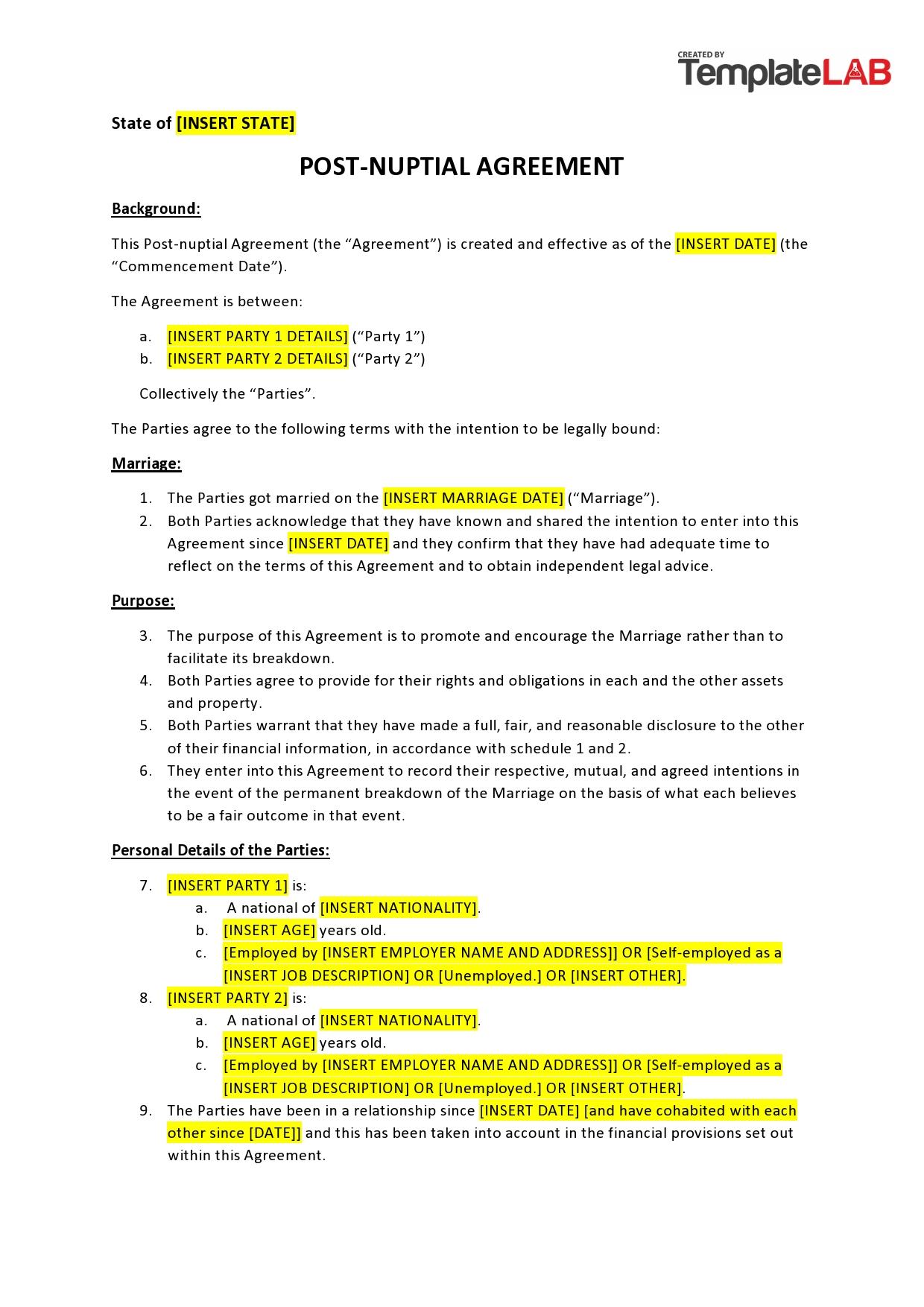
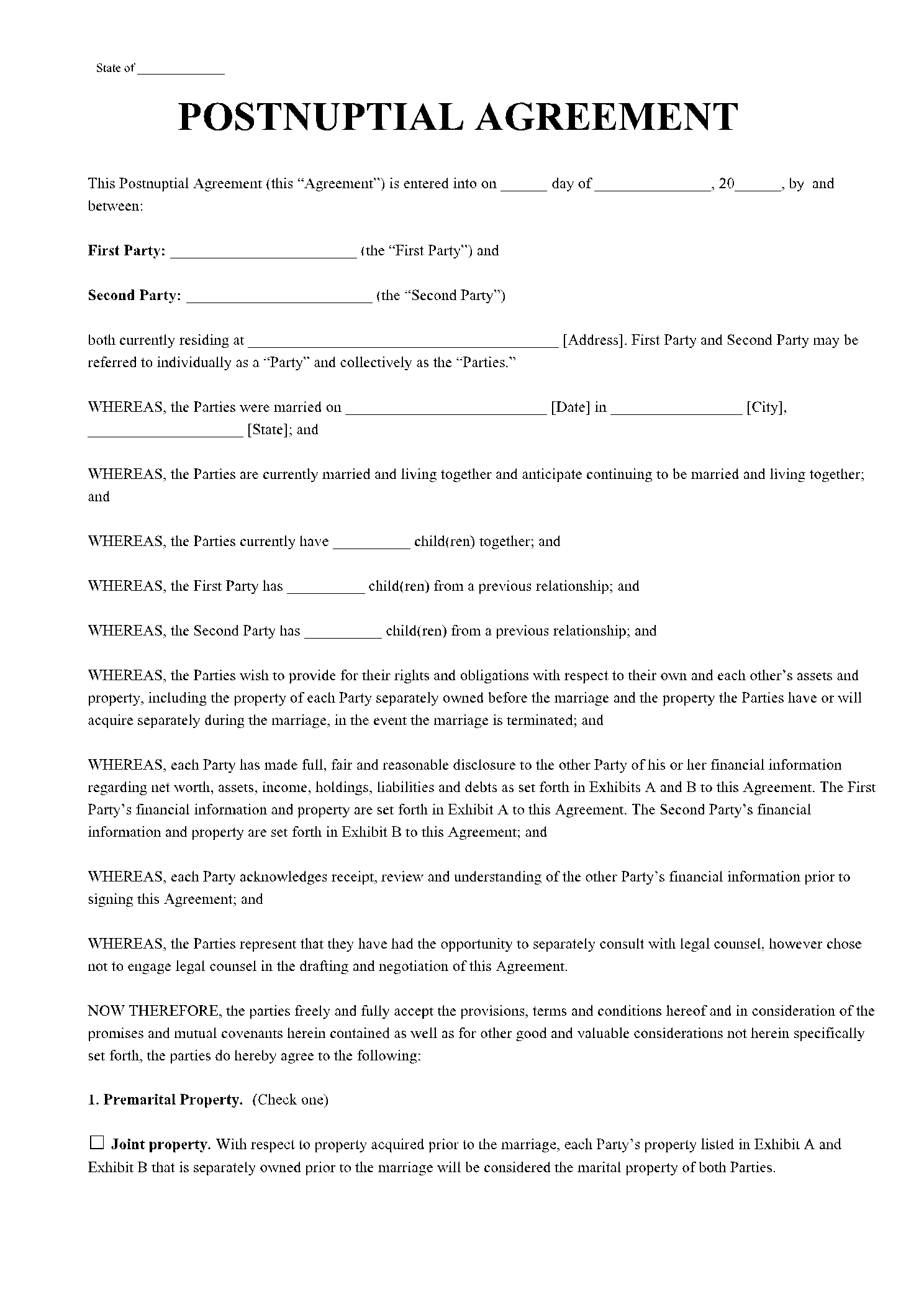
Examples
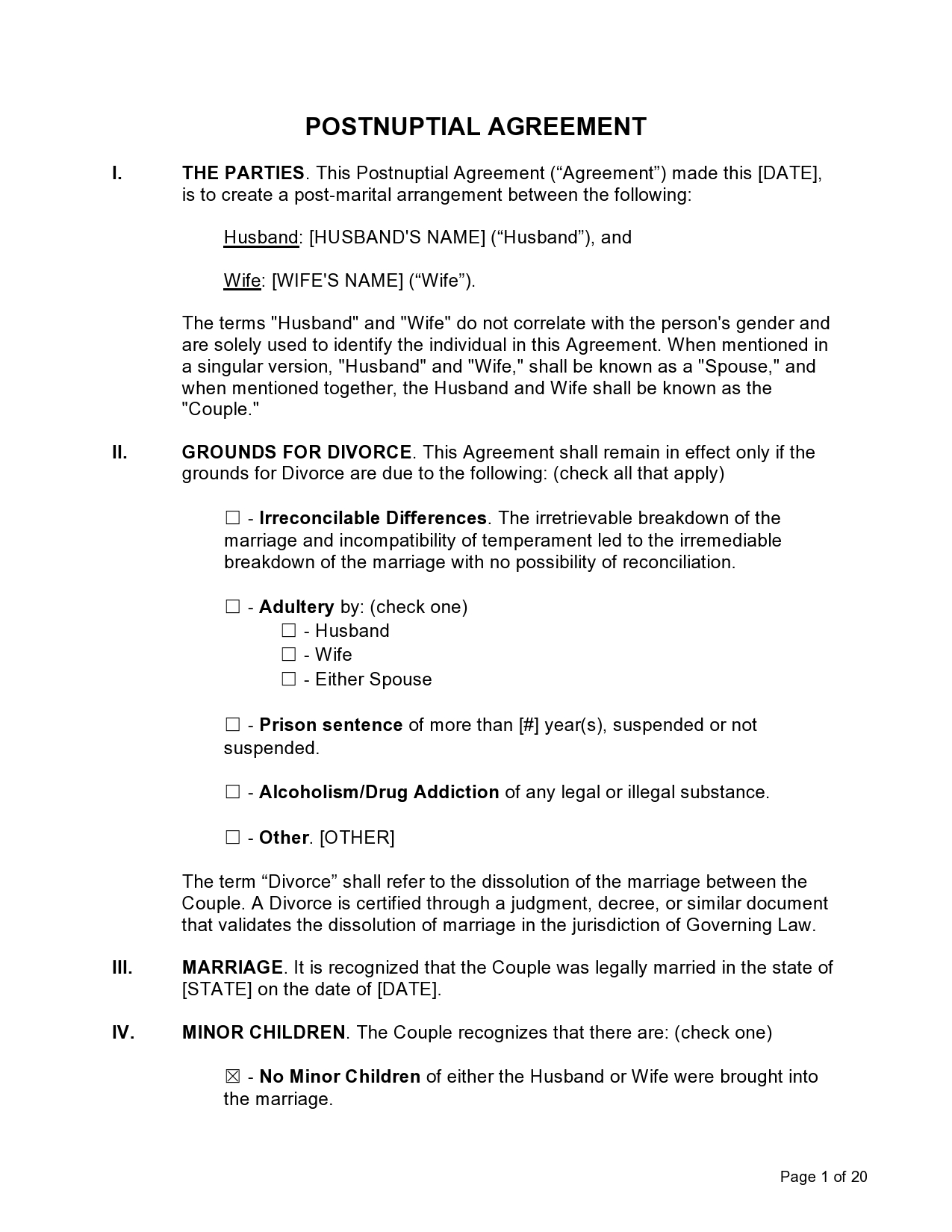
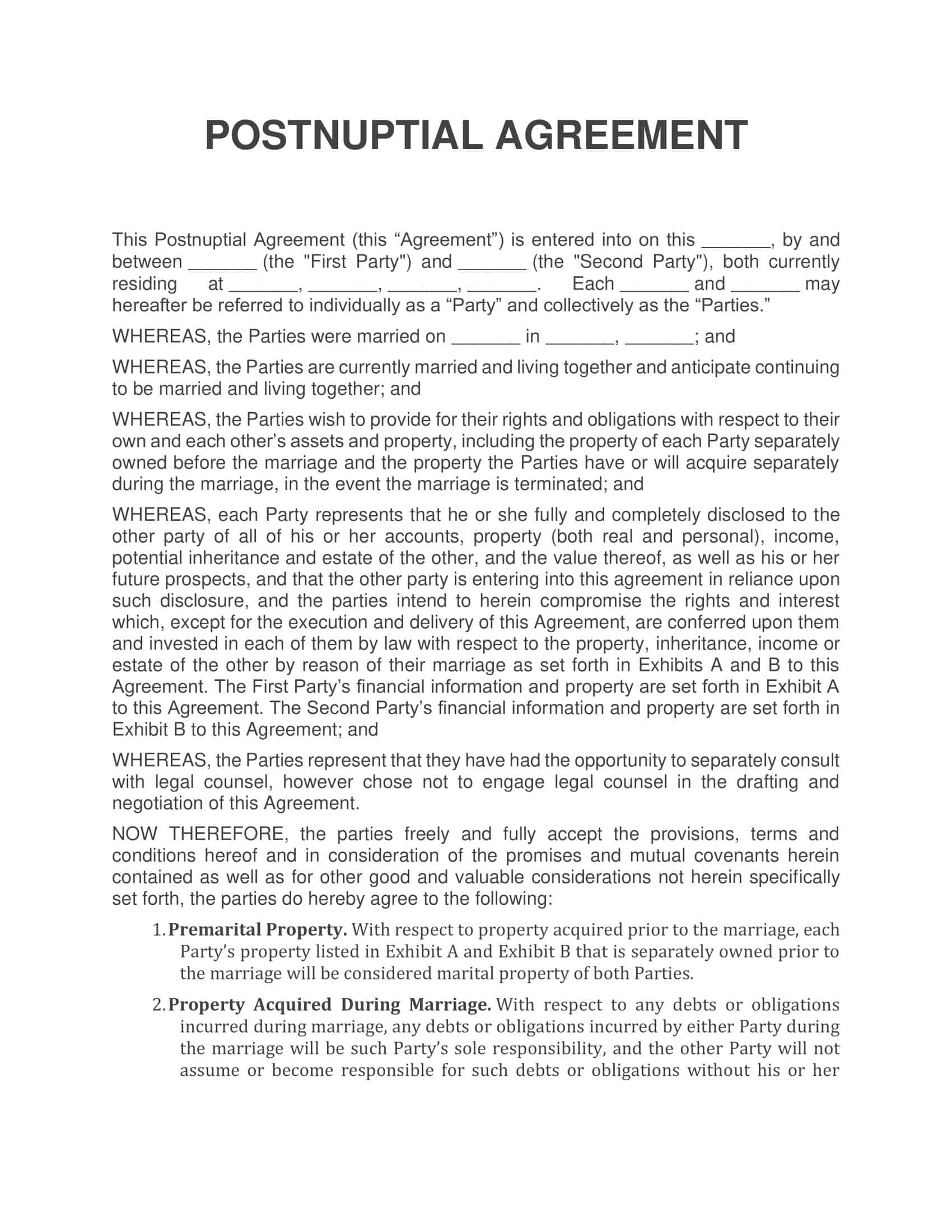
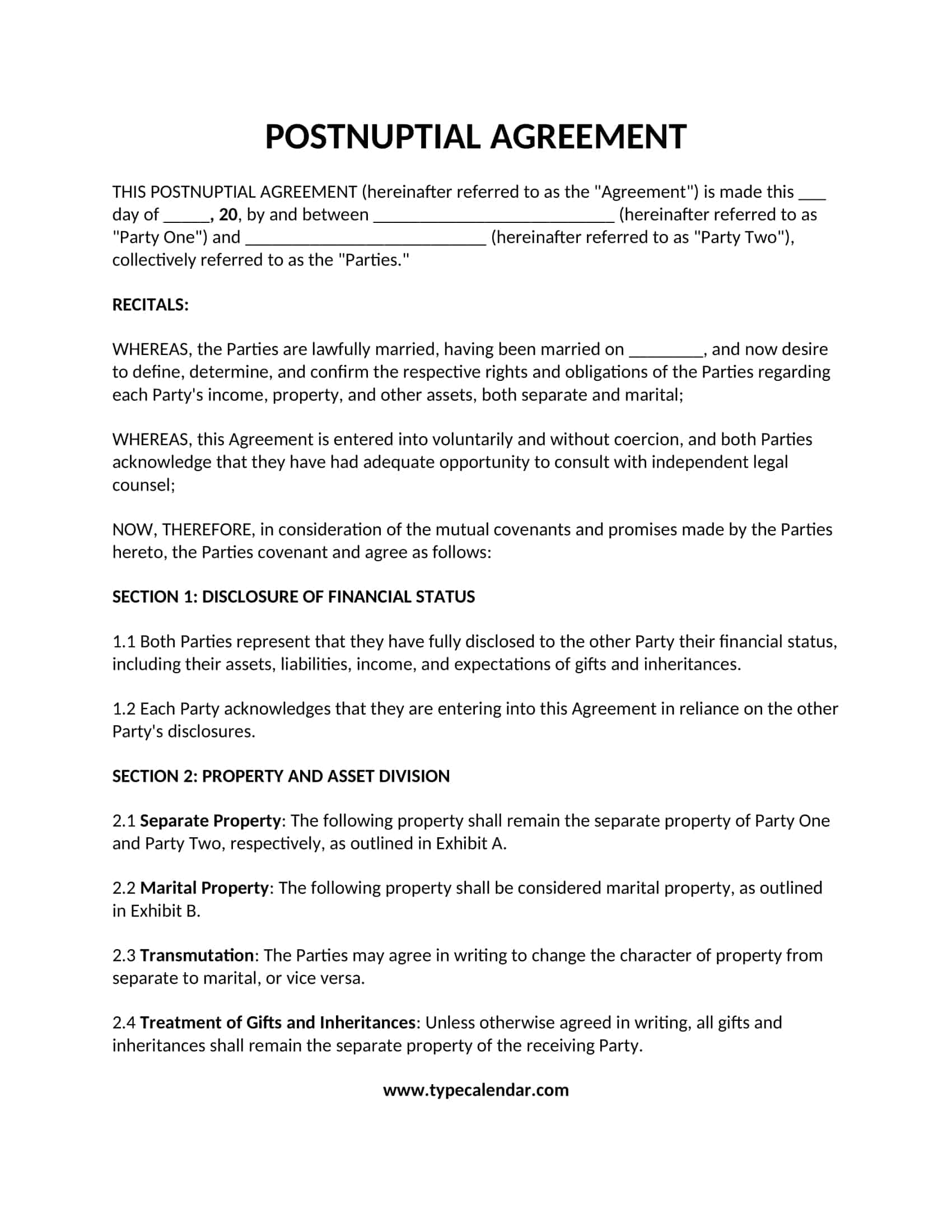
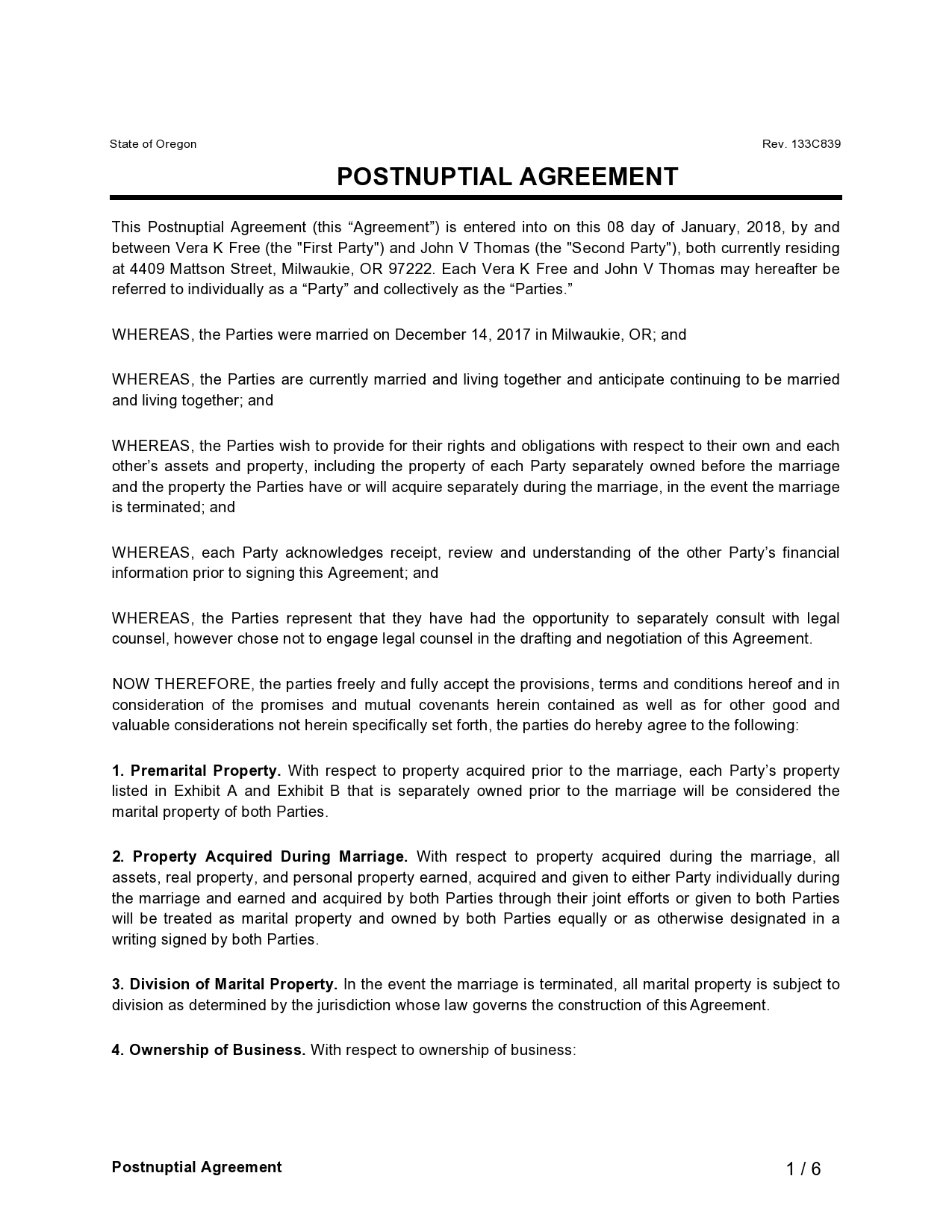
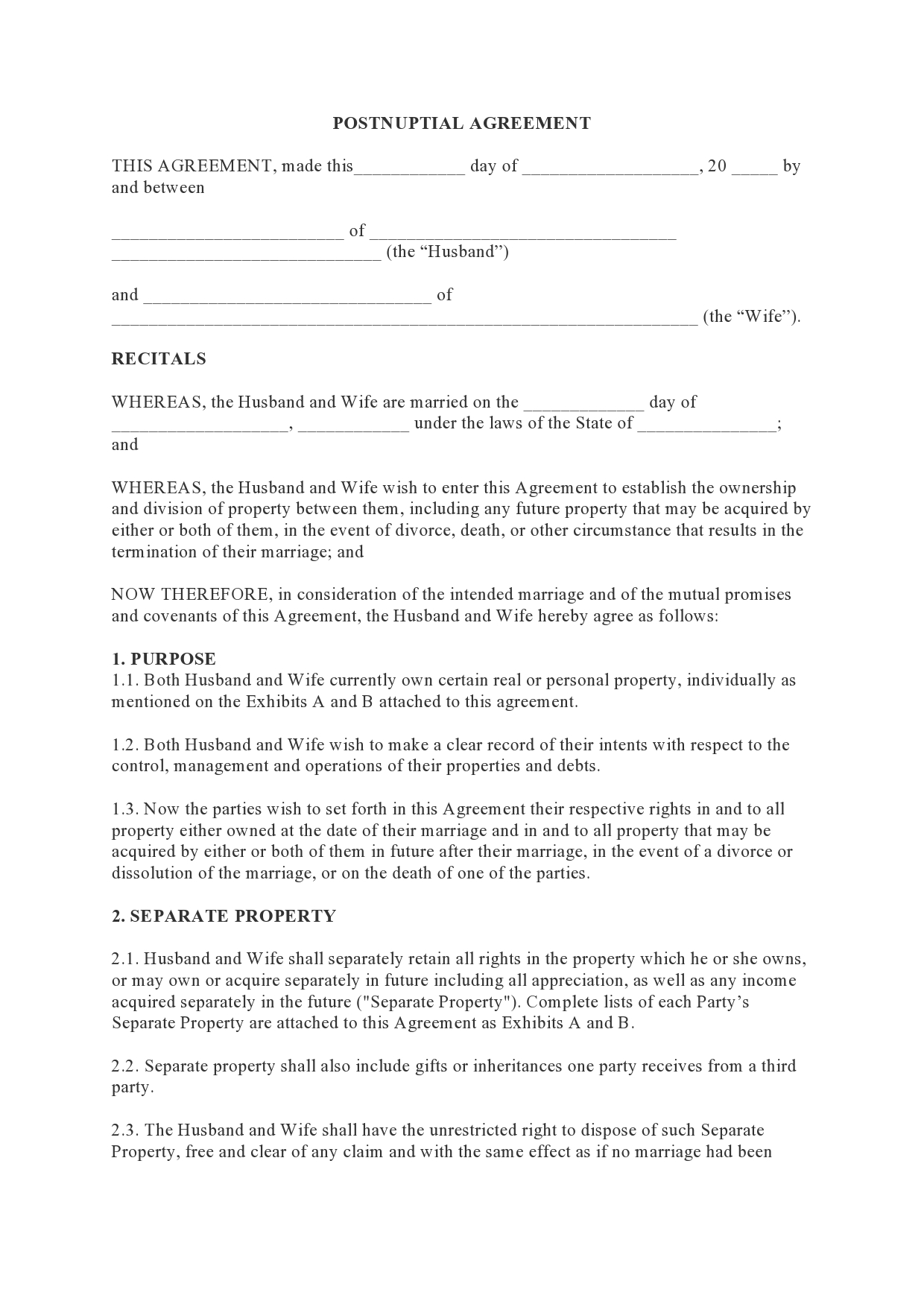
How to Negotiate and Draft a Postnuptial Agreement
When negotiating and drafting a postnuptial agreement, it is important to approach the process with open communication and honesty. Here are some tips for successful negotiation and drafting:
1. Be transparent
Both spouses should be open and honest about their financial situation and goals when negotiating a postnuptial agreement. Transparency is key to reaching a mutually beneficial agreement.
2. Seek legal advice
It is important to consult with a qualified attorney who has experience in drafting postnuptial agreements. An attorney can help ensure that the agreement complies with state laws and is enforceable in court.
3. Consider the long-term implications
When drafting a postnuptial agreement, it is important to consider the long-term implications of the agreement. Think about how your financial situation may change over time and ensure that the agreement is flexible enough to accommodate these changes.
4. Review and revise as needed
Postnuptial agreements can be updated and revised as needed to reflect changes in your financial situation or marital status. It is important to review the agreement periodically and make any necessary revisions.
5. Sign the agreement with care
Once the postnuptial agreement has been negotiated and drafted, both spouses should carefully review the document before signing. It is important to fully understand the terms of the agreement and seek legal advice if needed.
Conclusion
Postnuptial agreements can provide peace of mind and financial security for couples by clarifying how assets, debts, and other financial matters will be divided in the event of a divorce. By following the tips outlined in this guide and working with a qualified attorney, couples can successfully negotiate and draft a postnuptial agreement that meets their needs and protects their interests.
Postnuptial Agreement Template – Download

- Free Printable Bill Receipt Template - October 27, 2026
- Free Printable Bill Organizer Template - October 27, 2026
- Bill of Materials Template - October 27, 2026
