A weekly sales report provides a clear snapshot of sales activity and performance over a seven-day period. By organizing important information such as sales revenue, units sold, customer activity, average order value, and other key metrics, businesses can understand what happened during the week and identify areas that may require attention.
Regular sales reporting can also help teams make better decisions. Instead of relying on assumptions or isolated numbers, managers can review consistent data, compare results with previous periods, recognize patterns, and determine which strategies are producing useful results.
Whether you manage a small business, sales team, retail operation, or service company, a weekly sales report can turn day-to-day sales information into a practical tool for planning and improvement.
What Is a Weekly Sales Report?
A weekly sales report is a business document used to summarize and analyze sales performance during a specific week. It brings important sales information together in a format that is easy to review and compare.
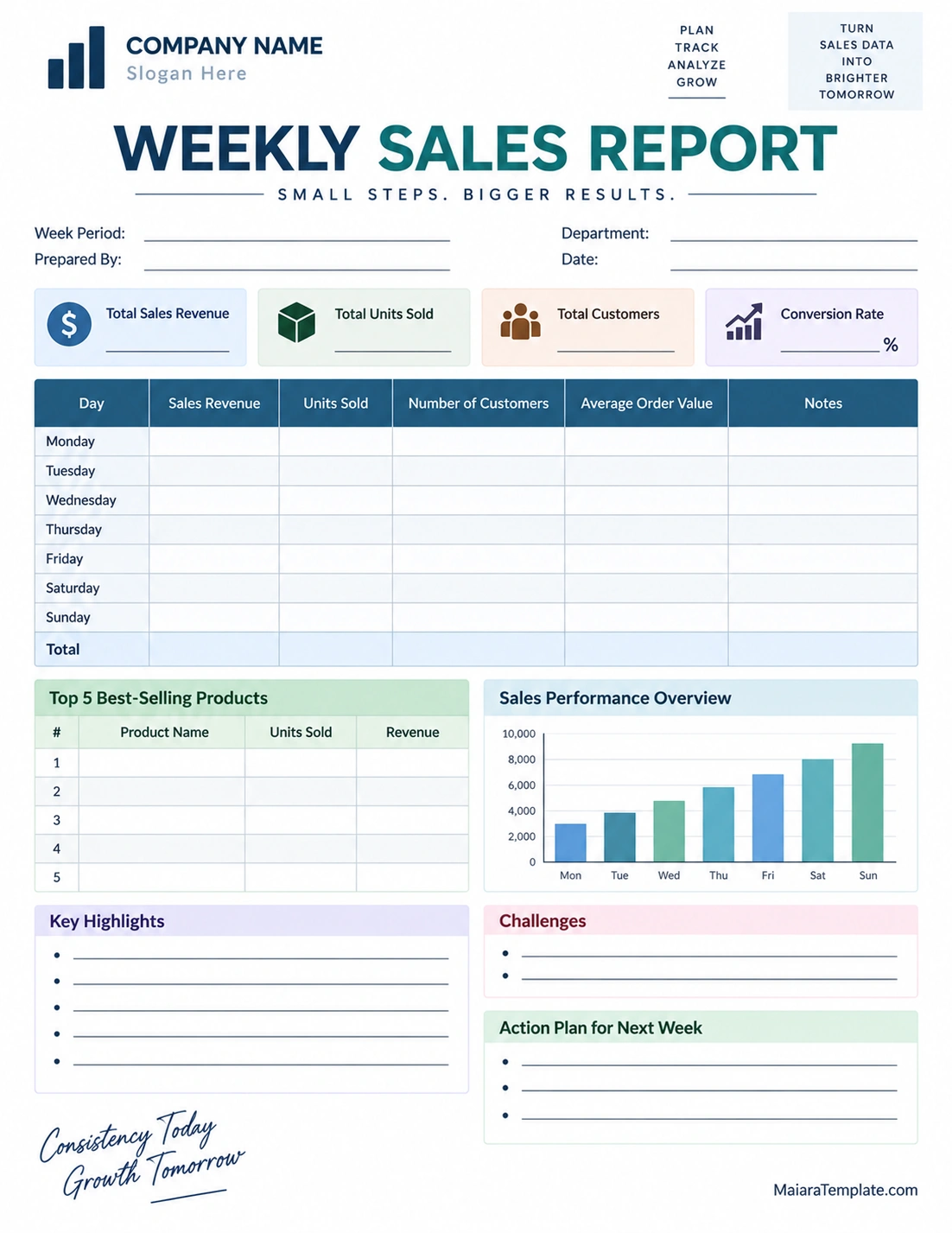
A typical report may include total sales revenue, number of units sold, number of customers, average order value, conversion rate, top-selling products, and notes about significant changes during the week.
The exact information included depends on the type of business and its sales process. A retail company may focus on product sales and customer transactions, while a service business may track completed orders, clients, revenue, and sales opportunities.
Why Use a Weekly Sales Report?
Weekly reporting creates a consistent process for reviewing sales performance. Instead of waiting until the end of a month or quarter, a business can identify important changes while they are still relatively recent.
Measure Sales Performance
A weekly report makes it easier to determine whether sales activity is moving in the desired direction. Comparing weekly revenue, units sold, customers, and other metrics can reveal increases, decreases, or unusual changes.
These measurements provide a factual basis for discussing performance and deciding where additional attention may be needed.
Identify Sales Trends
Sales numbers can change for many reasons. A weekly report helps businesses observe patterns such as stronger sales on particular days, increased demand for certain products, or changes in customer purchasing behavior.
When several weeks of reports are reviewed together, short-term observations can become more useful for identifying recurring patterns.
Improve Sales Strategies
Sales data can show whether a particular promotion, product focus, sales channel, or approach is generating the expected results. Teams can use these observations to refine their strategies and test different approaches.
Support Revenue Forecasting
Historical sales information can provide useful input for future planning. While a weekly report cannot guarantee future results, consistent records can help businesses understand recent sales activity and develop more informed forecasts.
What Should Be Included in a Weekly Sales Report?
The most useful sales reports contain metrics that are relevant to the business. Avoid adding numbers simply because they are available. Focus on information that can support decisions and explain sales performance.
Common sections include:
- Reporting period: The start and end dates covered by the report.
- Total sales revenue: The amount of revenue generated during the week.
- Units sold: The total quantity of products or services sold.
- Number of customers: The number of customers or transactions recorded.
- Average order value: The average amount spent per order.
- Conversion rate: The percentage of relevant prospects or visitors who became customers, when this metric is available.
- Top-selling products: Products or services that generated significant sales activity.
- Weekly highlights: Important positive developments or notable events.
- Challenges: Problems or obstacles that affected sales performance.
- Next-week action plan: Specific actions to improve or maintain performance.
Key Sales Metrics to Track
Sales Revenue
Sales revenue is one of the most important figures in a weekly sales report. It shows how much revenue was generated during the reporting period and can be compared with previous weeks or established targets.
Units Sold
Units sold indicate the quantity of products or services purchased. This metric can provide additional context when revenue changes. For example, higher revenue may result from selling more units, higher prices, or a combination of both.
Average Order Value
Average order value measures the average amount spent per transaction. Monitoring this metric can help businesses understand purchasing patterns and evaluate strategies designed to increase the value of individual orders.
Customer Count
Tracking the number of customers or transactions can help explain changes in revenue. A rise in revenue accompanied by more customers may indicate increased customer volume, while higher revenue with a similar customer count may reflect larger purchases.
Conversion Rate
For businesses that track leads, website visitors, or sales opportunities, conversion rate can show how effectively potential customers are moving through the sales process. The calculation and definition should remain consistent from week to week so comparisons are meaningful.
How to Create a Weekly Sales Report
Creating a weekly sales report becomes easier when the same structure is used consistently.
1. Define the Reporting Period
Choose the exact seven-day period covered by the report. Record the start and end dates clearly so the information can be compared with other reporting periods.
2. Collect Sales Data
Gather the sales information needed for the report. Depending on the business, this may come from a point-of-sale system, ecommerce platform, customer relationship management system, accounting software, or internal sales records.
Check the data for missing entries, duplicate transactions, or obvious errors before calculating totals.
3. Calculate Key Metrics
Calculate the metrics that matter to your business. At a minimum, many businesses can benefit from tracking revenue and units sold. Additional metrics can be added based on the sales process.
4. Compare Results
Compare the current week with useful reference points, such as the previous week, a weekly target, or the same period in an earlier reporting cycle when appropriate.
Comparisons provide context and make it easier to identify meaningful changes rather than simply listing isolated numbers.
5. Add Analysis and Action Items
A good report should not only show numbers. Include a short explanation of important results and identify specific actions for the following week.
For example, if one product performed particularly well, the team may investigate what contributed to its performance. If sales declined on a particular day, the team can review relevant factors before deciding what action to take.
How to Analyze Weekly Sales Performance
Once the data has been collected, focus on the story behind the numbers. The goal is to understand what changed and why it may have changed, while separating confirmed facts from assumptions.
Look for Significant Changes
Compare current results with previous reporting periods and identify meaningful increases or decreases. Pay particular attention to metrics that move together.
For example, a decrease in revenue combined with a decrease in customer count provides different information from a decrease in revenue while customer count remains stable.
Review Product Performance
Identify products or services that generated strong sales as well as those with weaker activity. Reviewing product-level information can help businesses understand customer demand and make more informed inventory, promotion, or sales decisions.
Examine Daily Performance
Breaking the report into individual days can reveal patterns that are hidden by the weekly total. Some businesses may experience stronger sales on weekends, while others may have more consistent weekday activity.
Connect Results With Business Activities
When possible, compare sales results with relevant activities such as promotions, product launches, advertising campaigns, pricing changes, or special events. This can provide context for unusual changes in performance.
Weekly Sales Report for Sales Teams
A weekly sales report can also support sales team management. Managers can use consistent reporting to review progress, identify obstacles, and discuss upcoming priorities.
A team-focused report may include:
- Sales generated by each representative
- Number of new leads
- New customers acquired
- Deals or opportunities closed
- Pending sales opportunities
- Conversion rates
- Progress toward sales targets
- Important customer developments
- Follow-up priorities for the next week
The purpose should be to create useful visibility into sales activity rather than simply collecting numbers. Clear definitions and consistent reporting help teams understand how their results are being measured.
Tips for Creating an Effective Weekly Sales Report
Keep the Layout Simple
A report should be easy to scan. Use clear headings, tables, and concise notes so readers can find important information quickly.
Focus on Relevant Metrics
More data does not automatically create a better report. Include metrics that help answer practical business questions and remove information that does not contribute to the analysis.
Use Consistent Definitions
Define metrics consistently. For example, if the business tracks conversion rate, use the same calculation method each week unless there is a documented reason to change it.
Separate Data From Interpretation
Clearly distinguish measured results from explanations or assumptions. The numbers describe what happened, while the analysis explores possible reasons and potential actions.
Include an Action Plan
End the report with a short list of practical next steps. Action items can include reviewing a product, following up with prospects, adjusting a campaign, addressing a sales obstacle, or testing a new approach.
Common Mistakes to Avoid
A weekly sales report can lose its value when it becomes difficult to understand or inconsistent from one week to another.
- Including too many irrelevant metrics
- Using inconsistent definitions for key measurements
- Reporting numbers without explaining important changes
- Ignoring data quality problems
- Failing to compare results with a useful benchmark
- Writing lengthy commentary without clear conclusions
- Creating reports without specific follow-up actions
Keeping the report focused and consistent makes it more useful for managers, sales representatives, and business owners.
How to Use a Weekly Sales Report for Future Planning
Weekly reports become more valuable when they are reviewed as a series rather than as isolated documents. Maintaining a consistent reporting history allows businesses to compare performance across multiple weeks and identify recurring patterns.
Over time, the information can support decisions about sales targets, staffing, inventory, marketing activities, product priorities, customer engagement, and revenue planning.
However, historical sales data should be interpreted alongside relevant business conditions. Market changes, seasonality, promotions, pricing, inventory availability, and other factors can influence sales results.
Conclusion
A weekly sales report provides a structured way to track sales performance, understand important changes, and plan the next steps. By monitoring revenue, units sold, customers, average order value, product performance, and other relevant metrics, businesses can turn routine sales data into useful management information.
The most effective report is clear, consistent, and focused on actionable information. Whether it is used by a small business owner, sales manager, or larger sales team, a well-organized weekly sales report can support better analysis, more informed planning, and continuous improvement.
Download: Weekly Sales Report Template

- Free Weekly Sales Report Template - September 23, 2026
- Free Printable Weekly Food Chart Template - September 23, 2026
- Staff Confidentiality Agreement Template (Word) - September 23, 2026
