A weekly food chart is a simple tool for organizing meals and keeping track of what you plan to eat throughout the week. Instead of deciding what to prepare every day, you can map out breakfast, lunch, dinner, snacks, and other food choices in advance. This makes meal planning more organized and can help reduce last-minute decisions.
A well-designed weekly food chart can also support balanced eating, grocery planning, budget management, and waste reduction. By seeing your meals for the entire week in one place, you can identify missing food groups, reuse ingredients, and make better use of the groceries you already have.
Whether you are planning meals for yourself, a family, or a household with different dietary preferences, a weekly food chart provides a practical snapshot of your eating plan. It can also help you become more aware of your food choices and build consistent eating habits over time.
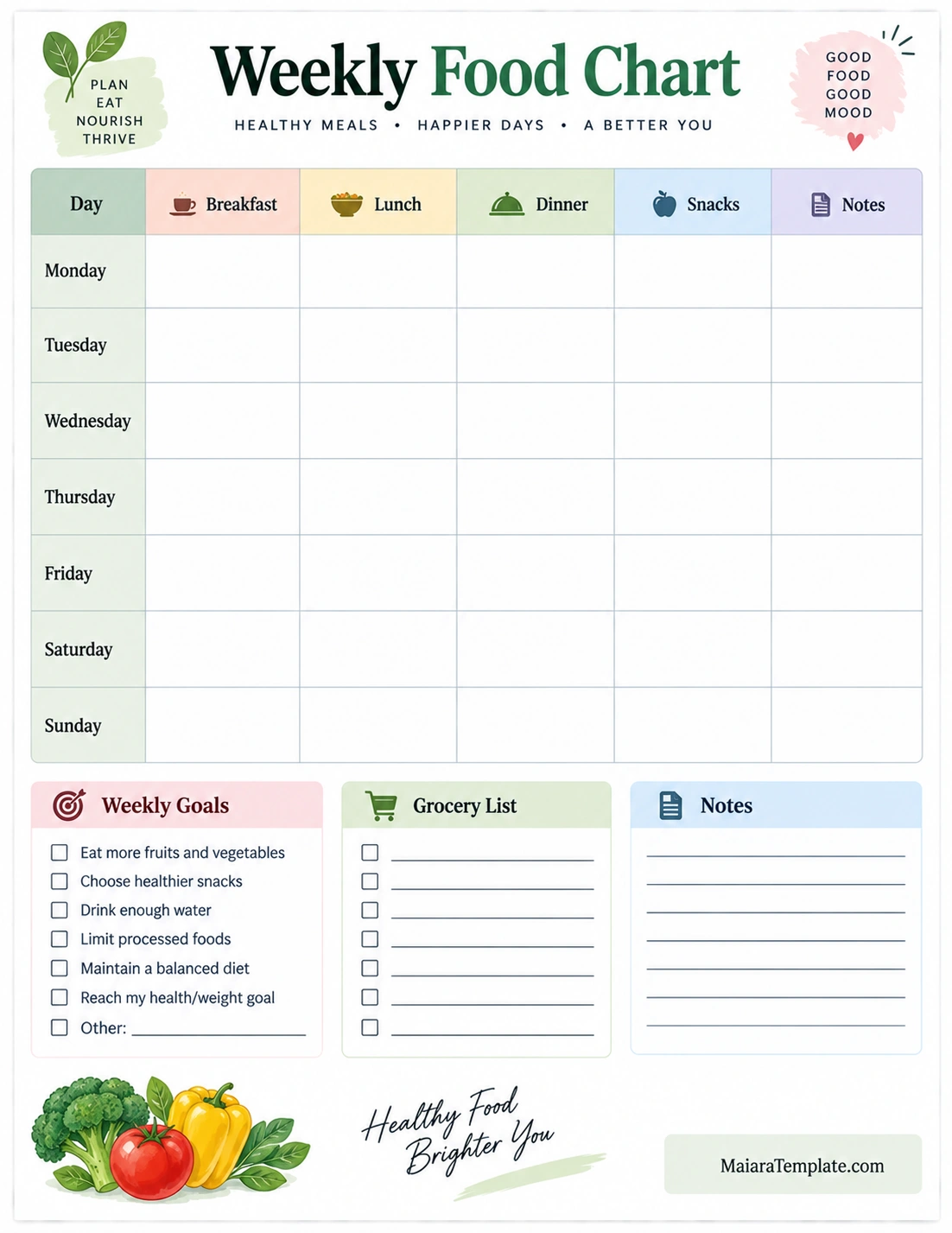
What Is a Weekly Food Chart?
A weekly food chart is a planning sheet that organizes meals and food choices by day. Most charts divide the week into seven sections, from Monday through Sunday, with spaces for different meals and additional notes.
Depending on your needs, a food chart may include breakfast, lunch, dinner, snacks, beverages, grocery items, or personal goals. Some people use it simply as a meal planning sheet, while others use it to become more aware of their overall eating patterns.
The main purpose is to create a clear visual plan. Instead of keeping meal ideas in your head or making several separate notes, everything can be recorded in one convenient place.
Why Use a Weekly Food Chart?
Planning food for an entire week can make everyday decisions easier. A chart provides a quick overview of what you intend to eat and what ingredients you may need.
Plan Meals in Advance
One of the biggest benefits is reducing the need to decide what to eat at the last minute. You can choose meals ahead of time based on your schedule, available ingredients, and personal preferences.
For example, you might plan quick meals on busy weekdays and allow more time for cooking on the weekend. This makes the food plan more realistic and easier to follow.
Encourage Balanced Eating
A weekly food chart can make it easier to notice whether your meals include a variety of nutritious foods. Looking at the entire week instead of a single meal provides a broader view of your eating pattern.
You can use the chart to include a variety of:
- Fruits and vegetables
- Whole grains and other carbohydrate sources
- Protein-rich foods
- Dairy or suitable alternatives
- Healthy sources of fats
- Different meals and ingredients throughout the week
A food chart does not need to follow a rigid diet. Its purpose is to help you become more intentional about your choices and variety.
Manage Your Food Budget
Meal planning can also make grocery spending easier to manage. When you know what meals you intend to prepare, you can create a more focused shopping list instead of buying food without a plan.
You can also compare ingredients across different meals and choose foods that can be used multiple times during the week. This can help make your grocery budget more efficient.
How to Create a Weekly Food Chart
Creating a weekly food chart does not have to be complicated. Start with a simple layout and customize it according to your eating habits.
1. Start With Your Weekly Schedule
Before choosing meals, look at your schedule for the upcoming week. Identify days when you will have plenty of time to cook and days when you will need something quick.
Consider work, school, appointments, exercise, social activities, and other commitments. This helps you choose meals that realistically fit your week.
2. Plan Your Main Meals
Fill in breakfast, lunch, and dinner for each day. You do not necessarily need a completely different meal every day. Repeating favorite meals can simplify preparation.
For example, you could prepare a larger batch of a meal and use the leftovers for lunch the following day. This saves time while reducing unnecessary food waste.
3. Add Snacks
If snacks are part of your routine, add them to the chart. Planning snacks can make it easier to keep suitable options available instead of relying on whatever food is most convenient.
Depending on your preferences, snack ideas might include fruit, yogurt, vegetables, nuts, whole-grain foods, or other foods that fit your individual dietary needs.
4. Check Variety
Once your meals are written down, review the entire chart. Look for variety in ingredients, flavors, colors, and food groups.
If the same meal or ingredient appears repeatedly, consider whether you can substitute another option. Variety can make a weekly meal plan more enjoyable and help prevent the menu from becoming repetitive.
5. Create a Grocery List
Use your completed food chart to create a grocery list. Check your pantry, refrigerator, and freezer first so you do not purchase ingredients you already have.
Group your shopping list into categories such as produce, proteins, grains, dairy, frozen foods, and pantry items. This can make grocery shopping faster and more organized.
What to Include in a Weekly Food Chart
A basic weekly food chart can be as simple or detailed as you need. The following sections can make the chart more useful:
- Days of the week: Create separate rows or sections for Monday through Sunday.
- Breakfast: Record your planned morning meal.
- Lunch: Add meals that fit your midday schedule.
- Dinner: Plan your main evening meal.
- Snacks: Record planned snacks or optional food choices.
- Grocery list: Write down ingredients that need to be purchased.
- Weekly goals: Add simple food or meal-planning goals.
- Notes: Record substitutions, leftovers, special occasions, or preparation reminders.
Tips for Making Your Food Chart Easier to Follow
Keep the Plan Realistic
A complicated meal plan can become difficult to maintain. Choose meals that match your cooking skills, available time, and household routine.
If you know that you will be busy on certain days, plan simple meals for those days. A realistic plan is generally more useful than a perfect plan that is difficult to follow.
Reuse Ingredients
Choose ingredients that can work in several meals. For example, vegetables prepared for dinner can potentially become part of the next day’s lunch. Cooked grains, proteins, or sauces can also be incorporated into different dishes.
Using ingredients across multiple meals can simplify grocery shopping and help reduce food that goes unused.
Plan Around What You Already Have
Before creating your shopping list, check your existing food supplies. Building some meals around ingredients already in your kitchen can reduce unnecessary purchases and help prevent food waste.
Leave Some Flexibility
Your weekly food chart does not have to be a strict schedule. Unexpected events, changes in appetite, or changes in your daily routine can happen.
Leave room for substitutions and leftovers. You can move meals between days when necessary without abandoning the entire plan.
Using a Weekly Food Chart for Healthier Habits
A food chart can increase awareness of your eating habits because it gives you a visible record of your planned meals. Over time, this can help you recognize patterns and identify areas you may want to improve.
For example, you may notice that you rarely plan vegetables for lunch, frequently skip breakfast, or rely heavily on the same type of meal. Once these patterns are visible, you can make small and practical changes.
For people working toward weight management goals, a weekly food chart can also provide structure and accountability. However, it should be used as a planning and awareness tool rather than as a substitute for individualized medical or nutrition advice.
How a Weekly Food Chart Can Reduce Food Waste
Food waste often happens when groceries are purchased without a clear plan. A weekly food chart helps connect the food you buy with the meals you intend to prepare.
To reduce waste, try these strategies:
- Check your kitchen before shopping.
- Plan meals around ingredients that need to be used soon.
- Reuse leftovers in another meal when appropriate.
- Avoid buying large quantities without a plan for using them.
- Freeze suitable foods when you cannot use them immediately.
- Keep a flexible meal in your plan for leftovers.
This approach can make your grocery routine more intentional while helping you get more value from the food you purchase.
Weekly Food Chart Ideas for Different Needs
There is no single format that works for everyone. You can adjust your chart based on your household and personal goals.
Family Weekly Food Chart
A family chart can include meals that are suitable for different preferences. Adding a notes section is useful for recording school lunches, activities, allergies, ingredient substitutions, or meals that need to be prepared ahead of time.
Simple Weekly Meal Chart
If you prefer a minimalist approach, use only the seven days and three main meals. This keeps planning quick while still providing a useful overview of the week.
Healthy Eating Food Chart
A health-focused chart can include additional sections for fruits and vegetables, water, meal variety, or personal nutrition goals. The goal is to increase awareness without making the planning process unnecessarily complicated.
Budget-Friendly Food Chart
For budget-conscious meal planning, focus on affordable ingredients that can be used across multiple meals. Combining your food chart with a grocery list can make it easier to plan purchases before visiting the store.
How to Review Your Food Chart at the End of the Week
Take a few minutes at the end of the week to review what worked and what did not. You do not need to evaluate every meal in detail. Instead, look for useful patterns.
- Which meals were easy to prepare?
- Which meals were enjoyed the most?
- Which ingredients were left unused?
- Did you purchase more food than necessary?
- Were there days when the plan was difficult to follow?
- Which meals would you like to repeat next week?
Use these observations to improve the next weekly food chart. Over time, your meal planning process can become faster and more closely aligned with your household’s routine.
Conclusion
A weekly food chart is a practical way to organize meals, plan groceries, increase food awareness, and develop more consistent eating habits. By planning breakfast, lunch, dinner, snacks, and grocery needs in one place, you can reduce daily decision-making and make your food routine easier to manage.
The most effective chart is one that fits your lifestyle. Keep it simple, allow flexibility, use ingredients efficiently, and review your plan regularly. Whether your goal is better organization, balanced meal planning, budget management, less food waste, or greater awareness of your eating habits, a printable weekly food chart can be a useful tool for staying on track.
Download: Weekly Food Chart Template

- Free Weekly Sales Report Template - September 23, 2026
- Free Printable Weekly Food Chart Template - September 23, 2026
- Staff Confidentiality Agreement Template (Word) - September 23, 2026
