Board meeting minutes are the official written record of what took place during a meeting of a company’s board of directors or board committee. They document important discussions, decisions, resolutions, voting results, and assigned responsibilities. Well-organized minutes help businesses maintain accurate records, support accountability, and provide a reliable reference for future decisions.
Creating effective board meeting minutes does not mean recording every word spoken during a meeting. Instead, the goal is to capture the essential information in a clear, professional, and objective format. Whether you are a corporate secretary, administrative assistant, or board member, understanding how to prepare meeting minutes can make board administration much easier.
In this guide, you will learn what board meeting minutes should include, how to write them step by step, and how to organize an effective record using a practical board meeting minutes template.
What Are Board Meeting Minutes?
Board meeting minutes are formal documents that summarize the proceedings of a board of directors meeting. They provide a written account of the meeting, including the date, attendees, agenda items, important discussions, motions, resolutions, and decisions made by the board.
Unlike informal meeting notes, official board minutes serve as an important corporate record. They help establish what the board considered, what actions it approved, and who was responsible for carrying out specific tasks.
Companies commonly maintain board meeting minutes as part of their corporate records. These documents may also be reviewed by auditors, legal advisers, shareholders, regulators, or other authorized parties when necessary.
Why Are Board Meeting Minutes Important?
Accurate board meeting minutes support good corporate governance and help organizations maintain a consistent decision-making process. They provide several important benefits.
1. Maintain an Official Business Record
Board minutes create a formal record of important company decisions. They allow the organization to review previous resolutions, understand the background of major actions, and maintain continuity when board membership changes.
2. Support Accountability
Meeting minutes document approved actions and identify the individuals or departments responsible for follow-up tasks. This makes it easier to monitor progress and determine whether agreed responsibilities have been completed.
3. Provide Evidence of Board Decisions
Minutes can help demonstrate that the board considered and approved particular matters through its formal decision-making process. They are especially useful when documenting significant resolutions, voting outcomes, and approvals.
4. Improve Future Meeting Preparation
Previous meeting records help board members review outstanding matters before the next meeting. They also provide useful background information for discussions involving ongoing projects, financial performance, business strategy, and corporate policies.
5. Support Corporate Governance and Compliance
Many jurisdictions require companies to maintain records of board proceedings. Proper documentation can support compliance with applicable corporate laws, company bylaws, and internal governance policies. Specific requirements vary depending on the company’s jurisdiction and legal structure.
What Should Be Included in Board Meeting Minutes?
A professional board meeting minutes document should contain enough information to accurately reflect the meeting without becoming unnecessarily lengthy. Although the format may differ between organizations, most board minutes include the following sections.
1. Meeting Information
Start with the basic details of the meeting, including:
- Company or organization name.
- Meeting title or type.
- Date and starting time.
- Meeting location or virtual meeting platform.
- Name of the chairperson.
- Name of the person preparing the minutes.
2. Attendance and Quorum
Record the names of board members who attended the meeting, those who were absent, and any invited guests or advisers. Where applicable, document whether a quorum was established according to the company’s governing documents and applicable requirements.
3. Approval of Previous Minutes
Include a brief statement indicating whether the minutes from the previous meeting were approved. If the board requested corrections, summarize the amendments and record the approval outcome.
4. Agenda Items and Key Discussions
Summarize the main topics discussed during the meeting. Focus on relevant information, significant viewpoints, proposals, and matters that influenced the board’s decisions.
Keep the language objective and professional. Avoid personal opinions, unnecessary details, or lengthy descriptions of conversations that do not contribute to the official record.
5. Motions, Resolutions, and Voting Results
Record important motions and formal resolutions considered by the board. Depending on the organization’s requirements, include the name of the person making the motion, the seconder, the voting result, and whether the proposal was approved, rejected, or deferred.
6. Action Items and Responsibilities
List the tasks assigned during the meeting, including the responsible person or department and any agreed deadlines. This section helps ensure that decisions are translated into practical actions.
7. Adjournment and Signatures
Document the meeting’s closing time and include the appropriate approval or signature fields. Depending on company policy and applicable requirements, the minutes may need to be reviewed or approved by the board chairperson, corporate secretary, or another authorized individual.
How to Write Board Meeting Minutes Step by Step
Preparing accurate board meeting minutes becomes easier when you follow a consistent process. The following steps can help you create professional records for every board meeting.
Step 1: Prepare Before the Meeting
Review the meeting agenda, previous minutes, relevant reports, and supporting documents before the meeting begins. Prepare a minutes template with sections for attendance, discussions, decisions, and action items.
Having a structured document ready will help you capture important information without missing essential details.
Step 2: Record Essential Meeting Details
At the beginning of the meeting, document the date, time, location, chairperson, and attendees. Also, record whether the meeting has the required quorum when applicable.
Step 3: Summarize Important Discussions
Follow the meeting agenda and record the key points discussed under each topic. Focus on relevant information, major proposals, concerns raised, and conclusions reached by the board.
Remember that board meeting minutes should be concise and factual rather than a word-for-word transcript.
Step 4: Document Decisions and Voting Outcomes
Pay particular attention when the board makes formal decisions. Clearly record the motion or resolution, its outcome, and any voting information required by company policy or applicable law.
If a decision is postponed, note that the matter was deferred and include any agreed next steps.
Step 5: List Action Items
Identify the tasks assigned during the meeting and record who is responsible for completing them. Include deadlines whenever they have been established.
A simple action item table can include the task description, responsible person, due date, and current status.
Step 6: Review and Edit the Minutes
After the meeting, organize your notes into a clear and professional document. Check names, dates, resolutions, voting outcomes, and assigned responsibilities for accuracy.
Remove unnecessary wording while ensuring that the meaning of important discussions and decisions remains intact.
Step 7: Distribute and Obtain Approval
Submit the draft minutes to the appropriate person for review according to the organization’s procedures. Once reviewed, distribute them to authorized board members and place them on the agenda for formal approval when required.
After approval, store the official version securely with the company’s corporate records.
Board Meeting Minutes Template: A Practical Format
Using a board meeting minutes template can simplify the documentation process and help maintain consistency across meetings. A good template provides dedicated sections for all essential information without making the document difficult to complete.
The following template structure is suitable for many standard board meetings:
- Meeting Information: Company name, date, time, location, and chairperson.
- Attendance: Board members present, absent members, and invited guests.
- Meeting Agenda: List of topics scheduled for discussion.
- Discussion Summary: Key points and relevant reports presented.
- Resolutions and Decisions: Motions, approvals, and voting results.
- Action Items: Assigned responsibilities and deadlines.
- Adjournment: Meeting closing time.
- Approval: Appropriate review and signature details.
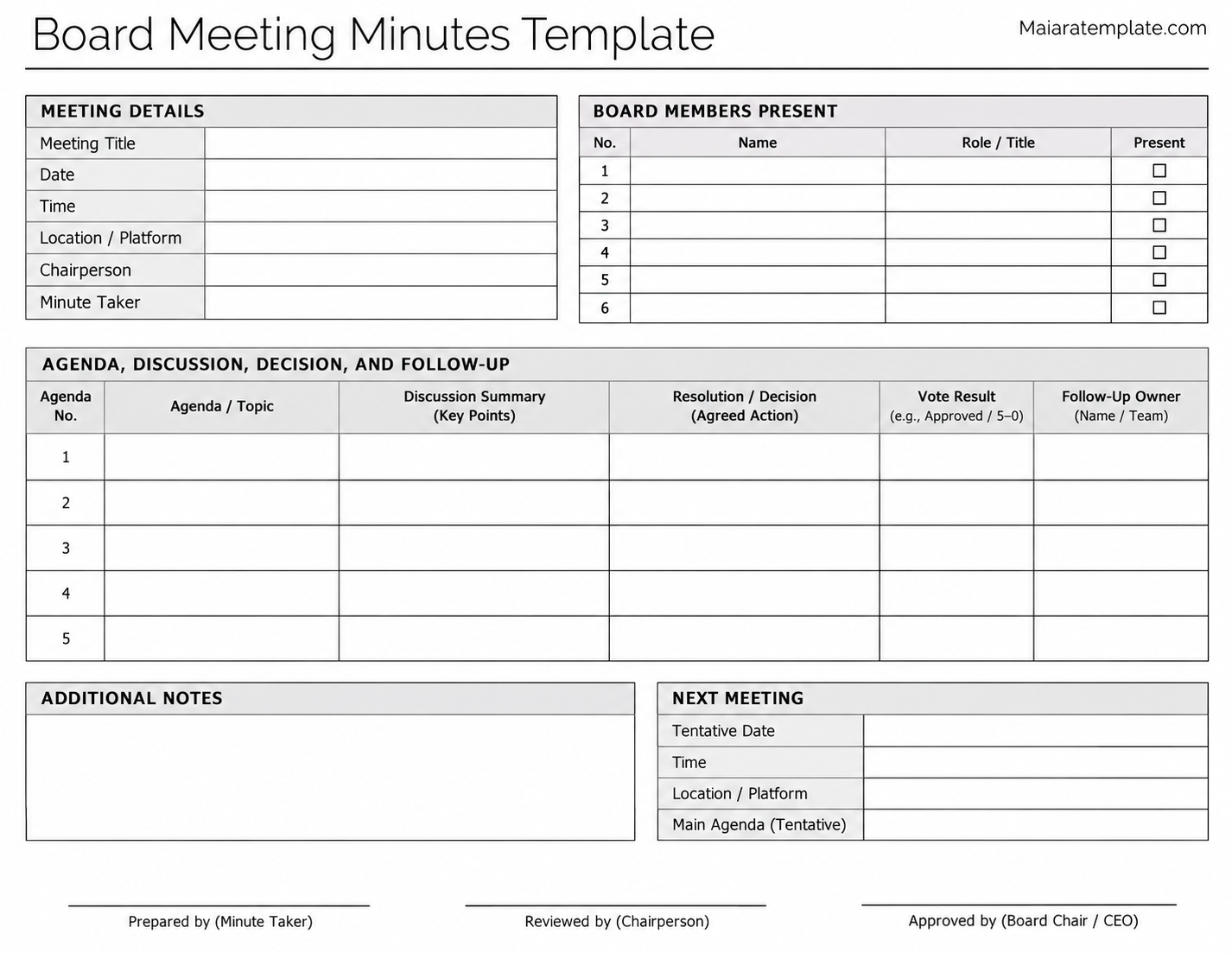
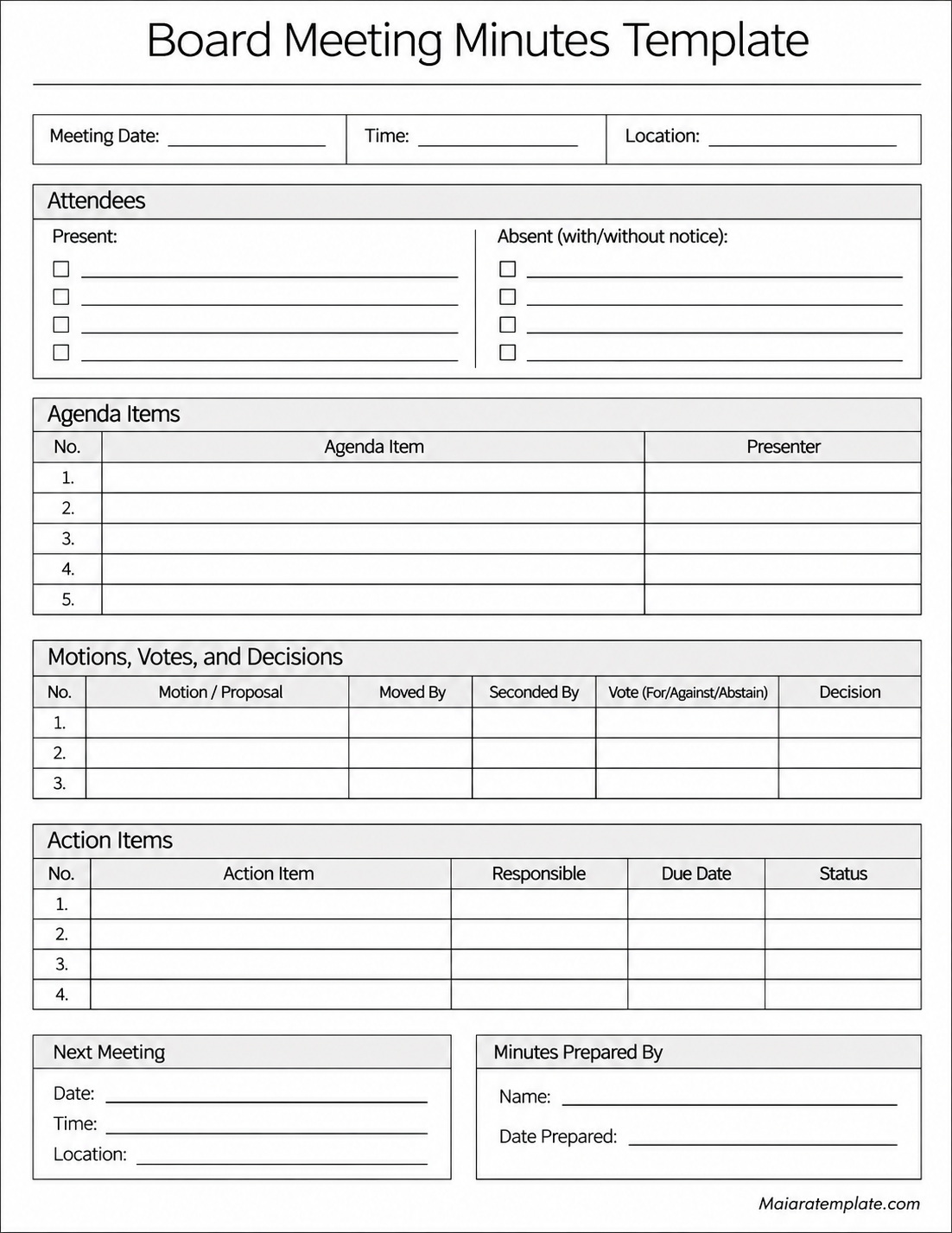
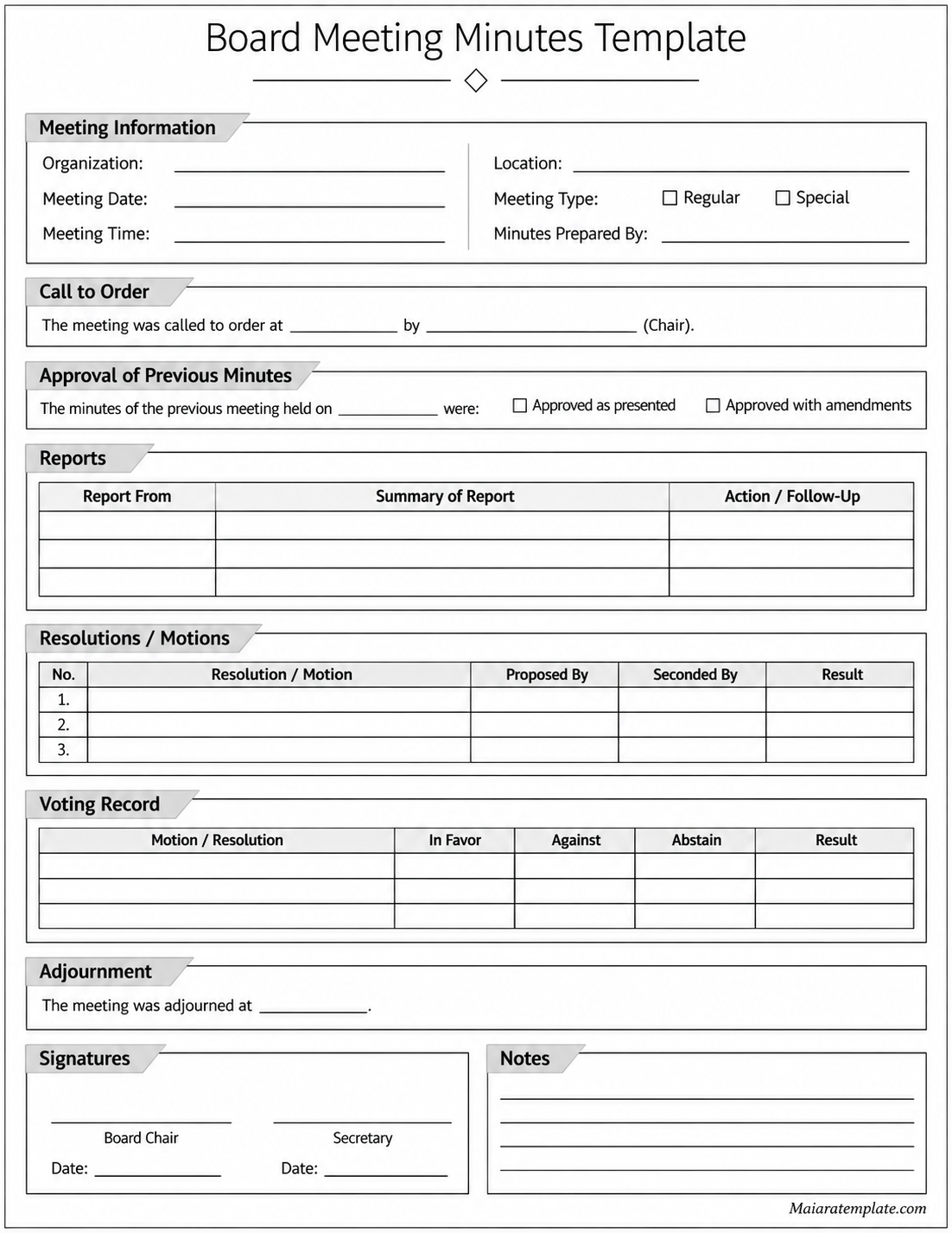
Below are three printable board meeting minutes template designs that can help organize meeting information, record decisions, and track follow-up responsibilities.
Tips for Creating Professional Board Meeting Minutes
Well-written minutes should be accurate, easy to understand, and consistent with the organization’s governance procedures. Consider these practical tips when preparing your documents.
- Use objective language: Record facts and decisions without adding personal opinions or emotional descriptions.
- Keep information concise: Summarize relevant discussions instead of writing a complete transcript.
- Follow a consistent format: Use the same structure for recurring board meetings.
- Record decisions accurately: Pay close attention to motions, resolutions, and voting outcomes.
- Protect confidential information: Store meeting records securely and restrict access to authorized individuals.
- Review before approval: Check the document carefully to prevent errors or missing information.
- Maintain organized records: Use clear file names and consistent storage procedures to make previous minutes easier to find.
Common Mistakes to Avoid When Writing Board Meeting Minutes
Even experienced minute takers can make mistakes when documenting board proceedings. Avoiding the following issues can improve the quality and reliability of your records.
Recording Too Much Information
Board minutes should summarize important matters rather than reproduce every conversation. Excessive detail can make the document difficult to review and may obscure the actual decisions made.
Leaving Out Important Decisions
Failing to record a formal resolution or voting outcome can create confusion later. Always pay attention when the board makes an important decision.
Forgetting Action Item Owners
Recording a task without identifying the responsible person can make follow-up difficult. Whenever responsibilities are assigned, document the owner and deadline.
Using Unclear or Subjective Language
Avoid vague statements and personal interpretations. Use neutral wording that accurately reflects what happened during the meeting.
Failing to Maintain Approved Records
Draft minutes and approved minutes should be clearly distinguished. Follow the organization’s document retention policy and applicable legal requirements when storing official records.
Frequently Asked Questions About Board Meeting Minutes
What is the main purpose of board meeting minutes?
The main purpose of board meeting minutes is to create an official written record of a board meeting. They document important discussions, decisions, resolutions, voting outcomes, and assigned responsibilities for future reference and corporate recordkeeping.
Who is responsible for taking board meeting minutes?
The corporate secretary is commonly responsible for preparing board meeting minutes. However, the responsibility may also be assigned to an administrative assistant, designated board member, or another authorized individual, depending on the organization’s procedures.
How long should board meeting minutes be?
There is no universal word count for board meeting minutes. Their length depends on the meeting’s agenda, complexity, and number of decisions. The document should be detailed enough to record important proceedings while remaining clear and concise.
Should board meeting minutes include every discussion?
No. Board meeting minutes generally do not need to include every statement made during a meeting. They should summarize significant discussions, relevant information, formal motions, decisions, and other matters necessary to create an accurate official record.
Are board meeting minutes legally required?
Many corporate laws and governance frameworks require companies to maintain records of board proceedings. However, specific obligations depend on the jurisdiction, company structure, and applicable regulations. Companies should consult qualified legal advisers to confirm their requirements.
When should board meeting minutes be distributed?
Draft minutes are generally prepared and circulated after the meeting according to the organization’s established procedures. The timing may vary depending on internal policies and applicable legal requirements. Board members should have sufficient time to review the document before approval.
What is the difference between board meeting minutes and meeting notes?
Meeting notes are usually informal records created for personal reference or general team coordination. Board meeting minutes are formal corporate records that document important board proceedings, decisions, resolutions, and voting outcomes.
Can I use a board meeting minutes template?
Yes. A board meeting minutes template provides a consistent structure for recording meeting information, attendance, agenda items, decisions, and action items. You can customize the template to match your company’s governance procedures and documentation requirements.
Conclusion
Board meeting minutes are an essential part of effective corporate governance. They provide an official record of important discussions, board decisions, resolutions, and responsibilities while helping organizations maintain accountability and continuity.
By following a consistent structure, recording information objectively, and reviewing each document carefully, you can create professional board meeting minutes that are easy to understand and maintain.
Using a printable board meeting minutes template can make the process even simpler. Choose a layout that fits your organization’s needs, customize the sections when necessary, and keep your meeting records organized for future reference.
