A staff training schedule provides a structured timeline for organizing employee learning activities, onboarding sessions, skill development, and follow-up training. It helps organizations make sure employees receive the right training at the right time while keeping learning activities aligned with business needs.
Without a clear schedule, training can become inconsistent or difficult to coordinate. Employees may miss important sessions, trainers may have overlapping commitments, and managers may struggle to see whether required training has been completed.
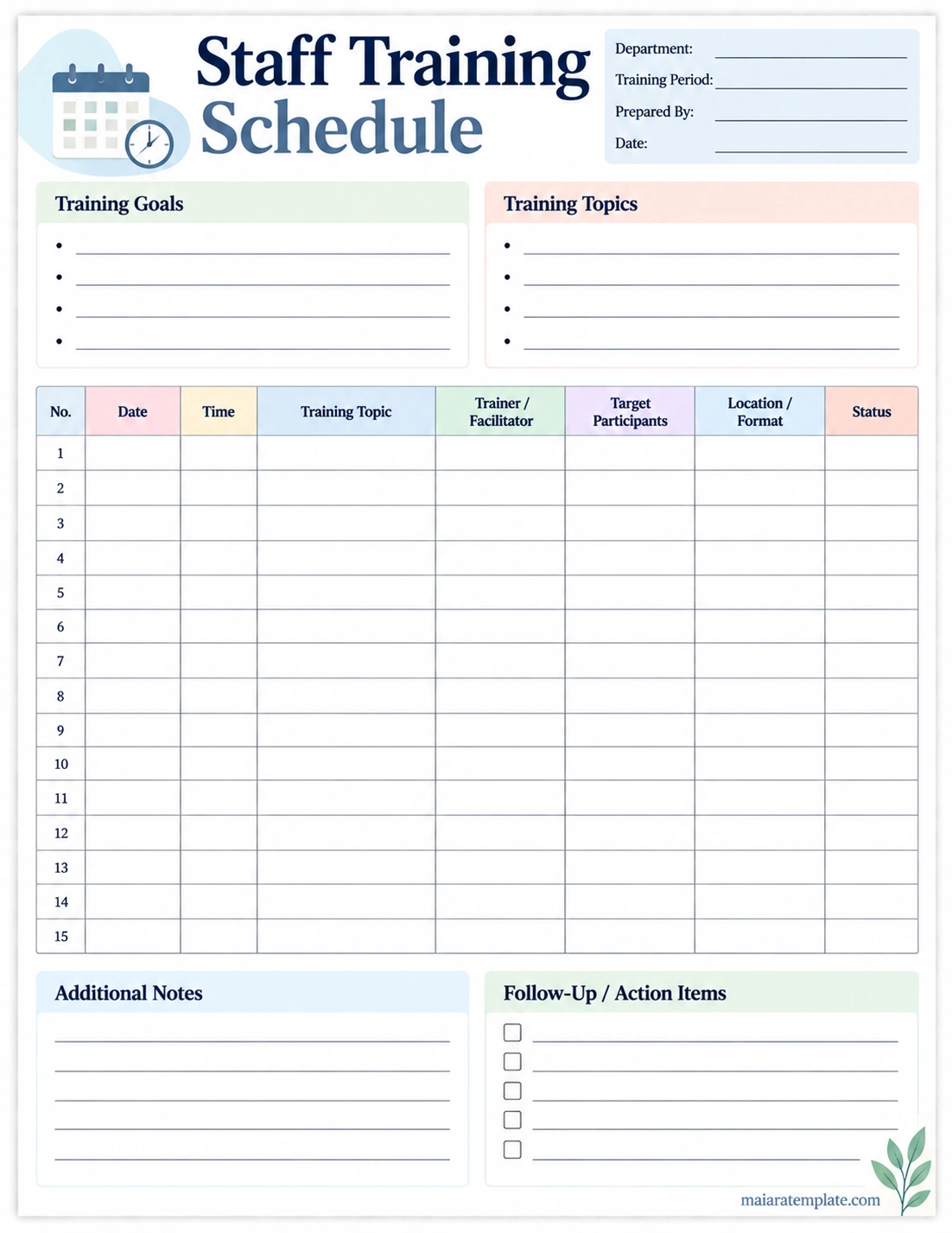
A well-organized staff training schedule creates a clear roadmap for both employees and managers. It can show training dates, times, topics, trainers, participants, locations, formats, and completion status in one convenient place.
What Is a Staff Training Schedule?
A staff training schedule is a planned timeline that organizes employee training activities over a specific period. It can be used for new employee onboarding, workplace skills training, compliance education, professional development, software training, leadership development, or other learning programs.
The schedule can cover a single day, several weeks, a month, or an entire training program. The appropriate timeframe depends on the organization’s goals and the complexity of the training.
A staff training schedule template can make the planning process easier by providing predefined areas for training goals, topics, dates, times, trainers, participants, locations, and follow-up actions.
Why Is a Staff Training Schedule Important?
Employee training is more effective when it is organized around clear objectives and realistic timelines. A training schedule helps turn a collection of learning activities into a coordinated program.
Some of the main benefits include:
- Better organization: Keep training activities, dates, and responsibilities in one place.
- Consistent onboarding: Give new employees a structured introduction to their roles and the organization.
- Improved time management: Coordinate training sessions with employee schedules and operational needs.
- Clear expectations: Help employees understand what they will learn and when training will take place.
- Better resource planning: Schedule trainers, rooms, equipment, and other resources in advance.
- Progress tracking: Monitor completed, scheduled, and outstanding training activities.
- Goal alignment: Connect employee development with organizational and business objectives.
Key Elements of a Staff Training Schedule
A useful training schedule should contain enough information to help managers coordinate the program and employees understand their responsibilities.
Training Goals
Start by identifying what the training program should accomplish. Goals might include improving technical skills, introducing workplace procedures, preparing employees for new responsibilities, or supporting professional development.
Clear goals help determine which topics should be included and how training success will be evaluated.
Training Topics
List the subjects employees need to learn. Training topics can range from company policies and workplace procedures to technical skills, communication, leadership, customer service, software systems, or job-specific processes.
Breaking a broad subject into smaller training topics can make the schedule easier to follow and help employees build knowledge progressively.
Date and Time
Every training session should have a defined date and time when possible. Clear scheduling helps employees plan their work and reduces conflicts with other responsibilities.
For longer programs, organize sessions in a logical sequence so that employees learn foundational information before moving into more advanced topics.
Trainer or Facilitator
Identify the person responsible for delivering each training session. This could be an internal manager, subject matter expert, human resources professional, instructor, or external trainer.
Assigning trainers in advance makes it easier to confirm availability and prepare the necessary materials.
Participants
Specify which employees or groups should attend each session. Not every training activity needs to be completed by every employee.
Participant information can help managers identify mandatory sessions, department-specific training, role-based learning, and optional professional development activities.
Location or Training Format
Include the training location or delivery format. Training may take place in a meeting room, classroom, workplace area, or through an online platform.
For virtual training, include any relevant access information in the appropriate supporting materials rather than leaving employees uncertain about how to join.
Status
A status field can show whether a training session is scheduled, completed, postponed, canceled, or requires follow-up. This gives managers a quick overview of the training program’s progress.
How to Create a Staff Training Schedule
Creating a staff training schedule is easier when the program is developed from clear business and employee development needs.
Step 1: Identify Training Needs
Begin by determining what employees need to learn. Consider new employee onboarding, changes in processes, skill gaps, new technology, workplace requirements, customer needs, and organizational goals.
Training needs can vary significantly between departments and job roles, so avoid assuming that every employee requires the same learning program.
Step 2: Define Training Objectives
Turn identified training needs into specific objectives. An objective should describe what employees should understand, demonstrate, or accomplish after completing the training.
Step 3: Organize Training Topics
Group related subjects together and determine the order in which they should be taught. Start with foundational information when employees need basic knowledge before they can understand more advanced topics.
Step 4: Choose Training Dates
Schedule sessions around employee availability, operational requirements, trainer availability, and important business deadlines.
Avoid scheduling too many intensive sessions close together if employees need time to practice or absorb new information.
Step 5: Assign Trainers
Identify who will deliver each session and confirm that the trainer has the necessary knowledge, availability, and resources.
Step 6: Assign Participants
Determine which employees should attend each session. For onboarding, create a schedule that covers the information new employees need during their first days and weeks.
Step 7: Prepare Training Resources
Identify the materials, equipment, software, rooms, handouts, presentations, or other resources required for each session. Preparing these items in advance can reduce disruptions during training.
Step 8: Add Follow-Up Activities
Training should not always end when the session ends. Include opportunities for practice, questions, assessments, coaching, or follow-up discussions when appropriate.
Staff Training Schedule for New Employee Onboarding
A staff training schedule is particularly useful during employee onboarding because new hires often need to absorb a large amount of information within a relatively short period.
A structured onboarding schedule can organize training such as:
- Company orientation
- Workplace policies and procedures
- Job responsibilities
- Department processes
- Technology and software systems
- Safety procedures
- Customer service standards
- Communication expectations
- Role-specific skills
- Performance expectations
Organizing onboarding training across several days or weeks can give new employees time to learn, practice, ask questions, and become familiar with their responsibilities.
Staff Training Schedule for Ongoing Employee Development
Training should not necessarily stop after onboarding. Organizations can use a staff training schedule to plan continuing education and professional development throughout the year.
Skills Training
Skills training can help employees develop abilities that are directly related to their current roles or future responsibilities.
Technology Training
When organizations introduce new software, equipment, or digital processes, scheduled training can help employees understand how to use the tools effectively.
Leadership Training
Managers and employees preparing for leadership responsibilities may benefit from training in communication, delegation, decision-making, coaching, and team management.
Refresher Training
Some subjects may require periodic refresher sessions to reinforce knowledge and keep employees familiar with important procedures.
Tips for Creating an Effective Staff Training Schedule
A training schedule should be practical enough for managers to maintain and clear enough for employees to understand.
- Start with business goals: Connect training activities to actual organizational needs.
- Keep sessions focused: Avoid putting too much unrelated information into one training session.
- Allow preparation time: Give trainers enough time to prepare materials and activities.
- Consider employee workloads: Schedule training without unnecessarily disrupting critical operations.
- Use a logical sequence: Teach foundational topics before advanced subjects when appropriate.
- Include follow-up: Give employees opportunities to practice and reinforce new skills.
- Track attendance and completion: Maintain an accurate record of required training.
- Review the schedule regularly: Adjust sessions when priorities, staffing, or business needs change.
Common Staff Training Scheduling Mistakes
Scheduling Too Much Training at Once
Employees may struggle to absorb information when too many sessions are scheduled without adequate breaks or practice time. A balanced schedule can make learning more manageable.
Ignoring Employee Availability
Training sessions should account for work responsibilities and employee schedules. Poor timing can lead to attendance problems and interruptions.
Failing to Define Training Objectives
Without clear objectives, it can be difficult to determine whether a training session was useful. Each session should have a clear purpose.
Forgetting Follow-Up
Employees often need opportunities to apply new knowledge. Follow-up activities can help reinforce what was taught and identify areas that require additional support.
Keeping an Outdated Schedule
Training plans can change because of staff availability, business priorities, or unexpected events. Update the schedule whenever important information changes.
How to Measure Training Progress
A staff training schedule becomes more useful when it is connected to simple methods for tracking progress and results.
Depending on the type of training, organizations may track:
- Training attendance
- Course completion
- Assessment results
- Employee feedback
- Skill demonstrations
- Completion of required certifications
- Follow-up coaching activities
- Changes in relevant work performance
The appropriate measurement depends on the purpose of the training. Attendance alone may show that an employee attended a session, but it does not necessarily demonstrate that the intended learning objectives were achieved.
Frequently Asked Questions
What is a staff training schedule?
A staff training schedule is a structured timeline used to organize employee training activities, including dates, times, topics, trainers, participants, locations, and completion status.
Why is a staff training schedule important?
A staff training schedule helps organizations coordinate employee learning, manage training resources, organize onboarding, track completion, and align skill development with business goals.
What should a staff training schedule include?
A useful schedule can include training goals, topics, dates, times, trainers, participants, locations or formats, status, notes, and follow-up actions.
How do I create a staff training schedule?
Start by identifying training needs and objectives. Then organize topics, select dates and times, assign trainers and participants, prepare resources, and add follow-up activities. Review the schedule regularly and update it when necessary.
How long should staff training last?
Training length depends on the subject, learning objectives, employee experience, and complexity of the material. Some topics may require a short session, while more complex skills may need multiple sessions spread over several days or weeks.
Can a staff training schedule be used for onboarding?
Yes. A staff training schedule can provide a structured onboarding roadmap that helps new employees learn company policies, job responsibilities, systems, procedures, and role-specific skills in an organized sequence.
Should staff training be scheduled during work hours?
The appropriate timing depends on the organization, training requirements, employee roles, and operational needs. Training should be scheduled in a way that provides sufficient participation while minimizing unnecessary disruption to essential work.
How often should a staff training schedule be updated?
The schedule should be updated whenever training dates, topics, trainers, participants, or business priorities change. Active training programs may benefit from regular reviews to ensure the schedule remains accurate.
Conclusion
A staff training schedule provides a clear structure for organizing employee learning and development. By setting training goals, arranging topics, scheduling sessions, assigning trainers and participants, and tracking progress, organizations can create a more consistent and manageable training process.
A well-planned schedule is especially useful for onboarding, skills development, technology training, leadership programs, refresher courses, and other employee learning initiatives. It also helps managers coordinate resources and keep training activities aligned with broader business objectives.
The most effective schedule is one that is clear, realistic, and easy to maintain. Whether you use a printable staff training schedule template or a digital planning system, regularly reviewing and updating the schedule can help keep employee development on track.
Download: Staff Training Schedule Template

- Free Printable Travel Itinerary Template - October 2, 2026
- Free Printable Wanted Poster Template - October 2, 2026
- Printable Staff Training Schedule Template - October 2, 2026
