A vacation planner is a practical tool for organizing the many details that go into a trip. From choosing destinations and booking transportation to arranging accommodations, planning activities, preparing documents, and creating a packing list, a well-organized vacation plan can make travel easier and less stressful.
Whether you are planning a weekend getaway, a family vacation, a road trip, an international adventure, or a multi-destination journey, keeping everything in one place can help you stay organized. Instead of relying on scattered notes, emails, booking confirmations, and reminders, a vacation planner gives you a central place to track important travel information.
A good vacation plan should be detailed enough to keep the trip organized without making the experience feel overly rigid. The goal is to know what needs to be arranged before departure while leaving enough flexibility to enjoy unexpected opportunities along the way.
What Is a Vacation Planner?
A vacation planner is a planning system or worksheet used to organize the important details of a trip. It can include information about the destination, travel dates, transportation, lodging, activities, meals, budget, packing, reservations, and other travel requirements.
The term can also refer to a person or professional who helps clients organize and book travel arrangements. In this context, a vacation planner may assist with transportation, accommodations, tours, activities, and other logistics.
For personal use, however, a printable vacation planner or digital planning document can provide a simple way to manage a trip independently.
Why Use a Vacation Planner?
Travel planning often involves multiple reservations, deadlines, documents, and decisions. A vacation planner helps bring those details together so you can see the bigger picture before and during the trip.
A vacation planner can help you:
- Organize travel dates and destinations.
- Track flight or transportation details.
- Record hotel and accommodation information.
- Create a daily itinerary.
- Estimate and track travel expenses.
- Prepare a packing list.
- Track important travel documents.
- Record reservations and confirmations.
- List places you want to visit.
- Keep pre-trip tasks organized.
- Reduce the chance of forgetting important details.
Having these details in one organized location can make it easier to review your plans and identify anything that still needs attention.
What to Include in a Vacation Planner
The exact contents of a vacation planner can vary depending on the length and complexity of the trip. A simple weekend trip may need only a few sections, while an international multi-city vacation may require considerably more information.
Trip Overview
Start with the basic information about the vacation. Include the destination, travel dates, trip duration, travelers, and purpose of the trip if useful.
This overview provides a quick reference and helps you organize the remaining sections around the main trip details.
Transportation Details
Record important transportation information such as flight numbers, departure and arrival times, airports, train schedules, rental car details, or other transportation arrangements.
For a multi-leg trip, separate each journey so the information is easy to find when you need it.
Accommodation
List hotels, vacation rentals, resorts, hostels, or other accommodations. Include addresses, check-in and check-out dates, reservation information, and contact details when appropriate.
If your trip includes several destinations, creating a separate entry for each accommodation can help prevent confusion.
Daily Itinerary
A daily itinerary provides a basic schedule for activities and appointments. It can include dates, times, activities, locations, reservations, and notes.
You do not need to schedule every minute of a vacation. Leaving open periods can give you flexibility to rest, explore, or change plans.
Travel Budget
A travel budget helps you estimate expected costs and compare them with actual spending. Common categories include transportation, accommodation, food, activities, shopping, and other expenses.
Tracking estimated and actual costs can help you understand where your travel money is going and identify expenses that may need adjustment.
Packing List
A packing checklist helps you prepare the items you need before leaving. The list can be customized based on the destination, weather, trip length, activities, and personal requirements.
Common categories may include clothing, toiletries, electronics, chargers, travel documents, medications, footwear, and other essentials.
Important Documents
Travel documents can be easy to overlook when preparing for a trip. A vacation planner can include a checklist for passports, identification, tickets, hotel reservations, insurance information, visas when required, and other relevant documents.
Always verify current entry, identification, and documentation requirements for your specific destination before traveling.
How to Create a Vacation Plan
Creating a vacation plan becomes easier when you work through the major decisions in a logical order.
1. Choose Your Destination
Start by deciding where you want to go. Consider the length of the trip, travel preferences, available time, seasonal conditions, and activities you want to experience.
2. Set the Travel Dates
Determine when the trip will begin and end. If your dates are flexible, you can compare different options before making reservations.
3. Plan Transportation
Decide how you will reach your destination and how you will get around once you arrive. Record relevant booking information in your vacation planner.
4. Book Accommodation
Choose lodging based on location, length of stay, needs, and planned activities. Record check-in and check-out information so it is easy to access during the trip.
5. Research Activities
Make a list of attractions, tours, restaurants, parks, museums, events, or other activities you may want to experience. Separate must-do activities from optional ideas.
6. Create a Flexible Itinerary
Organize your activities by date and approximate time. Avoid filling every available hour unless the trip requires a highly structured schedule.
7. Estimate the Budget
Estimate major expenses before the trip. Include transportation, accommodation, food, activities, and other expected costs. A separate amount for unexpected expenses can also be considered.
8. Prepare for Departure
Use your packing and document checklists to prepare before leaving. Confirm important reservations and complete any outstanding travel tasks.
Planning a Daily Vacation Itinerary
A daily itinerary is one of the most useful parts of a vacation planner because it gives you a quick overview of what is planned for each day.
For each day, consider recording:
- Date.
- Approximate time.
- Activity or reservation.
- Location.
- Transportation requirements.
- Confirmation information when applicable.
- Notes or reminders.
Try to group activities that are geographically close to one another. This can reduce unnecessary travel time and leave more time for enjoying the destination.
How to Organize a Vacation Budget
A vacation budget does not have to be complicated. The goal is to create a realistic overview of expected expenses and track actual costs when useful.
Common budget categories include:
- Transportation: Flights, trains, rental cars, fuel, parking, and local transportation.
- Accommodation: Hotels, rentals, resorts, or other lodging.
- Food and drinks: Restaurants, groceries, snacks, and beverages.
- Activities: Tours, attractions, tickets, excursions, and entertainment.
- Shopping: Souvenirs and other purchases.
- Other expenses: Fees, tips, miscellaneous purchases, and unexpected costs.
Keeping estimated and actual amounts separate can make it easier to see whether spending is staying close to the original plan.
Vacation Packing Checklist
Packing requirements vary considerably depending on the destination and type of trip. A vacation planner can provide a general checklist that you customize before departure.
Consider categories such as:
- Clothing and underwear.
- Shoes.
- Toiletries.
- Medications and personal necessities.
- Travel documents.
- Electronics.
- Chargers and adapters.
- Travel accessories.
- Weather-specific items.
- Activity-specific equipment.
Check the list before leaving home and again before returning if you want to reduce the chance of leaving important belongings behind.
Vacation Planner for Families and Groups
Planning for several travelers can be more complicated because different people may have different preferences, schedules, and needs.
A shared vacation planner can help organize group information in one place. You can record transportation details, accommodations, activities, meal ideas, packing requirements, and important reminders.
For families, it can also be useful to consider children’s needs, rest periods, age-appropriate activities, and flexible time between scheduled events.
Vacation Planner for Multi-Destination Trips
Trips involving multiple destinations benefit from detailed organization because each location may have separate transportation and accommodation arrangements.
Create a separate section for each destination and record:
- Arrival and departure dates.
- Transportation between destinations.
- Accommodation details.
- Activities and reservations.
- Places to visit.
- Local transportation plans.
- Important notes.
Keeping destinations in chronological order makes it easier to follow the trip from beginning to end.
Tips for Making Vacation Planning Easier
A vacation planner works best when it simplifies the planning process rather than creating additional work.
- Keep important information together: Use one central planning document for the major details.
- Prioritize reservations: Identify activities and bookings that need advance planning.
- Separate essential and optional activities: This makes it easier to adjust the itinerary.
- Leave free time: A flexible schedule allows room for rest and unexpected opportunities.
- Review your plan before departure: Check reservations, transportation, documents, and packing.
- Update the planner: Add changes as your plans develop.
- Keep confirmation information accessible: Record important booking details where they can be found quickly.
Using a Vacation Planner Template
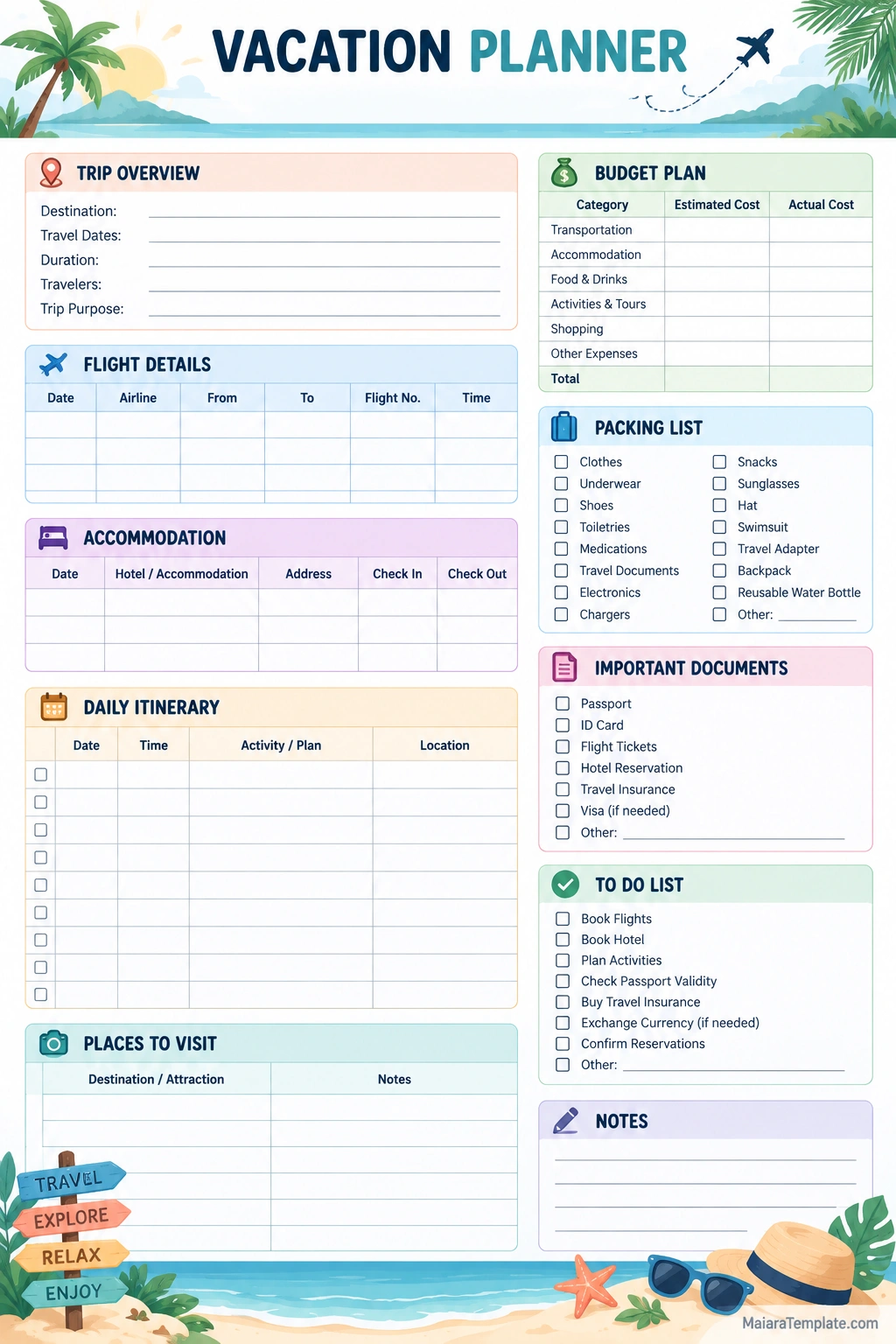
A vacation planner template provides a ready-made structure for organizing a trip. Instead of creating tables and checklists from scratch, you can fill in the sections that apply to your vacation.
A printable template can include areas for the trip overview, transportation, accommodation, daily itinerary, budget, packing list, important documents, to-do items, places to visit, and notes.
The template can be adapted to different types of travel. A short getaway may require only a few sections, while a longer vacation can use more detailed entries for each destination and activity.
Using a template also makes it easier to review your plans at a glance. You can print the completed planner or keep a blank copy for future trips.
Printable vs. Digital Vacation Planners
A printable vacation planner is useful for travelers who prefer writing down information and keeping a physical reference. It can be stored with other travel documents or carried during the trip.
A digital planner offers different advantages, including easy editing, copying, searching, and updating. It can be especially convenient when plans change frequently.
There is no single format that works for every traveler. The best choice is the one that makes your travel information easy to organize, update, and access.
Common Vacation Planning Mistakes
Even a well-organized trip can become difficult when basic planning details are overlooked. Watch for these common issues:
- Overplanning every hour: Too many scheduled activities can leave little room for rest or unexpected experiences.
- Forgetting travel time: Activities may take longer to reach than expected.
- Ignoring reservation requirements: Some attractions and tours may require advance booking.
- Leaving packing until the last minute: A checklist can make preparation more manageable.
- Not checking documents: Confirm that required travel documents are available and valid for the planned trip.
- Failing to track changes: Update your planner when reservations or schedules change.
Final Thoughts on Vacation Planners
A vacation planner provides a practical way to organize the many details involved in preparing for a trip. By bringing together transportation, accommodation, itineraries, budgets, packing lists, documents, reservations, and travel tasks, it can make the planning process more structured and manageable.
The key is to create a plan that supports your trip without making it unnecessarily rigid. Organize the essential details, prioritize important reservations, leave room for flexibility, and keep your information easy to access.
A vacation planner template can make this process even easier by providing a ready-to-use framework for organizing everything from the first travel idea to the final packing checklist. Whether you are planning a short getaway or a complex multi-destination vacation, a well-organized planner can help you travel with greater clarity and confidence.
Download: Vacation Planner Template

- Wedding Invitation Wording Template - September 27, 2026
- Free Printable Vacation Planner Template - September 27, 2026
- Free Printable Slumber Party Invitation Template - September 27, 2026
