A well-organized baseball schedule helps teams, coaches, players, and families stay informed throughout the season. It outlines game dates, start times, opponents, locations, and important events so everyone knows where the team needs to be and when. Whether you manage a youth league, a school team, or a recreational baseball club, a clear schedule makes it easier to coordinate games and prepare for the season.
Creating a baseball season schedule involves more than assigning dates. Organizers must consider field availability, travel time, opponent availability, rest periods, weather risks, and league requirements. A practical schedule helps prevent conflicts, distributes games fairly, and gives families enough notice to plan around practices, school, work, and other commitments.
This guide explains what a baseball schedule should include, how to create one, and how to maintain it throughout the season. You will also learn how a printable baseball schedule template can help keep game information organized in one convenient place.
What Is a Baseball Schedule?
A baseball schedule is a structured list of games and related team events planned for a specific period. It typically identifies the date, time, opponent, field location, and whether each game is played at home or away.
Depending on the team or league, the schedule may also include practices, tournaments, playoff dates, rainout makeups, team meetings, and other important activities. A league-wide schedule coordinates games between multiple teams, while an individual team schedule helps players and families follow their own commitments.
Baseball schedules can be prepared for a single tournament, a regular season, a summer league, or an entire year. The best format is one that is easy to read, simple to update, and accessible to everyone who needs the information.
Why Is a Baseball Schedule Important?
A reliable schedule helps teams operate more efficiently and makes the season easier to manage. It also gives players, parents, coaches, and league officials a shared reference for upcoming games.
1. Keeps Teams Organized
A schedule places game dates, times, opponents, and locations in one place. Coaches can prepare their teams in advance, while players can plan their attendance and understand the upcoming competition.
2. Supports Fair and Consistent Competition
League organizers can use a structured schedule to distribute opponents, home games, and away games more evenly. They can also review rest periods and travel demands to reduce unnecessary disadvantages between teams.
3. Simplifies Travel Planning
Listing field locations and home-or-away status helps families and coaches prepare for travel. For teams playing at several venues, clear location details can reduce confusion and late arrivals.
4. Helps Families Balance Commitments
Parents and young players often manage school, work, family activities, and other sports. Publishing game dates early gives families more time to organize transportation and avoid preventable scheduling conflicts.
5. Improves Communication
A shared schedule reduces repeated questions about game times and locations. When changes occur, organizers can update one central version and notify everyone affected.
What to Include in a Baseball Schedule
A useful baseball schedule should provide enough information for people to attend the correct game without needing to search through multiple messages.
Team and Season Details
Start with the team name, league or division, coach, and season year. These details help distinguish the schedule from other teams’ calendars, especially when a club has multiple age groups.
Game Dates and Start Times
List each game in chronological order. Include the date and scheduled start time, and make sure the time zone is clear if the schedule is shared across different regions.
Opponent and Home-or-Away Status
Identify the opposing team and indicate whether the game is at home or away. This information helps players understand the matchup and prepare for the correct venue.
Field or Venue Location
Provide the field name and address when possible. If a complex has several diamonds, include the field number or a useful entrance or parking note to make arrival easier.
Notes and Special Events
Use a notes column for details such as tournament rounds, arrival instructions, uniform requirements, senior nights, or other team-specific information. Keep these notes concise so the main schedule remains easy to scan.
Important Season Dates
Record the first and last games, playoff windows, tournament dates, and other major milestones. These dates can affect travel plans, roster availability, and the team’s preparation throughout the season.
Printable Baseball Schedule Template
A printable baseball schedule template gives coaches and families a simple way to track games without searching through scattered emails or messages. A well-designed worksheet includes team details, a game-by-game table, venue information, and space for important dates and notes.
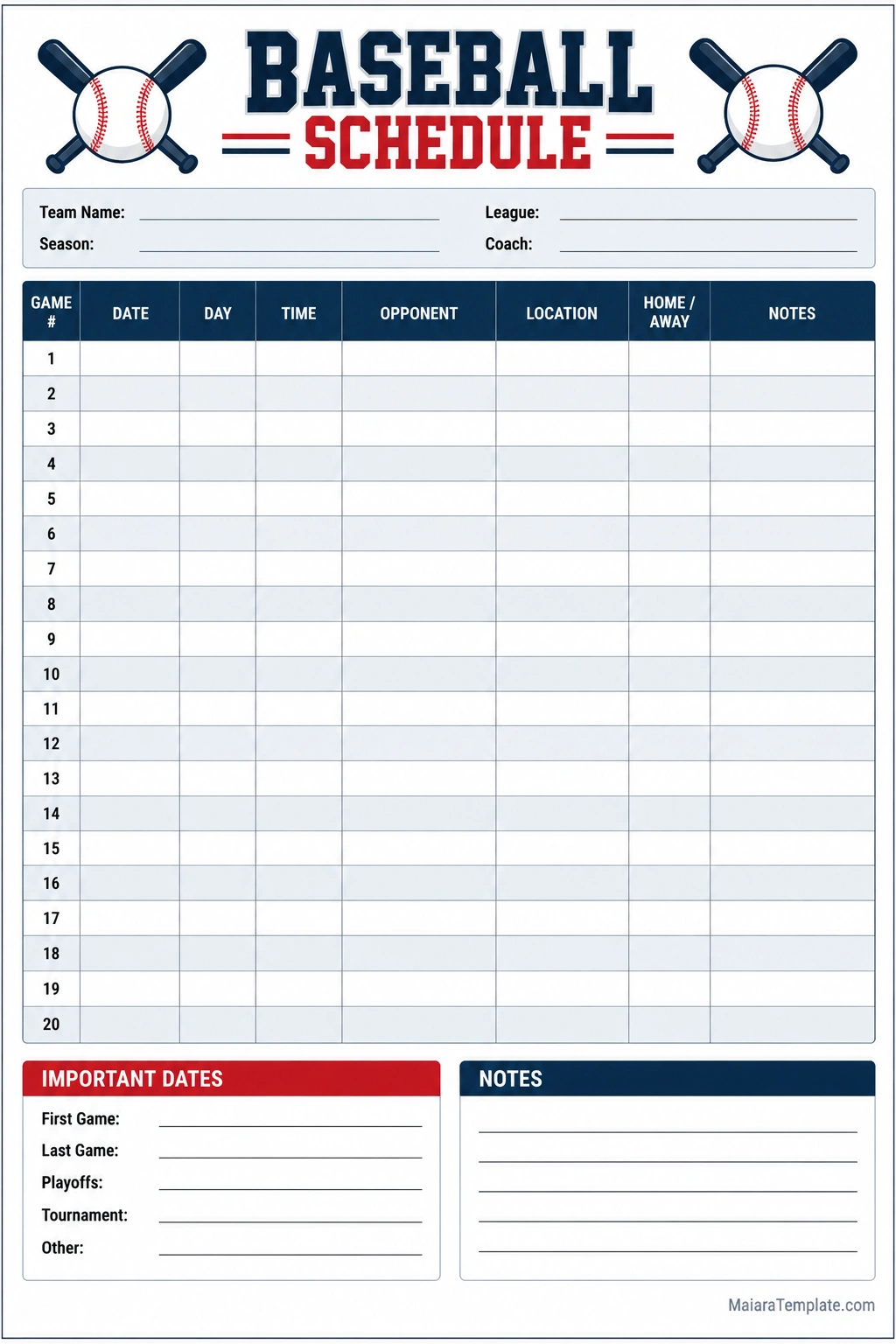
Before using a template, check that it has enough rows for the full season. If your team plays more games than the worksheet allows, print additional pages or maintain a digital version alongside the printable copy.
How to Create a Baseball Schedule Step by Step
Step 1: Confirm the Season Dates
Identify the expected start and end of the season, league deadlines, tournament windows, and playoff periods. Check school calendars, field restrictions, and other known commitments that may affect game availability.
Step 2: Gather Team and Venue Information
Collect the team list, opponent details, available fields, field time slots, and any league scheduling rules. Confirm which venues can host games and whether lighting, maintenance, or shared-field arrangements limit availability.
Step 3: Determine the Number of Games
Decide how many games each team should play and how opponents will be distributed. League organizers may use round-robin matchups, divisions, repeated matchups, or another format depending on the number of teams and competition goals.
Step 4: Assign Dates and Times
Place games into available time slots while considering field capacity, team availability, travel distances, and rest periods. Avoid scheduling a team for overlapping games or creating unnecessary back-to-back travel demands when alternatives exist.
Step 5: Balance Home and Away Games
Review the schedule to distribute home and away games as fairly as practical. Consider field availability, travel burden, and any league-specific rules when deciding which team hosts each matchup.
Step 6: Review Conflicts and Dependencies
Check for double-booked fields, conflicting team commitments, holidays, tournament overlaps, and unusually short rest periods. Ask coaches or venue managers to review proposed dates before the schedule is finalized.
Step 7: Publish the Schedule
Share the approved schedule in a clear, accessible format. A printable PDF works well for team binders and noticeboards, while a digital calendar is useful for reminders and updates. Include the date of the latest revision so readers know whether they have the current version.
Step 8: Update Changes Promptly
Games may change because of weather, field conditions, team availability, or league decisions. When a change occurs, update the central schedule, notify affected teams, and clearly identify the revised date, time, or venue.
Tips for Managing a Youth Baseball Schedule
Youth baseball scheduling requires special attention because players and families often balance sports with school, rest, and other activities. A thoughtful schedule can support player development while keeping the season manageable.
- Publish dates early. Give families as much advance notice as possible.
- Allow adequate rest. Consider age-appropriate recovery time and avoid unnecessary scheduling pressure.
- Limit excessive travel. Group away games sensibly when the competition format allows it.
- Coordinate with other activities. Check known school events and local league commitments before finalizing dates.
- Share weather procedures. Explain how cancellations and postponements will be announced.
- Use clear communication channels. Tell families where to find official updates rather than relying on informal messages alone.
- Review the schedule as the season progresses. Adjust when necessary while keeping the process fair and transparent.
How to Handle Rainouts and Schedule Changes
Weather and field conditions can disrupt baseball games, especially during outdoor seasons. A clear rescheduling process helps teams respond without creating unnecessary confusion.
Establish a Cancellation Procedure
Decide who has authority to postpone a game, when a decision will be made, and how teams will be notified. Follow league and venue safety policies when assessing weather and field conditions.
Identify Makeup Dates
Where possible, reserve potential makeup dates or time slots before the season begins. Flexible options make it easier to reschedule postponed games without disrupting the rest of the calendar.
Notify Everyone Affected
When a game is moved, share the revised date, time, venue, and any new arrival instructions. Ask coaches to confirm receipt and make sure families can access the updated information.
Keep a Clear Revision History
Mark postponed games clearly and remove outdated information from the main schedule when appropriate. If multiple versions have been distributed, state which version is current to reduce the chance of someone following an old date.
Common Baseball Scheduling Mistakes to Avoid
A schedule may look complete but still create problems if important details or constraints are overlooked. Watch for these common mistakes:
- Leaving out field addresses or field numbers
- Scheduling two games at the same venue and time without sufficient capacity
- Creating avoidable conflicts for teams or officials
- Distributing home and away games unevenly without a clear reason
- Ignoring travel time and player recovery needs
- Failing to plan for weather-related postponements
- Updating one version while leaving other shared copies unchanged
- Announcing schedule changes too late or through unclear channels
Reviewing the schedule before publication and checking it regularly during the season can prevent many of these issues.
Frequently Asked Questions
What is a baseball schedule used for?
A baseball schedule organizes games by date, time, opponent, and location. It helps teams coordinate competition, plan travel, manage field availability, and keep players, coaches, and families informed.
What should a baseball schedule include?
A useful schedule includes the team name, season, game date, start time, opponent, field location, home-or-away status, and notes. It may also list practices, tournaments, playoffs, and important season dates.
How do you make a baseball season schedule?
Start by confirming season dates, teams, venues, and league rules. Determine the number of games, assign matchups and time slots, balance home and away games, check for conflicts, and publish the approved schedule.
How far in advance should a baseball schedule be published?
Publish the schedule as early as practical once dates and venues have been confirmed. Early publication gives families time to arrange transportation and manage other commitments. If some games are not yet confirmed, clearly label them as tentative.
How should rainouts be handled on a baseball schedule?
Follow the league’s cancellation policy, notify affected teams promptly, and assign a makeup date when possible. Update the central schedule and make sure everyone can identify the latest version.
Can I use a printable baseball schedule template for a youth league?
Yes. A printable template can help youth teams track games, locations, opponents, and important dates. Customize it to fit the number of games and include any league-specific details families need.
What is the difference between a baseball schedule and a baseball scorecard?
A baseball schedule lists upcoming games and related details. A scorecard records what happens during a game, including runs, hits, outs, and player performance. They serve different purposes and can be used together.
How can teams share baseball schedule updates?
Teams can use a shared digital calendar, league website, email, team-management platform, or updated printable schedule. Choose a reliable official channel and use it consistently so families know where to check for changes.
Conclusion
A well-planned baseball schedule helps teams coordinate games, distribute competition fairly, manage travel, and keep everyone informed throughout the season. By confirming dates and venues, reviewing conflicts, planning for postponements, and communicating updates clearly, organizers can make the season easier to manage for players, coaches, and families.
Use a printable baseball schedule template to keep game information organized and accessible. Review the schedule regularly, follow league procedures, and update changes promptly so everyone can rely on the same information from the first game to the final matchup.
Download: Baseball Schedule Template

- Free Printable Baseball Scorecard Template - October 25, 2026
- Free Printable Baseball Schedule Template - October 25, 2026
- Baseball Lineup Card Template - October 25, 2026
