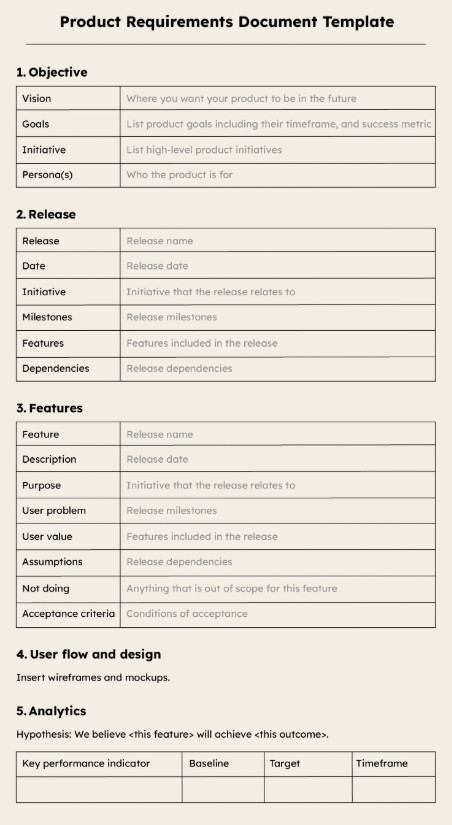
What is a Product Requirements Document?
A Product Requirements Document (PRD) is a crucial document that outlines the specifications, features, and functionality of a product to be developed. It serves as a roadmap for the product team, clearly defining what needs to be built and how it should function. The PRD acts as a communication tool between stakeholders, product managers, designers, developers, and other team members involved in the product development process.
Why is a Product Requirements Document Important?
Having a well-defined PRD is essential for the success of any product development project. It helps align the team members on the goals and objectives of the product, ensuring that everyone is on the same page. The PRD also serves as a reference point throughout the development process, helping to avoid misunderstandings and scope creep. By clearly outlining the requirements and expectations, the PRD helps to streamline the development process, saving time and resources in the long run.
What to Include in a Product Requirements Document
Creating a comprehensive PRD involves including specific details and information to guide the development team effectively. Here are some key elements to include in a PRD:
- Product Overview: Provide a brief description of the product and its purpose.
- Functional Requirements: Detail the features and functionality of the product.
- Technical Requirements: Specify any technical considerations, such as platforms and technologies to be used.
- User Stories: Define the user personas and scenarios for the product.
- Wireframes or Mockups: Include visual representations of the product design and layout.
How to Create a Product Requirements Document
Creating a PRD requires collaboration and input from various team members. Here are some steps to follow when creating a PRD:
- Define the Scope: Clearly outline the goals and objectives of the product.
- Gather Requirements: Collect input from stakeholders, users, and team members to identify key features and functionality.
- Document Specifications: Detail the requirements, specifications, and constraints of the product.
- Review and Revise: Collaborate with the team to review and refine the PRD before finalizing it.
- Share and Communicate: Distribute the PRD to all relevant team members and stakeholders for alignment.
Tips for Successful Product Requirements Document
To ensure the effectiveness of your PRD, consider the following tips:
- Be Specific: Provide detailed and specific requirements to avoid ambiguity.
- Involve Stakeholders: Seek input and feedback from all stakeholders to ensure alignment.
- Update Regularly: Keep the PRD up to date as requirements evolve throughout the development process.
- Use Visual Aids: Include wireframes, mockups, and diagrams to enhance understanding.
- Seek Feedback: Encourage team members to provide feedback on the PRD for continuous improvement.
In conclusion, a well-crafted Product Requirements Document is essential for the success of any product development project. By clearly defining the scope, requirements, and expectations, the PRD serves as a roadmap for the development team, ensuring that everyone is aligned on the goals and objectives of the product. By following the tips outlined in this guide, you can create a comprehensive PRD that helps streamline the development process and ultimately leads to a successful product launch.
Product Requirements Document Template

- Printable Weekly Cleaning Schedule Template - September 17, 2026
- Free Printable Travel Budget Template - September 17, 2026
- Printable Weekly Lesson Planner Template - September 17, 2026
