An automobile bill of sale is an important document that records the sale and transfer of a vehicle from a seller to a buyer. It provides written evidence of the transaction and identifies the vehicle, purchase price, parties involved, and date of sale. Having a clear record can help both parties avoid misunderstandings and organize the paperwork needed after the purchase.
Whether you are selling a used car privately, purchasing a vehicle from an individual, or preparing documents for a family vehicle transfer, a bill of sale can help keep the transaction organized. It records the agreed terms and gives both parties a reference if questions arise later.
Although the requirements vary by location, a properly completed automobile bill of sale is a useful part of many private vehicle transactions. This guide explains what the document should contain, how to complete it, and how to use an automobile bill of sale template when preparing your paperwork.
What Is an Automobile Bill of Sale?
An automobile bill of sale is a written record of a vehicle transaction between a seller and a buyer. It typically identifies both parties, describes the vehicle, records the sale price, and includes the date and signatures.
The document helps establish the terms of the sale and provides evidence that the parties agreed to transfer the vehicle under the stated conditions. Depending on local regulations, it may also be used as supporting documentation when completing vehicle registration or title transfer procedures.
An automobile bill of sale is also commonly called a car bill of sale, vehicle bill of sale, or motor vehicle bill of sale. Although these terms are often used interchangeably, the required information and legal effect can vary by jurisdiction.
Why Is an Automobile Bill of Sale Important?
A vehicle bill of sale creates a written record of the transaction. It helps clarify what was sold, who purchased it, and the terms agreed upon by both parties.
1. Documents the Vehicle Transaction
The document records essential details such as the vehicle identification number, sale date, purchase price, and names of the buyer and seller. These details help distinguish the transaction from other vehicle sales.
Both parties should check the information carefully before signing. Incorrect vehicle details or an inaccurate sale date can create unnecessary complications later.
2. Helps Reduce Disputes
A clear bill of sale can help resolve questions about the agreed purchase price, vehicle condition, or terms of the transaction. If the parties agree to additional conditions, they should record them in writing.
For example, the document may describe whether the vehicle is sold as is, subject to any applicable legal requirements, or whether the seller has agreed to specific repairs before delivery.
3. Supports Registration and Title Procedures
Some motor vehicle agencies accept a bill of sale as supporting evidence when processing registration or ownership documents. However, a bill of sale does not automatically replace the vehicle title or other required transfer paperwork.
Check the rules of the relevant motor vehicle agency before completing the sale. Requirements may depend on the vehicle’s age, title status, transaction type, and location.
4. Provides a Record for Both Parties
The seller can retain evidence of the transaction, while the buyer can keep a record of the purchase price and vehicle details. Both parties should keep a signed copy along with relevant payment and transfer documents.
What Information Should an Automobile Bill of Sale Include?
A complete automobile bill of sale should contain enough information to identify the parties, describe the vehicle, and document the transaction. The exact requirements depend on local law and the circumstances of the sale.
1. Seller Information
Include the seller’s full legal name and appropriate contact information. The seller should confirm that the details match the information required for the vehicle transfer.
If more than one person is listed as an owner, check whether all required owners must participate in the transaction or sign the relevant documents.
2. Buyer Information
Record the buyer’s full legal name and any other information required for the transaction. Verify the spelling before signing the document.
Accurate buyer information helps maintain a clear record of the person purchasing the vehicle.
3. Vehicle Description
Describe the automobile using details that clearly identify it. Most templates include the following information:
- Vehicle make and model.
- Model year.
- Vehicle identification number (VIN).
- Body type and color, when relevant.
- License plate number, where applicable.
- Odometer reading and the appropriate unit.
- Title number or other vehicle reference, when available.
Compare the information with the vehicle’s title and other official records. The VIN is particularly important because it distinguishes the vehicle from others of the same make and model.
4. Sale Date and Purchase Price
State the date of the transaction and the agreed purchase price. Make sure the amount is recorded accurately and matches the parties’ agreement.
If the transaction includes a deposit, installment arrangement, trade-in, or other special payment condition, explain it clearly in the appropriate section or a separate written agreement.
5. Payment Method
The bill of sale may identify how the buyer paid or will pay for the vehicle. Common methods include cash, check, electronic transfer, or another agreed method.
Keep supporting payment records where appropriate. Do not describe a payment as completed if the funds have not been received or the payment arrangement has not been fulfilled.
6. Vehicle Condition and Additional Terms
The parties may record relevant information about the vehicle’s condition, known defects, included accessories, or other agreed terms. Any statements about warranties or an as-is sale should be accurate and consistent with applicable law.
A general as-is clause does not necessarily eliminate every legal obligation. Consumer protection laws, disclosure requirements, fraud rules, and other legal protections may still apply.
7. Signatures and Dates
The document should provide signature fields for the buyer and seller, along with printed names and dates where appropriate. Check whether the relevant jurisdiction requires witnesses, notarization, or a specific government form.
Both parties should receive a completed copy and retain it with their transaction records.
How to Complete an Automobile Bill of Sale Step by Step
Completing the document carefully helps reduce errors and makes the vehicle transaction easier to document.
Step 1: Verify Ownership and Vehicle Details
Before completing the sale, review the vehicle title and compare the listed owner with the seller’s information. Confirm the VIN and other identifying details against the vehicle itself.
If the title is missing, contains errors, or lists a lien, resolve the issue according to the relevant motor vehicle agency’s requirements before proceeding.
Step 2: Choose a Suitable Template
An automobile bill of sale template provides a structured layout for the parties’ information, vehicle description, sale price, and signatures.
Choose a template that suits the transaction and the jurisdiction. Some locations provide official forms or require additional documents, so a general printable template may not be sufficient on its own.
Step 3: Enter the Transaction Details
Fill in the buyer’s and seller’s information, vehicle identification details, sale date, purchase price, and payment terms. Add any relevant conditions that both parties have agreed upon.
Use clear wording and avoid leaving important fields incomplete. If a field does not apply, follow the template’s instructions rather than adding uncertain information.
Step 4: Review the Terms Before Signing
Read the completed document carefully. Confirm the sale price, vehicle details, condition statements, and any special arrangements.
Both parties should have an opportunity to ask questions and correct errors before signing. If a term is unclear, revise it before finalizing the transaction.
Step 5: Sign and Exchange Copies
Sign the bill of sale using the method accepted for the transaction. Provide a completed copy to the buyer and seller, and store the document securely.
Complete the separate title transfer, registration, and notification procedures required by the relevant motor vehicle agency. Keep confirmation of those steps when available.
Automobile Bill of Sale vs. Vehicle Title
An automobile bill of sale and a vehicle title serve different purposes. Understanding the difference helps buyers and sellers avoid assuming that one document replaces the other.
Automobile Bill of Sale
The bill of sale records the transaction between the buyer and seller. It usually identifies the vehicle, purchase price, sale date, and parties involved.
Vehicle Title
The vehicle title is an official ownership document issued or recognized by the relevant authority. It is commonly used in the formal process of transferring the vehicle’s ownership record.
Depending on the jurisdiction, the buyer may need a properly assigned title, registration application, odometer disclosure, tax documentation, or other paperwork in addition to the bill of sale.
Tips for a Safe Private Vehicle Sale
Using a bill of sale is only one part of completing a vehicle transaction responsibly. The following steps can help buyers and sellers maintain accurate records and reduce avoidable problems.
- Verify the seller’s identity: Confirm that the seller is the owner or has proper authority to sell the vehicle.
- Inspect the vehicle: Review its condition and consider an independent mechanical inspection.
- Check the VIN and title: Confirm that the vehicle identification matches the official paperwork.
- Review any liens: Determine whether an outstanding loan or other claim affects the transfer.
- Record the actual sale price: Do not knowingly enter a false amount on the bill of sale or related official documents.
- Keep payment evidence: Retain receipts or other appropriate records of the transaction.
- Complete the official transfer: Follow local rules for title assignment, registration, taxes, and required notifications.
- Keep copies: Save the signed bill of sale and all supporting paperwork.
Common Automobile Bill of Sale Mistakes to Avoid
Small errors can delay a vehicle transfer or create confusion after the sale. Review these common mistakes before finalizing the document.
- Incorrect VIN: Compare the number with the vehicle and official records.
- Missing signatures: Check who must sign the bill of sale and related transfer documents.
- Incomplete buyer or seller details: Use accurate legal names and required information.
- Unclear payment terms: Document deposits, balances, or other agreed arrangements.
- Unspecified vehicle condition: Record relevant conditions and agreed terms accurately.
- Assuming the bill of sale transfers title automatically: Complete all additional transfer procedures required by local law.
- Failing to keep a copy: Give each party a completed copy for their records.
Automobile Bill of Sale Template and Example
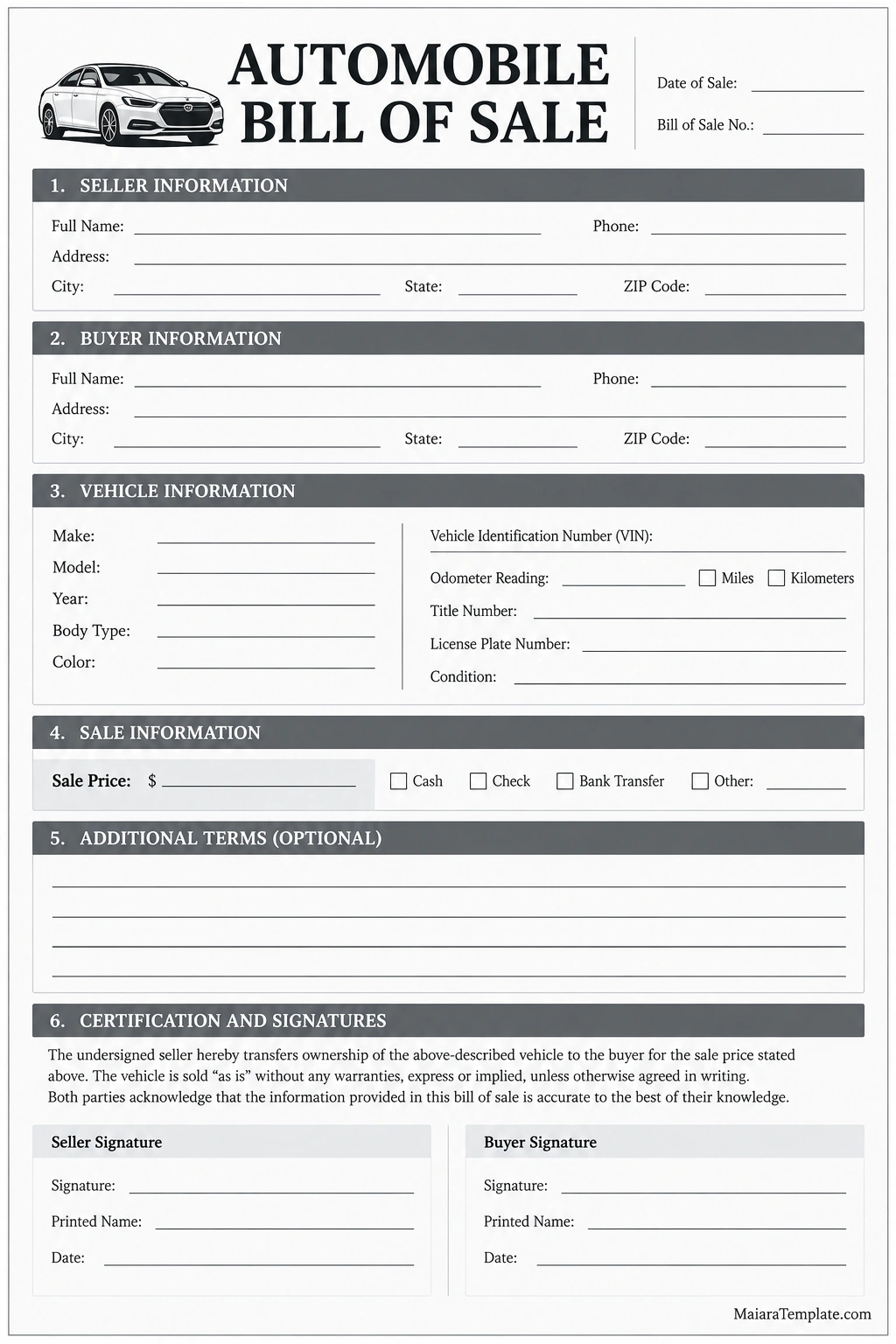
A printable automobile bill of sale template can help individuals organize the details of a private car sale. It is particularly useful when buyers and sellers want a clear written record of the transaction.
A typical template includes the seller’s information, buyer’s information, vehicle description, sale price, payment terms, condition statements, and signature fields. Some versions also include an odometer reading, title information, and additional terms.
For example, a seller transferring a used sedan to a private buyer could use the document to record the vehicle’s make, model, year, VIN, agreed purchase price, sale date, and signatures. The parties would then complete the separate title and registration procedures required for their location.
This example illustrates the information commonly recorded in a bill of sale. It does not replace official transfer forms or guarantee that a particular document meets every local legal requirement.
Before using an automobile bill of sale template, check the requirements of the relevant motor vehicle agency. Customize the document as necessary and ensure that all information matches the actual transaction.
Frequently Asked Questions About Automobile Bills of Sale
What is the purpose of an automobile bill of sale?
An automobile bill of sale documents the sale of a vehicle between a buyer and a seller. It records details such as the parties’ names, vehicle identification, purchase price, sale date, and agreed terms.
Is an automobile bill of sale proof of ownership?
It is evidence of a transaction, but it may not be sufficient on its own to establish or complete legal ownership transfer. The vehicle title and other required documents may also be necessary, depending on local law.
Can I write my own automobile bill of sale?
In many situations, you can prepare your own document, provided it includes the necessary information and meets applicable requirements. However, some jurisdictions require an official form or additional disclosures.
Does an automobile bill of sale need to be notarized?
Not every bill of sale requires notarization. The requirements depend on the jurisdiction and transaction. Check the applicable motor vehicle agency’s instructions before signing.
Can I use an automobile bill of sale for a used car?
Yes. A bill of sale is commonly used to document private sales of used vehicles. The parties should accurately record the vehicle details, purchase price, sale date, and any agreed conditions.
What if I make a mistake on the bill of sale?
Correct errors before signing whenever possible. If the document has already been signed, ask the relevant authority or a qualified professional how to correct it properly. Avoid making undocumented changes that could create questions about the agreement.
Do I still need the vehicle title if I have a bill of sale?
In many jurisdictions, yes. The title is generally a key document in the formal ownership transfer process. Confirm which title, registration, and supporting documents are required for your particular transaction.
Can I use a free automobile bill of sale template?
Yes. A free template can provide a convenient starting point. Make sure it includes the information required for your location and transaction, and check whether an official government form is also necessary.
Conclusion
An automobile bill of sale provides a written record of a vehicle transaction and helps buyers and sellers document the agreed terms. By including accurate party information, vehicle details, the purchase price, sale date, and signatures, both parties can maintain a clearer record of the sale.
Start by verifying the vehicle’s ownership and identification details. Complete the document carefully, review the terms before signing, and retain copies of the signed paperwork.
Most importantly, check the local requirements for title transfer, registration, taxes, and other necessary documents. A well-prepared automobile bill of sale can support an organized transaction, but it should be used alongside any official procedures required for the vehicle transfer.
Download: Automobile Bill of Sale Template

- Baby Feeding Chart Template - October 18, 2026
- Automobile Bill of Sale Template - October 18, 2026
- Autobiography Template - October 18, 2026
