An auto repair estimate helps vehicle owners understand the expected cost of repairing or maintaining a car before authorizing the work. It outlines the proposed services, replacement parts, labor charges, and other potential expenses. With this information, you can plan your budget and make a more informed decision about your vehicle.
Whether your car needs routine maintenance, brake repairs, engine diagnostics, or more extensive work, reviewing an auto repair estimate can help you understand what a repair shop recommends. It also gives you a useful basis for comparing services, asking questions, and identifying possible additional costs.
Understanding a vehicle repair estimate does not require advanced automotive knowledge. This guide explains what an estimate includes, how to read the cost breakdown, and what to check before approving repairs. You will also learn how to use an auto repair estimate template to organize repair information clearly.
What Is an Auto Repair Estimate?
An auto repair estimate is a document that outlines the projected cost of repairing, servicing, or maintaining a vehicle. It typically lists the recommended work, estimated parts costs, labor charges, applicable fees, and expected total.
A repair shop prepares the estimate after reviewing the reported problem and, when necessary, inspecting or diagnosing the vehicle. The estimate helps the customer understand the proposed work before deciding whether to proceed.
Depending on the problem, the document may cover routine maintenance, brake replacement, tire services, electrical repairs, engine work, or other automotive services. The level of detail varies with the repair and the shop’s procedures.
Why Is an Auto Repair Estimate Important?
A written repair estimate gives vehicle owners a clearer picture of the proposed work and its expected cost. It also creates a useful reference for communication between the customer and the repair shop.
1. Helps You Plan Your Budget
Car repairs can involve several expenses, including parts, labor, diagnostic services, and applicable taxes. An itemized estimate helps you see how these costs contribute to the expected total.
With a clearer breakdown, you can decide whether to proceed immediately, ask about alternatives, or schedule nonurgent work for a later date.
2. Improves Cost Transparency
A detailed estimate explains what the repair shop proposes to do and how much each major item is expected to cost. This makes it easier to ask questions about unfamiliar services or charges.
If an estimate lists a general repair description without enough detail, ask the shop to clarify the work involved before approving it.
3. Makes Comparing Repair Shops Easier
Comparing estimates from different mechanics can help you evaluate prices and service options. However, the lowest quoted price is not always the best choice.
Compare the proposed repairs, parts quality, labor rates, warranty coverage, and any excluded services. Make sure each shop is estimating the same scope of work before drawing conclusions.
4. Helps Prevent Unexpected Expenses
An estimate records the work and costs anticipated at the time of inspection. It can also explain that additional problems may be discovered after repairs begin.
Ask the shop how it handles unexpected repairs and whether it will contact you before performing work that increases the approved cost. This helps you maintain control over your repair budget.
What Does an Auto Repair Estimate Include?
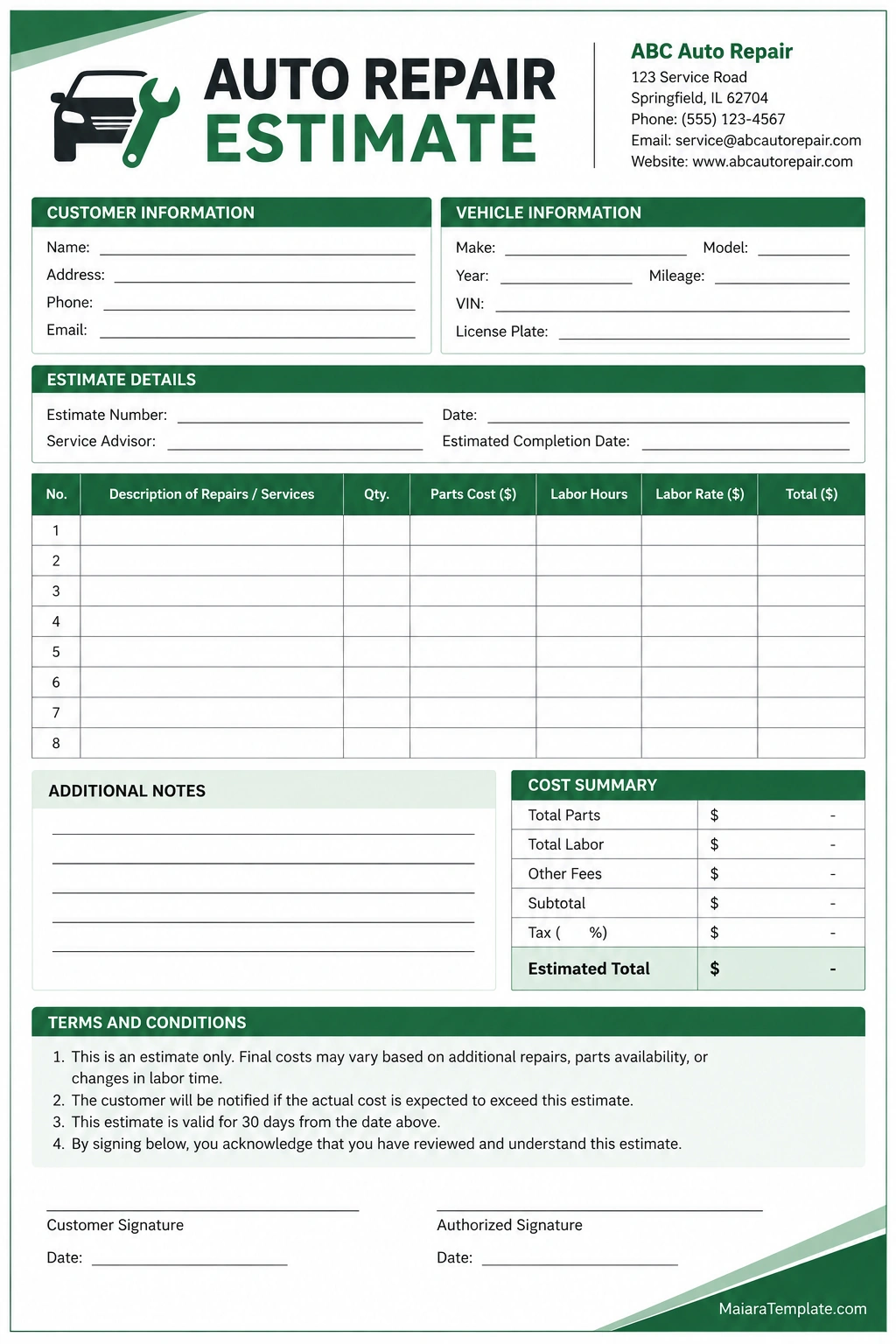
A professional vehicle repair estimate usually contains several sections. Reviewing each one helps you understand the proposed service and identify information that may need clarification.
1. Customer and Vehicle Information
The estimate should identify the customer and the vehicle being serviced. Common details include the customer’s name, contact information, vehicle make, model, year, mileage, and vehicle identification number (VIN), when appropriate.
Accurate vehicle information helps the repair shop identify compatible parts and maintain the correct service records.
2. Repair Description
This section explains the recommended repairs or maintenance services. Each item should describe the work clearly enough for the customer to understand what the shop proposes to perform.
For example, an estimate may list brake pad replacement, battery testing, oil service, or diagnostic work. If the description is unclear, request an explanation of the problem and the reason for the recommended repair.
3. Parts Costs
Parts costs represent the estimated price of the components required for the repair. Depending on the service, these may include filters, brake pads, belts, batteries, sensors, or other replacement parts.
Ask whether the estimate uses original equipment manufacturer (OEM) parts, aftermarket parts, or remanufactured components. Availability, compatibility, warranty terms, and price can differ between options.
4. Labor Charges
Labor charges cover the work performed by technicians. Shops may calculate labor using an hourly rate, a standard labor time for a particular repair, or another disclosed pricing method.
Review the estimated labor time and rate when these details are provided. If the labor charge seems unusually high or unclear, ask the shop to explain how it was calculated.
5. Diagnostic Fees and Additional Charges
Some repairs require diagnostic testing before the cause of a problem can be confirmed. The estimate may also include shop supplies, disposal charges, towing, or other applicable fees.
Ask which charges are included in the total and which may be billed separately. Confirm whether a diagnostic fee will be applied toward the repair if you authorize the recommended work.
6. Taxes and Estimated Total
The estimate should show the expected subtotal and applicable taxes or other disclosed charges. The final estimated total helps you understand the anticipated cost of the proposed work.
Check that the figures add up correctly. If the shop provides a range rather than a single amount, ask what circumstances could cause the final bill to fall at the higher end.
7. Notes, Terms, and Approval
Some estimates include notes about parts availability, expected completion time, warranty conditions, and limitations. They may also provide a space for the customer to authorize the proposed repairs.
Read the terms carefully and confirm whether signing the estimate authorizes work, acknowledges receipt, or serves another purpose. Ask the shop to explain any unclear wording before you sign.
How to Read an Auto Repair Estimate Step by Step
Reviewing an estimate in a consistent order makes it easier to understand the proposed work and identify questions before authorizing repairs.
Step 1: Confirm the Vehicle Details
Check the vehicle identification, mileage, and customer information. Correct any mistakes before the estimate becomes part of the repair record.
Step 2: Understand Each Recommended Repair
Ask the technician to explain the problem, the evidence supporting the diagnosis, and the purpose of each recommended service. Find out which repairs are urgent and which can safely wait.
Step 3: Review Parts and Labor Separately
Examine the estimated parts costs and labor charges. Ask whether the parts are new, used, aftermarket, or OEM, and clarify the labor calculation if it is not obvious.
Step 4: Check Fees and the Total
Review diagnostic fees, additional charges, taxes, and the estimated total. Confirm that the document includes all known costs associated with the proposed work.
Step 5: Ask About Changes to the Estimate
Mechanical problems sometimes reveal additional damage after disassembly or testing. Before approving the work, ask how the shop will notify you if the repair requires extra parts or labor.
Request a clear approval process for additional work. Do not assume that every estimate automatically guarantees the final price unless the shop has explicitly agreed to those terms.
Step 6: Keep a Copy
Save the estimate along with any written approvals, invoices, and repair records. These documents help you compare the final bill with the original proposal and maintain a useful history of vehicle maintenance.
Auto Repair Estimate vs. Repair Invoice
An auto repair estimate and a repair invoice serve different purposes. Understanding the distinction helps you know which document to review at each stage of the service process.
Auto Repair Estimate
An estimate describes the work the shop expects to perform and the projected cost. It is generally prepared before the customer authorizes the proposed repairs.
Repair Invoice
An invoice records the charges for work performed or products supplied. It may include the actual parts used, labor billed, taxes, payments, and the amount due.
The final invoice may differ from the original estimate if additional work is discovered and properly authorized, or if the actual parts and labor differ from the initial assumptions. Review any differences and ask for an explanation if the charges do not match the approved work.
How to Compare Auto Repair Estimates
Getting more than one estimate can be helpful for significant or expensive repairs. To make a fair comparison, ensure that each shop is evaluating the same problem and proposing a similar scope of work.
- Compare the repair scope: Check whether each estimate includes the same services and replacement parts.
- Review parts quality: Confirm the type, brand, and warranty of the proposed components.
- Check labor charges: Compare the stated rates and estimated labor time where available.
- Identify additional fees: Look for diagnostic costs, shop supplies, disposal charges, and taxes.
- Ask about warranties: Review coverage for parts and workmanship.
- Consider the shop’s qualifications: Evaluate relevant experience, certifications, customer service, and reputation.
- Confirm the approval process: Ask how the shop handles additional work and changes to the estimated total.
A lower estimate may be reasonable, but it could also exclude necessary services or use different parts. Focus on the overall value, clarity, and quality of the proposed repair rather than price alone.
How to Create an Auto Repair Estimate Template
An auto repair estimate template helps mechanics and repair shops prepare consistent, easy-to-read cost breakdowns. It also gives customers a structured document for reviewing the proposed service.
Step 1: Add Shop and Customer Information
Include the repair shop’s name and contact information, followed by the customer’s details and vehicle identification. Add an estimate number and preparation date to make the document easier to track.
Step 2: List the Proposed Repairs
Create separate rows for each repair or service. Include a description, quantity where relevant, parts cost, labor details, and line total.
Step 3: Calculate the Estimated Cost
Summarize parts, labor, applicable fees, and taxes. Check the calculations and clearly label the estimated total.
Step 4: Include Notes and Approval Terms
Provide space for diagnostic findings, additional notes, estimated completion dates, and relevant conditions. Explain how the customer can approve the work and how changes to the estimate will be handled.
Step 5: Review and Share the Document
Check the vehicle details, repair descriptions, calculations, and terms before sending the estimate. Keep a copy for the shop’s records and provide the customer with a copy for review.
Common Auto Repair Estimate Mistakes to Avoid
A few common issues can make repair estimates confusing or lead to disagreements. Review these points when preparing or evaluating the document.
- Vague repair descriptions: Use clear language to explain the recommended work.
- Missing cost details: Separate parts, labor, fees, and taxes where possible.
- Incorrect vehicle information: Verify the model, year, mileage, and other relevant details.
- Unclear parts specifications: Identify the type of parts being proposed when relevant.
- Unexplained additional charges: Ask for clarification about fees not previously discussed.
- No process for extra work: Establish how the customer will approve changes before additional repairs begin.
- Confusing estimates with invoices: Review the final bill separately and compare it with the approved work.
Frequently Asked Questions About Auto Repair Estimates
What is an auto repair estimate?
An auto repair estimate is a document that outlines the projected cost of repairing or maintaining a vehicle. It usually includes recommended services, parts costs, labor charges, applicable fees, and an estimated total.
Is an auto repair estimate the same as a quote?
The terms are sometimes used interchangeably, but their meaning can vary by shop and jurisdiction. An estimate generally represents an expected cost, while a quote may communicate a more definite price commitment. Ask the repair shop whether the stated amount is binding and what conditions could change it.
Is a repair estimate free?
Some repair shops provide estimates without charge, while others charge a diagnostic or inspection fee. Ask about any fees before booking an appointment and confirm whether diagnostic charges are separate from the repair estimate.
Can an auto repair estimate change?
Yes. The shop may discover additional problems or different parts requirements during the repair. Ask for an explanation of the changes and confirm that you will be contacted for approval before additional work is performed, subject to the applicable agreement and local law.
Should I get multiple auto repair estimates?
Comparing estimates can be helpful for expensive or complex repairs. Make sure each shop is quoting the same scope of work, comparable parts, and similar warranty coverage. A cheaper estimate is not necessarily better if it excludes important repairs.
What should I do if the final bill is higher than the estimate?
Compare the invoice with the original estimate and any written approvals for additional work. Ask the shop to explain each difference and provide supporting details. Your rights may depend on the agreement, local repair regulations, and the circumstances of the additional charges.
How long is an auto repair estimate valid?
The validity period depends on the repair shop’s terms and the circumstances. Parts prices, availability, and labor costs may change over time. Ask the shop how long the estimate remains valid before scheduling the repair.
Can I use a printable auto repair estimate template?
Yes. A printable auto repair estimate template can help organize vehicle details, repair descriptions, parts costs, labor charges, and the estimated total. Repair shops should customize the template to match their workflow and applicable disclosure requirements.
Conclusion
An auto repair estimate helps vehicle owners understand the proposed repair work and its expected cost before authorizing service. By reviewing the repair descriptions, parts, labor, fees, and approval terms, you can make a more informed decision about maintaining your vehicle.
Start by checking the vehicle details and asking questions about any recommended repairs you do not understand. Compare estimates carefully when necessary, and confirm how additional work will be approved before it begins.
Whether you are a vehicle owner planning a repair or a mechanic preparing a customer document, a clear auto repair estimate supports better communication, more transparent pricing, and a more organized repair process.
Download: Auto Repair Estimate Template

- Baby Feeding Chart Template - October 18, 2026
- Automobile Bill of Sale Template - October 18, 2026
- Autobiography Template - October 18, 2026
