A check is a written financial instrument that allows an individual or organization to authorize a payment from a bank account to another person or business. Although digital payments have become increasingly popular, paper checks are still used for certain personal, business, and financial transactions.
A blank check template is a ready-made design that provides a visual layout of a traditional paper check. It includes designated spaces for important information, such as the payee’s name, payment amount, date, memo, and signature. These templates can be useful for educational activities, design projects, financial demonstrations, and sample documents.
Whether you want to understand how a check works, create an illustrative check design, or learn how to complete a traditional paper check, having a clear template can make the process easier. This guide explains the different parts of a check, how to fill one out, and the benefits of using a printable check template.
What Is a Check?
A check is a written instruction from an account holder directing a financial institution to pay a specified amount of money to a designated recipient. The person or organization issuing the check is called the drawer, while the recipient is known as the payee.
Traditional checks contain several important details that help identify the transaction and authorize payment. These include the date, payee name, payment amount, written amount, and authorized signature.
When a recipient deposits or presents a valid check, the bank processes the payment according to applicable banking rules and verification procedures. Payment may depend on factors such as available funds, account status, signatures, and fraud-prevention checks.
Checks are commonly used for:
- Paying rent and other household expenses.
- Making business payments.
- Paying contractors and service providers.
- Sending personal payments.
- Completing certain official or administrative transactions.
What Is a Blank Check Template?
A blank check template is a pre-designed layout that resembles the structure of a traditional paper check. It provides designated spaces for entering payment details without requiring users to create the entire design from scratch.
Most blank check designs include fields for the check number, date, payee, numerical amount, written amount, memo, and signature.
These templates can be used for educational demonstrations, financial literacy activities, graphic design projects, and non-negotiable sample documents. However, a printable template is not a substitute for an authorized check issued by a financial institution.
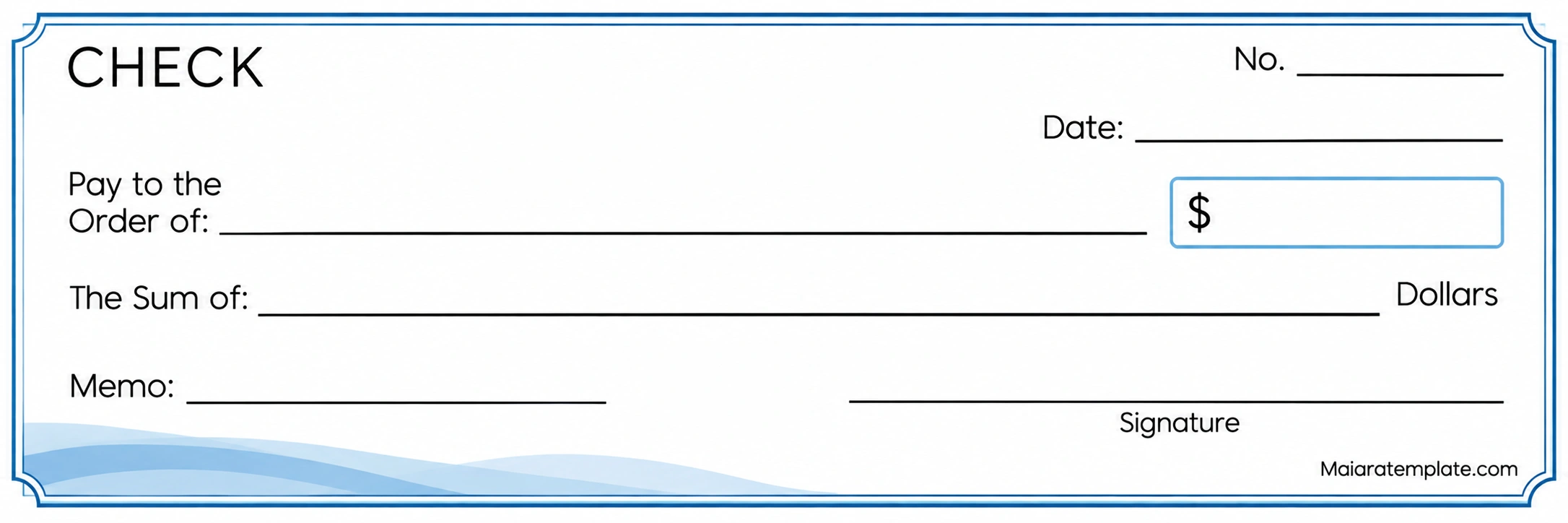
This illustrative design provides a convenient visual reference for understanding the different sections of a check. It is intended for educational and design purposes, not for authorizing real payments.
Different Parts of a Check and Their Functions
Understanding the different sections of a check helps you recognize what information belongs in each area. Although check designs may vary between financial institutions, most traditional checks contain several common elements.
1. Check Number
The check number is a unique reference number used to identify an individual check within a checkbook. It helps the account holder track issued payments and maintain financial records.
2. Date
The date indicates when the check is written. It helps identify the intended issue date and can be important when determining whether a check is valid for processing.
3. Payee Name
The payee is the individual or organization receiving the payment. The payee’s name should be written clearly and accurately to avoid confusion during processing.
4. Numerical Amount
This section displays the payment amount using numbers. For example, a payment of five hundred dollars would be written as $500.00.
5. Written Amount
The written amount spells out the payment value in words. It provides another way to identify the intended payment amount and helps prevent misunderstandings.
6. Memo Line
The memo section allows the issuer to describe the purpose of the payment. For example, it might identify a rent payment, invoice number, or service description.
7. Signature
The signature section is where the authorized account holder signs the check. A valid signature is an important part of the authorization process.
How to Fill Out a Traditional Paper Check
Completing a legitimate paper check requires accurate information and careful attention to detail. If you are using a check issued by your bank, follow these general steps.
Step 1: Write the Date
Enter the appropriate date in the date field. Use a clear and consistent date format to avoid confusion.
Step 2: Enter the Payee’s Name
Write the full name of the person or organization receiving the payment. Confirm the spelling before proceeding.
Step 3: Enter the Payment Amount in Numbers
Write the exact payment amount in the numerical amount box. Include the decimal portion when applicable.
Step 4: Write the Amount in Words
Spell out the payment amount in words on the designated line. The written amount should match the numerical amount.
Step 5: Complete the Memo Field
Add a short description explaining the reason for the payment. This information can help both parties identify the transaction later.
Step 6: Sign the Check
The authorized account holder must sign the check according to the signature requirements associated with the bank account. Never sign a blank check or leave a completed check unsecured.
Step 7: Record the Transaction
Keep a record of the payment in your check register or financial records. Record the date, payee, amount, and purpose to help monitor your account balance.
Benefits of Using a Blank Check Template
A blank check template can be useful in several situations, particularly when someone needs a visual example of a traditional check without using an actual financial instrument.
- Educational purposes: Teachers can use sample check layouts to explain basic banking concepts and financial literacy.
- Financial demonstrations: Templates can help explain how payment information is organized on a traditional check.
- Design projects: Designers can use blank layouts as references when creating non-negotiable mockups or presentation materials.
- Training activities: Organizations can use clearly marked sample documents to demonstrate payment procedures.
- Convenient reference: A printable layout helps users identify the different sections of a traditional check.
For safety, an educational or decorative check template should be clearly marked as a sample and should not contain real bank account details, routing numbers, or other information that could make it appear to be an authorized payment instrument.
Important Safety Tips When Using Checks
Although checks are useful payment instruments, they require careful handling. Protecting your financial information can help reduce the risk of unauthorized payments and check fraud.
- Keep checks secure: Store unused checks in a safe place.
- Never sign blank checks: Complete the required information before signing an authorized payment check.
- Verify the payee: Confirm the recipient’s name before issuing payment.
- Check the amount: Make sure the numerical and written amounts match.
- Monitor your bank account: Review transactions regularly and report suspicious activity promptly.
- Avoid sharing sensitive details: Do not publish account numbers, routing information, or check images containing personal banking details.
- Use authorized bank checks: For actual payments, obtain checks through your financial institution rather than relying on generic printable templates.
Check vs. Money Order: What Is the Difference?
Checks and money orders are both payment instruments, but they work differently.
A personal check is issued by an account holder and directs their bank to pay a specified amount to a recipient. Payment generally depends on the account being valid and having sufficient available funds when the check is processed.
A money order is generally purchased in advance for a specific amount. The purchaser pays for it upfront, and the recipient can redeem it according to the issuer’s rules.
The main difference is that a personal check draws on a bank account when presented for payment, while a money order is prepaid.
Frequently Asked Questions About Checks
What is a blank check template?
A blank check template is a pre-designed layout that resembles a traditional check. It contains spaces for payment information, including the date, payee, amount, memo, and signature. It is commonly used for educational demonstrations and non-negotiable sample documents.
Can I print a blank check template at home?
Yes. You can print an illustrative blank check template using a home printer. However, a generic printable design is not an authorized bank check and cannot be used to withdraw money or make a legitimate bank payment.
What information is included on a traditional check?
A traditional check generally includes the check number, date, payee name, numerical payment amount, written amount, memo, authorized signature, and banking information. The exact layout may vary by financial institution.
What is the purpose of the memo line on a check?
The memo line provides a short description of the payment purpose. It may include information such as rent, an invoice reference, a service description, or another transaction note.
Can I use a blank check template to pay someone?
No. A generic printable template is not a bank-issued or negotiable payment instrument. For legitimate payments, use an authorized check provided by your bank or another approved payment method.
What happens if the written amount and numerical amount do not match?
A discrepancy can create processing problems. Banks generally follow applicable legal and banking rules to determine the amount payable. To avoid confusion, always ensure both amounts match before issuing a legitimate check.
Is it safe to share a picture of a check?
Sharing an image of a real check can expose sensitive financial information, including account and routing details. Avoid posting check images publicly. If you need to share one for an authorized purpose, use a secure channel and follow the bank’s instructions for protecting sensitive information.
What is the difference between a canceled check and a void check?
A canceled check is a check that has already been processed and paid by the bank. A void check is marked as invalid for payment and is commonly used to prevent someone from using it as a payment instrument. A voided check may sometimes be requested for account verification, subject to the receiving organization’s requirements.
How can I keep track of checks I have issued?
You can maintain a check register or use a digital budgeting application to record the check number, date, payee, payment amount, and transaction purpose. Regularly comparing your records with bank statements can help identify discrepancies.
Conclusion
A check is a traditional payment instrument that allows an account holder to authorize a payment to another person or organization. Understanding its different sections, including the payee, date, payment amount, memo, and signature, makes it easier to understand how paper checks work.
A blank check template provides a convenient visual reference for educational activities, financial demonstrations, and non-negotiable design projects. It can help users become familiar with the layout of a traditional check without using an actual bank-issued document.
Whether you are learning about personal banking or preparing a sample financial document, always handle real checks carefully and protect sensitive banking information. For legitimate payments, use authorized checks issued by your financial institution.
Download: Blank Check Template
