An authorization letter is a formal document that allows another person to act on your behalf for a specific purpose. It can be useful when you cannot attend an appointment, collect documents, submit paperwork, or complete an administrative task yourself.
Whether you need someone to pick up a package, represent you at an office, collect important records, or handle a routine business matter, a clear authorization letter provides written evidence of your permission. It identifies the authorized person, explains what they can do, and establishes the limits of their authority.
Writing an authorization letter does not have to be difficult. With the right structure and wording, you can prepare a professional document that communicates your instructions clearly. This guide explains what to include, how to write an effective authorization letter, and when you may need additional documentation.
What Is an Authorization Letter?
An authorization letter is a written statement that grants another person or organization permission to perform specified actions on your behalf. The person granting permission is the authorizing party, while the person receiving permission is the authorized representative.
This document is commonly used for administrative tasks, document collection, package pickup, business transactions, and other situations where personal attendance is inconvenient or impossible.
An authorization letter is also known as a letter of authorization or letter of authority. Although these terms are sometimes used interchangeably, the legal effect of a document depends on its wording, purpose, and applicable requirements.
Why Is an Authorization Letter Important?
An authorization letter helps communicate permission in a clear and organized way. It can reduce confusion and provide a written record that an individual has been allowed to complete a specific task.
1. Saves Time and Simplifies Administrative Tasks
Sometimes, attending an office or collecting documents in person is not practical. An authorization letter allows you to designate a representative when the receiving organization permits this arrangement.
For example, you may authorize a family member to collect a document or ask a trusted colleague to submit paperwork on your behalf.
2. Defines the Scope of Permission
A well-written letter explains exactly what the authorized person may do. This helps prevent misunderstandings about the representative’s responsibilities and limits.
Instead of granting broad permission, describe the specific task, transaction, document, or appointment covered by the letter.
3. Provides Written Evidence
The letter records who granted permission, who received it, and what actions were authorized. The receiving organization can review these details before deciding whether to accept the representative’s request.
However, an authorization letter does not automatically satisfy every institution’s identification, verification, or legal requirements. Always check the applicable procedure in advance.
What to Include in an Authorization Letter
A professional authorization letter should contain enough information for the recipient to verify the permission and understand its purpose. The exact requirements depend on the task and the organization receiving the document.
1. Sender’s Information
Begin with the full name and appropriate contact information of the person granting authorization. Depending on the situation, include a mailing address, telephone number, or email address.
Use accurate details so the recipient can contact you if clarification is necessary.
2. Date and Recipient Information
Include the date the letter is written. If the receiving person or organization is known, address the letter to the relevant individual, department, company, or institution.
When the recipient is unknown, a suitable general greeting may be used. However, addressing the correct department can make the letter easier to process.
3. Authorized Person’s Details
Identify the person who will act on your behalf. Use their full legal name and include any additional information required by the receiving organization.
For tasks involving identity verification, the organization may request identification documents or other supporting information. Do not include unnecessary sensitive information in a letter that may be shared or stored by multiple parties.
4. Specific Authorized Actions
This is the most important section of the authorization letter. State clearly what the representative is permitted to do.
Examples include:
- Collecting a specified document or certificate.
- Picking up a package or parcel.
- Submitting completed paperwork.
- Receiving records from an authorized department.
- Representing you at a specified administrative appointment.
- Communicating with an organization about a defined matter.
Be precise about the scope of authority. If the representative is allowed to collect a document but not sign additional agreements, make that limitation clear.
5. Purpose and Validity Period
Explain why authorization is being granted and, when appropriate, identify the relevant transaction, reference number, appointment, or document.
You can also state when the authorization begins and ends. A defined validity period helps prevent the letter from being used for unrelated tasks or after the intended purpose has been completed.
6. Limitations and Supporting Documents
If the representative has limited authority, describe those limits in plain language. You may also mention any supporting documents attached to the letter, such as a copy of an identification document or a reference confirmation, when appropriate.
Only provide supporting information that is necessary and safe to share. Some organizations require their own authorization form rather than a general letter.
7. Signature and Contact Information
Close the letter with a polite statement and the signature of the person granting authorization. Include the printed name and a reliable contact method.
Depending on the purpose, the recipient may require an original signature, an electronic signature, notarization, witnesses, or additional verification. Confirm these requirements before submitting the document.
How to Write an Authorization Letter Step by Step
Following a simple structure makes it easier to write a clear and professional authorization letter. Prepare the essential details before drafting the final document.
Step 1: Identify the Purpose
Start by determining exactly why you need to authorize another person. Identify the task, the organization involved, and the outcome the representative is expected to complete.
A clear purpose helps you decide which information belongs in the letter and which details can be omitted.
Step 2: Choose an Authorization Letter Template
An authorization letter template provides a ready-made structure for the sender’s details, recipient information, authorization statement, and signature.
Choose a template that suits your situation. A simple document collection letter may require only a few paragraphs, while a business authorization letter may need more detailed terms and supporting information.
Step 3: Write the Authorization Statement
State your intention directly. Identify the authorized person and explain the specific task they may perform.
For example, you could write: “I hereby authorize Jane Smith to collect my certificate from the administration office on my behalf.”
Adjust the wording to match the actual task. Avoid vague phrases that could be interpreted as granting broader authority than intended.
Step 4: Add Limits and Supporting Details
Include relevant reference numbers, document descriptions, appointment dates, or validity periods. Explain any restrictions that the representative must follow.
If the organization requires proof of identity or an official form, prepare those documents according to its instructions.
Step 5: Review and Sign the Letter
Check the names, dates, contact information, and authorization statement before signing. Make sure the letter grants only the permission you intend to provide.
Keep a copy for your records and send the completed document through an accepted method. If the representative needs the original, confirm how it should be delivered.
Common Types of Authorization Letters
The content of an authorization letter depends on the task involved. The following examples illustrate common situations in which written permission may be useful.
Authorization Letter for Document Collection
This letter allows another person to collect a specified document from an office, school, company, or other organization. Identify the document and include any reference information needed to locate it.
Check whether the issuing organization requires identification, an original signature, or its own authorization form.
Authorization Letter for Package Pickup
A package pickup authorization letter identifies the person permitted to collect a delivery. Include the tracking number or delivery reference when available.
Some delivery services require the recipient’s identification, a signed authorization, or other verification before releasing a package.
Authorization Letter for Business Purposes
A business authorization letter may allow an employee or representative to submit documents, receive correspondence, or handle a specific administrative matter.
Clearly define the representative’s authority and confirm that the person granting permission has the right to authorize the action. Tasks involving contracts, financial transactions, or legally significant decisions may require more formal documentation.
Authorization Letter for School or Family Matters
A parent or guardian may sometimes authorize another adult to complete a permitted school-related task or collect specified records. The institution may require additional consent forms or identity checks.
For medical care, travel involving minors, or other sensitive matters, a general authorization letter may not be sufficient. Follow the relevant institution’s and jurisdiction’s requirements.
Practical Tips for a Professional Authorization Letter
A clear letter is easier for the recipient to understand and process. Use the following tips to improve the document.
- Be specific: Describe the exact action the representative may perform.
- Keep it concise: Include essential information without unnecessary background details.
- Use formal language: Maintain a polite and professional tone.
- Verify names and dates: Make sure all identifying details are accurate.
- Set appropriate limits: Avoid granting broader authority than necessary.
- Check recipient requirements: Confirm whether an official form, original signature, or notarization is needed.
- Protect personal information: Share only the details required for the task.
- Keep a copy: Retain the signed letter and relevant supporting records.
Authorization Letter Template and Example
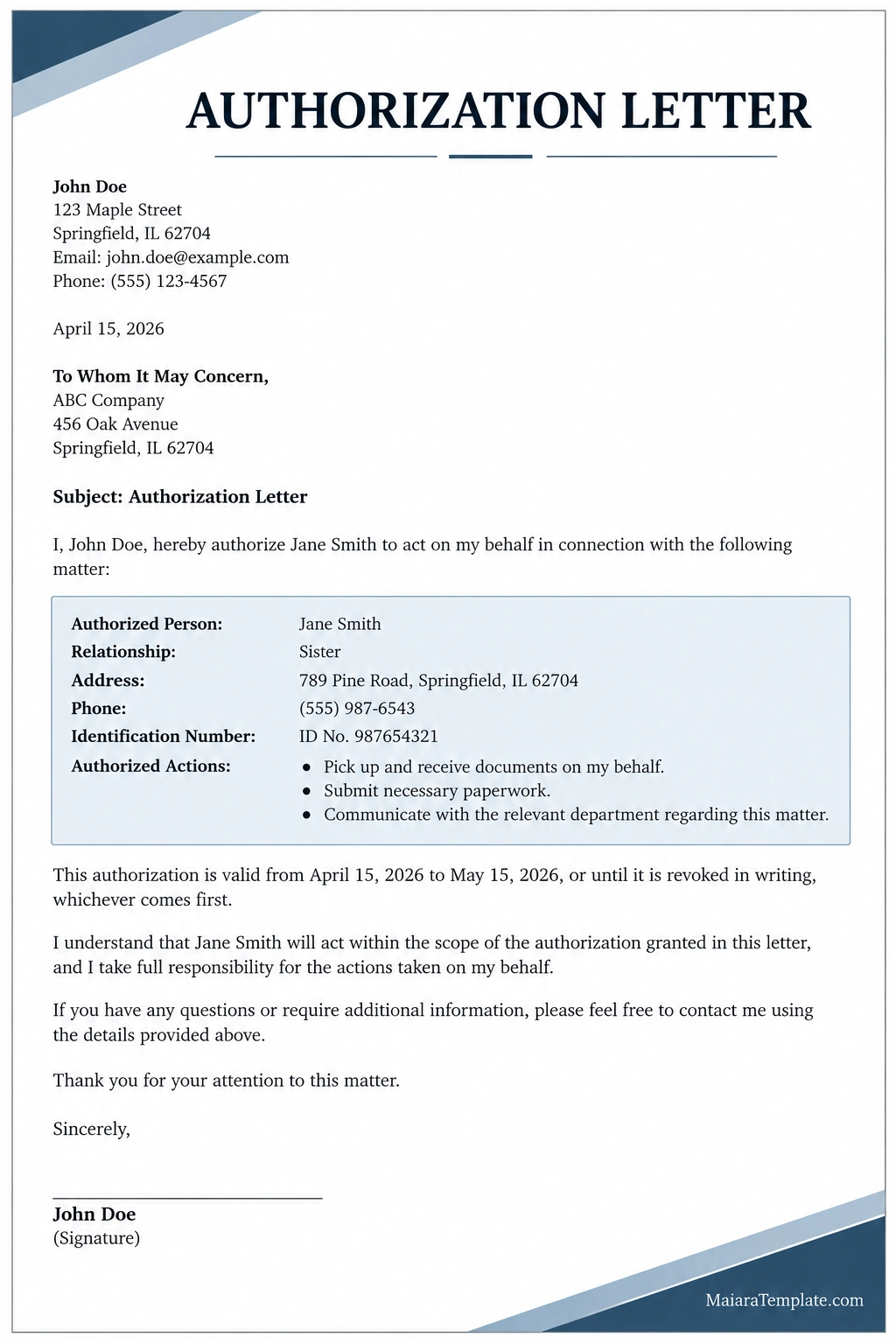
An authorization letter template can help you prepare a professional document without starting from a blank page. It provides a consistent format for the sender’s details, recipient, authorized representative, purpose, limitations, and signature.
For example, someone who cannot visit an administration office may authorize a trusted family member to collect a specific certificate. The letter would identify both individuals, name the certificate, state the permitted action, and include the date and signature.
A general example of the authorization statement is: “I, [Full Name], hereby authorize [Representative’s Full Name] to [Specific Action] on my behalf. This authorization is valid for [Purpose or Period], subject to the requirements of the receiving organization.”
This wording is a starting point rather than a universal legal form. Adapt it to the actual circumstances and any instructions provided by the recipient.
Before using a printable authorization letter template, review the scope of permission carefully. For financial matters, property transactions, legal representation, or other high-stakes activities, seek appropriate professional guidance if needed.
Frequently Asked Questions About Authorization Letters
What is the main purpose of an authorization letter?
The main purpose of an authorization letter is to provide written permission for another person to perform a specific task on your behalf. It identifies the representative, explains the permitted action, and records the authorization.
How do I write a simple authorization letter?
Include your name and contact details, the date, the recipient, the authorized person’s name, and a clear statement describing the permitted task. Add relevant limitations, supporting details, and your signature.
Is an authorization letter the same as a power of attorney?
No. An authorization letter often grants permission for a limited task, while a power of attorney is a more formal legal instrument that can grant broader authority, depending on its terms and the applicable law. Some activities require a specific legal document rather than a general letter.
Does an authorization letter need to be notarized?
Not every authorization letter requires notarization. The requirement depends on the purpose, the receiving organization, and applicable law. Check the relevant instructions before preparing or submitting the letter.
Can I write an authorization letter by hand?
In many routine situations, a handwritten letter may be accepted if it contains the required information and signature. However, some organizations require a typed letter, an official form, or a specific signing method.
How long is an authorization letter valid?
The validity depends on the wording of the letter and the rules that apply to the task. You can specify a date range or limit the authorization to a particular transaction. Some permissions may also be revoked, subject to applicable requirements.
Can an authorization letter be sent electronically?
Some organizations accept scanned or electronically signed authorization letters, while others require an original document. Confirm the accepted submission method before sending the letter.
What documents should accompany an authorization letter?
Depending on the task, the recipient may request identification, a reference number, proof of relationship, supporting records, or an official form. Provide only what is necessary and follow the organization’s verification procedures.
Conclusion
An authorization letter is a practical way to give another person permission to complete a specific task on your behalf. By clearly identifying the representative, explaining the permitted actions, and setting appropriate limits, you can make the arrangement easier to understand and verify.
Start by confirming the recipient’s requirements, then choose a suitable template and add the necessary details. Review the wording carefully, sign the document using an accepted method, and keep a copy for your records.
Whether you need help collecting documents, picking up a package, or handling an administrative task, a well-prepared authorization letter can provide clear written evidence of your permission. For legal or high-stakes matters, make sure the document meets all applicable requirements before relying on it.
Download: Authorization Letter Template Word

- Baby Feeding Chart Template - October 18, 2026
- Automobile Bill of Sale Template - October 18, 2026
- Autobiography Template - October 18, 2026
