Leaving a job does not always require a lengthy explanation. In many situations, a short and professional resignation letter is all you need to formally inform your employer that you are moving on. A brief resignation letter communicates your decision clearly, confirms your final working day, and expresses appreciation for the opportunity.
Whether you are accepting a new position, pursuing a different career path, relocating, or leaving for personal reasons, keeping your resignation letter simple can make the process easier. You do not need to explain every detail behind your decision or include unnecessary information.
In this guide, you will find brief resignation letter examples, ready-to-use templates, essential writing tips, and answers to common questions. These samples can help you write a polite, professional resignation letter that communicates everything your employer needs to know.
What Is a Brief Resignation Letter?
A brief resignation letter is a short, formal document that notifies your employer of your intention to leave your current position. It typically includes your job title, company name, intended last working day, and a short expression of appreciation.
Unlike a detailed resignation letter, a short resignation letter focuses only on essential information. It avoids lengthy explanations, personal complaints, and unnecessary background details.
Most brief resignation letters can fit into three or four short paragraphs. They are commonly submitted to a direct supervisor, manager, or human resources department, depending on company procedures.
Although the letter is short, it should still maintain a respectful tone. A professional resignation message helps you leave on good terms and maintain positive relationships with former colleagues and employers.
What to Include in a Brief Resignation Letter
A professional resignation letter does not need many sections. However, including the following elements ensures that your message is clear and complete.
1. A Clear Statement of Resignation
Begin by directly stating that you are resigning from your position. Include your job title and company name so there is no confusion about your employment status.
For example: “Please accept this letter as formal notice of my resignation from my position as Administrative Assistant at ABC Company.”
2. Your Last Working Day
Clearly identify the date you intend to finish working. This information helps your employer plan staffing, project handovers, and other transition arrangements.
For example: “My final working day will be Friday, December 18, 2026.”
Before choosing a date, review your employment agreement and applicable workplace policies to understand any notice requirements.
3. A Brief Expression of Appreciation
A short thank-you message makes your resignation letter more courteous. You can acknowledge the experience, opportunities, professional development, or support you received during your employment.
For example: “I appreciate the opportunities and valuable experience I have gained during my time with the company.”
4. An Optional Transition Offer
If appropriate, offer to help with the transition before your departure. This could include organizing documents, completing outstanding tasks, or sharing important information with colleagues.
For example: “I am happy to assist with the handover of my responsibilities to help ensure a smooth transition.”
5. A Professional Closing
Finish with a polite sign-off such as “Sincerely,” “Best regards,” or “Kind regards,” followed by your full name.
These five elements are generally sufficient to create a clear and professional resignation letter.
Brief Resignation Letter Examples
The following examples demonstrate different ways to write a short resignation letter. Choose the version that best matches your employment situation and adjust the details before submitting it.
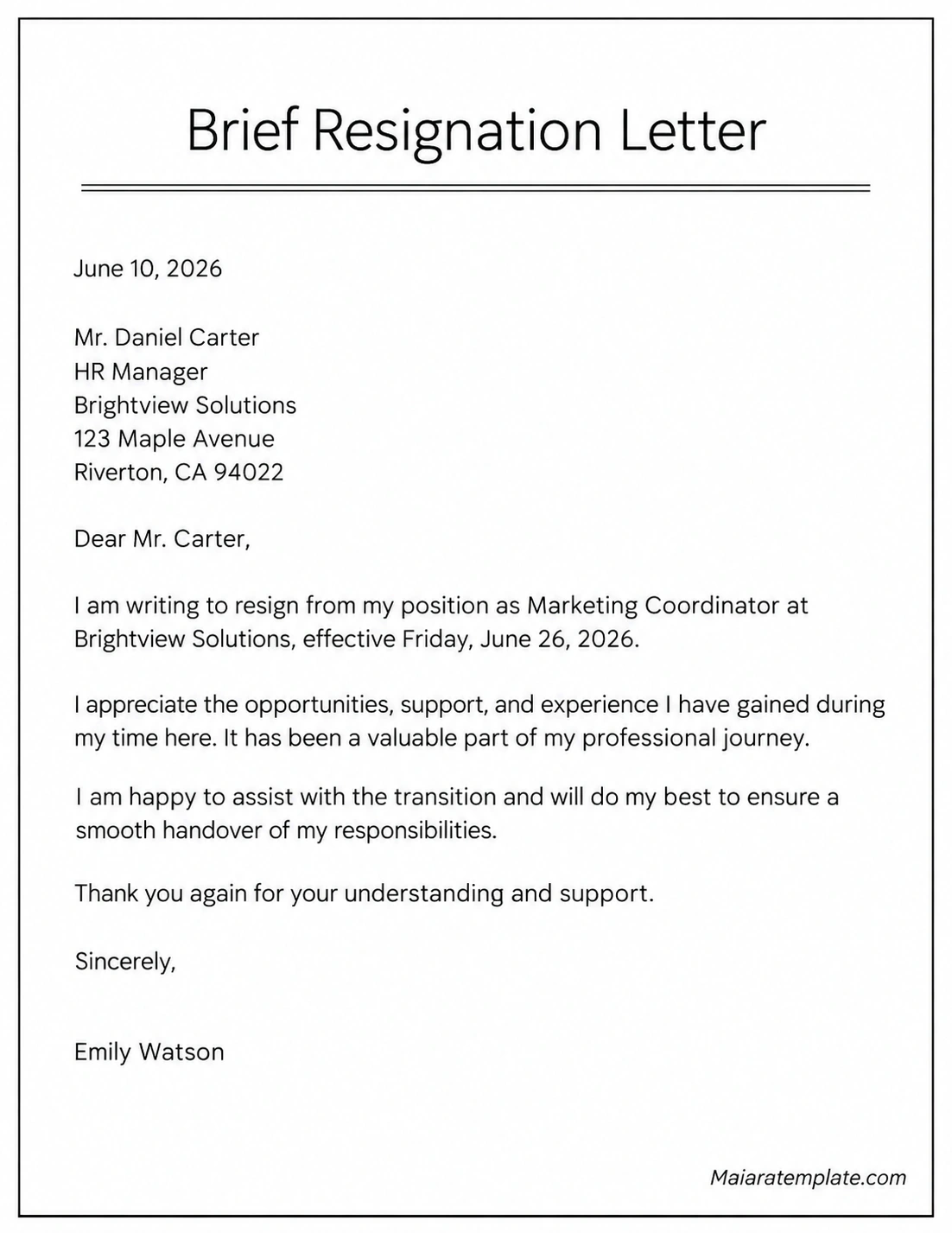
Example 1: Standard Brief Resignation Letter
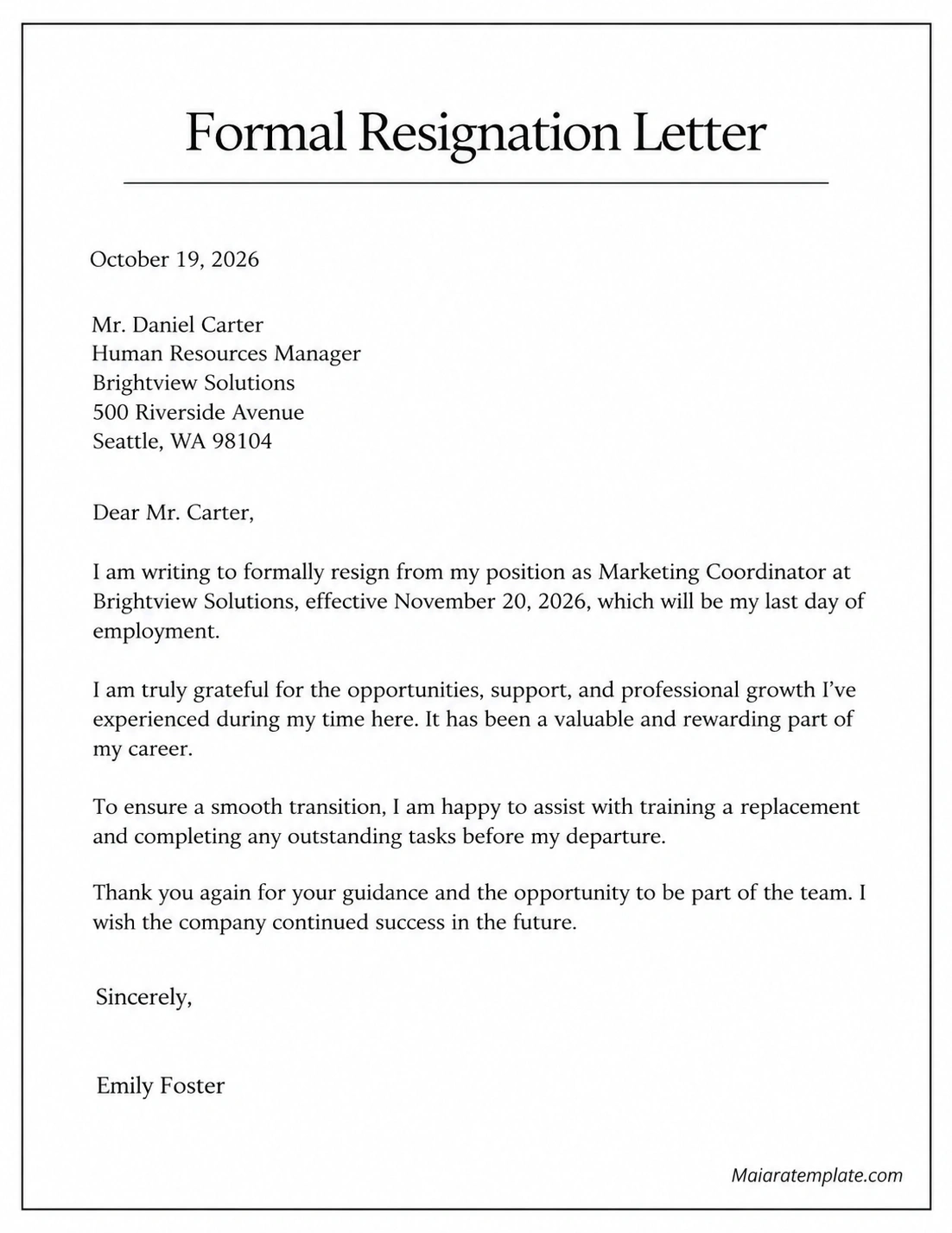
This is a simple, professional example suitable for most employees who want to provide formal notice without including unnecessary details.
Subject: Resignation Letter
Dear [Manager’s Name],
Please accept this letter as formal notice of my resignation from my position as [Job Title] at [Company Name]. My last working day will be [Date].
I sincerely appreciate the opportunities and experience I have gained during my time with the company. Thank you for your support and guidance.
I am happy to assist with the transition of my responsibilities before my departure.
Sincerely,
[Your Full Name]
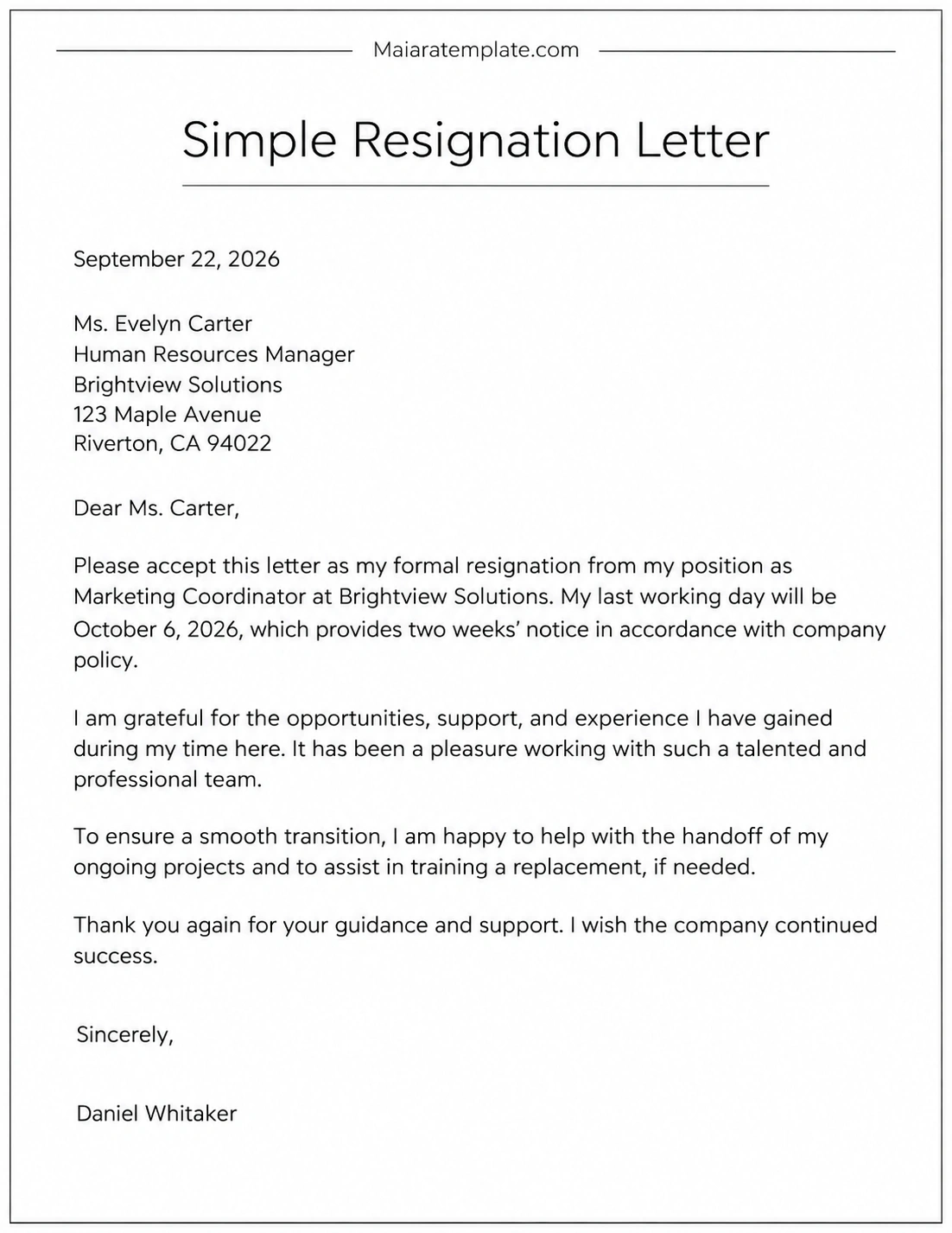
Example 2: Short and Simple Resignation Letter
If you prefer an even shorter message, this version communicates your decision in just a few sentences.
Subject: Notice of Resignation
Dear [Manager’s Name],
I am writing to formally resign from my position as [Job Title] at [Company Name], effective [Last Working Day].
Thank you for the opportunity to work with the team and for the experience I have gained. I wish the company continued success.
Best regards,
[Your Full Name]
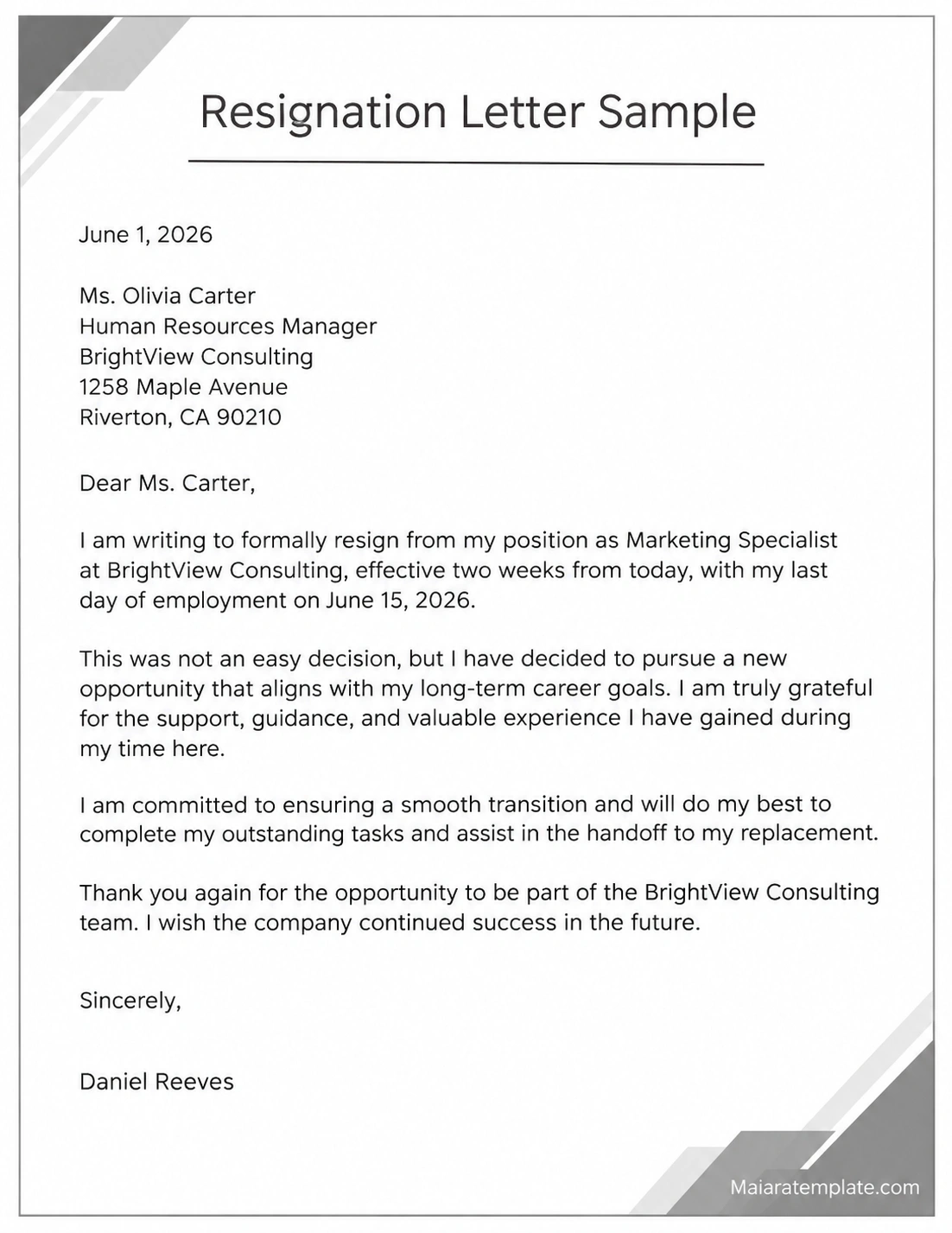
Example 3: Brief Resignation Letter With Two Weeks’ Notice
When your workplace requires advance notice, you can mention the notice period and your final working date in the opening paragraph.
Subject: Two Weeks’ Notice of Resignation
Dear [Manager’s Name],
Please accept this letter as my formal two weeks’ notice of resignation from my position as [Job Title] at [Company Name]. My final working day will be [Date].
I am grateful for the professional opportunities and support I have received during my employment.
I will do my best to complete my outstanding responsibilities and assist with the transition.
Sincerely,
[Your Full Name]
Example 4: Brief Resignation Letter for Personal Reasons
You do not have to disclose private circumstances when leaving a job. A general reference to personal reasons is enough if you want to provide context.
Subject: Formal Resignation
Dear [Manager’s Name],
I am writing to formally resign from my position as [Job Title] at [Company Name] due to personal reasons. My last working day will be [Date].
I appreciate the understanding, support, and opportunities provided during my time with the company.
Thank you for everything. I wish you and the team continued success.
Best regards,
[Your Full Name]
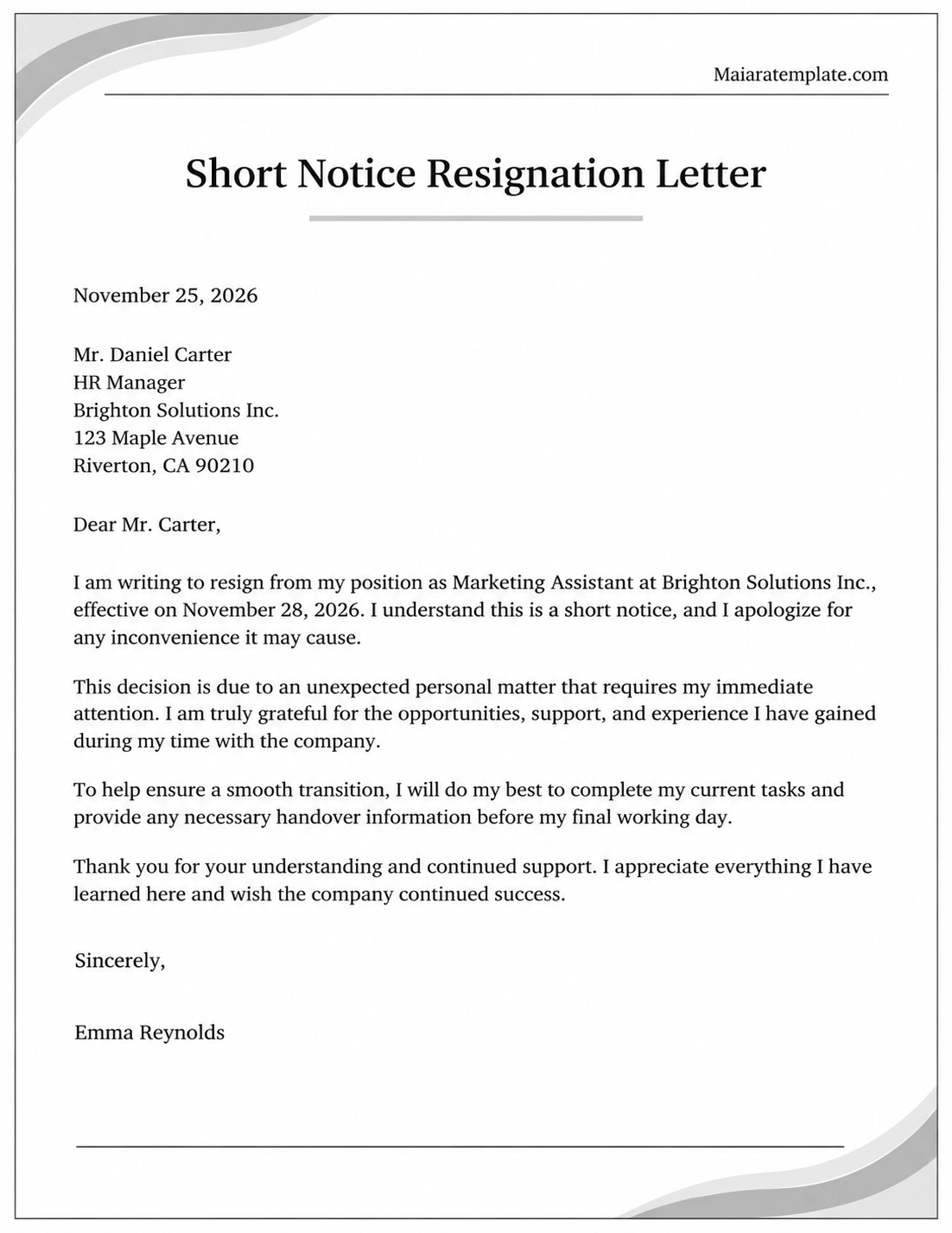
Example 5: Short Notice Resignation Letter
Sometimes, unexpected circumstances make it difficult to provide the standard notice period. In this situation, communicate your departure date clearly and acknowledge the shorter notice.
Subject: Resignation Notice
Dear [Manager’s Name],
I regret to inform you that I must resign from my position as [Job Title] at [Company Name], effective [Date]. I understand that this provides shorter notice than usual, and I apologize for any inconvenience.
I appreciate the opportunities and experience I have gained while working here. I will do my best to assist with any necessary handover arrangements.
Thank you for your understanding.
Sincerely,
[Your Full Name]
How to Write a Brief Resignation Letter
Writing a short resignation letter is straightforward when you follow a simple structure. Use these practical steps to prepare a message that is clear, respectful, and professional.
Step 1: Use a Professional Format
Start with the date, recipient’s name, job title, and company name if you are submitting a formal printed letter. For an email, use a clear subject line such as “Resignation Letter” or “Notice of Resignation.”
Step 2: State Your Decision Clearly
Do not make your resignation announcement vague. Use a direct sentence that confirms your intention to leave your current position.
Avoid phrases that make your decision sound uncertain if you have already decided to resign.
Step 3: Confirm Your Final Working Day
Include a specific date rather than simply saying that you will leave in two weeks. A precise date helps prevent misunderstandings and allows your employer to prepare for your departure.
Step 4: Keep Your Explanation Short
You are not required to provide a detailed explanation for leaving in your resignation letter. If you want to mention your reason, use a brief and neutral statement.
For example, you can say that you are leaving for a new opportunity, personal reasons, or a career change. You can also leave the reason out entirely.
Step 5: End on a Positive Note
Include a brief thank-you message and, when appropriate, offer to support the transition. Even if your experience was challenging, keeping the letter professional can help preserve your working relationships.
Tips for Keeping Your Resignation Letter Professional
A short resignation letter should be easy to understand and free from unnecessary information. Consider these tips before sending your notice.
- Keep it concise: Aim for approximately 100 to 200 words. Include only the information your employer needs.
- Use a polite tone: Maintain respectful language throughout the letter, regardless of your reason for leaving.
- Check your notice period: Review your employment agreement and company policies before confirming your departure date.
- Avoid negative comments: Do not use your resignation letter to criticize management, colleagues, or workplace conditions.
- Proofread carefully: Check spelling, grammar, names, job titles, and dates before submitting the document.
- Follow company procedures: Send your resignation to the appropriate manager or HR representative and follow any required submission process.
- Keep a copy: Save a copy of your resignation letter or email for your personal employment records.
Remember that a resignation letter is a formal employment document. A professional approach can make your departure smoother and help you maintain a positive reputation.
Common Mistakes to Avoid
Even a short resignation letter can create confusion if important details are missing. Avoid these common mistakes when preparing your notice.
- Leaving out your final working day: Always provide a clear date to establish when your employment will end.
- Giving an unclear resignation statement: Make sure your opening paragraph directly communicates your decision.
- Providing too much personal information: Detailed explanations are generally unnecessary unless you choose to share them.
- Using an emotional tone: Keep personal frustrations and workplace disagreements out of the formal letter.
- Ignoring notice requirements: Check the applicable employment terms before choosing your last day.
- Sending the letter to the wrong person: Confirm who should receive your resignation notice.
Frequently Asked Questions
How short should a brief resignation letter be?
A brief resignation letter can be approximately 100 to 200 words. It should clearly state your decision to resign, identify your final working day, include a short thank-you message, and end with a professional sign-off. A shorter letter is acceptable as long as it contains the essential information.
Can I resign without giving a reason?
Yes. You generally do not need to explain why you are leaving in your resignation letter. Simply state your intention to resign and provide your final working day. However, review your employment agreement and applicable workplace requirements before submitting your notice.
Is a brief resignation letter professional?
Yes. A short resignation letter can be completely professional when it uses respectful language and includes the necessary employment details. Length does not determine professionalism. Clear communication and an appropriate tone are more important.
Can I send a resignation letter by email?
Yes, many employers accept resignation notices by email. Use a clear subject line, address your manager professionally, state your resignation and final working day, and include a polite closing. Check your company’s resignation procedures to confirm whether an additional signed document is required.
Should I give two weeks’ notice when resigning?
Two weeks’ notice is a common professional practice in some workplaces, particularly in the United States. However, the appropriate notice period depends on your employment agreement, company policy, position, and applicable local requirements. Check these details before selecting your final working day.
What should I write in a resignation letter if I am leaving immediately?
Clearly state that your resignation is effective immediately or provide your intended final working date. Briefly acknowledge the short notice and apologize for any inconvenience if appropriate. You should also review your employment terms and discuss any applicable notice obligations with your employer.
Do I need to thank my employer in a resignation letter?
A thank-you message is not always required, but it is a professional courtesy. A single sentence expressing appreciation for the experience, support, or opportunities you received is usually sufficient.
Can I use the same resignation letter template for any job?
Yes. A general resignation letter template can work for many positions and industries. Simply customize the recipient’s name, your job title, company name, and final working day. You can also adjust the appreciation message to reflect your professional experience.
Should I address my resignation letter to my manager or HR?
This depends on your company’s procedures. Many employees submit their resignation directly to their manager and copy the HR department when appropriate. If your workplace has a specific resignation process, follow its instructions.
Conclusion
A brief resignation letter is an effective way to communicate your decision to leave a job without including unnecessary details. By stating your resignation clearly, confirming your final working day, expressing appreciation, and maintaining a respectful tone, you can create a professional notice in just a few paragraphs.
You can use the examples and templates in this guide as a starting point. Customize the wording to match your employment situation, check your notice requirements, and proofread the final document before sending it.
Ultimately, a well-written short resignation letter helps you communicate your departure clearly while leaving a positive and professional impression.
Download: Brief Resignation Letter Template Word
