Managing money can feel overwhelming when you only look at your finances once a month. Bills, groceries, transportation, and unexpected purchases can quickly add up. A weekly budget planner makes money management easier by breaking your financial goals into smaller, more manageable steps.
Instead of waiting until the end of the month to review your spending, you can use a weekly budget worksheet to plan your income, set spending limits, track daily expenses, and monitor your savings. This approach helps you understand where your money goes and make better financial decisions throughout the week.
Whether you receive a weekly paycheck, manage a household budget, or want to develop better spending habits, a printable weekly budget planner can help you stay organized. In this guide, you will discover how to use one effectively and explore different printable templates for your budgeting needs.
What Is a Weekly Budget Planner?
A weekly budget planner is a printable worksheet or digital spreadsheet designed to organize income, expenses, bills, and savings over a seven-day period. It helps you assign a specific amount to each spending category before the week begins.
Unlike a traditional monthly budget, a weekly budget sheet provides more frequent opportunities to review your finances. You can compare planned spending with actual expenses and identify areas where you may need to adjust your budget.
A typical weekly budget planner includes:
- Weekly income: Money available from paychecks, freelance work, or other income sources.
- Fixed expenses: Regular payments such as rent, utilities, subscriptions, and insurance.
- Variable expenses: Flexible spending categories such as groceries, transportation, dining out, and entertainment.
- Savings goals: Money reserved for emergency funds, personal goals, or future purchases.
- Actual spending: A record of what you really spend during the week.
- Remaining balance: The amount left after accounting for expenses and savings.
By organizing these details in one place, you can create a realistic spending plan and maintain better control of your money.
Free Printable Weekly Budget Planner Templates
Choosing the right budgeting worksheet depends on your income schedule and financial priorities. The following printable templates offer different ways to organize your weekly finances.
1. Weekly Budget Planner Template
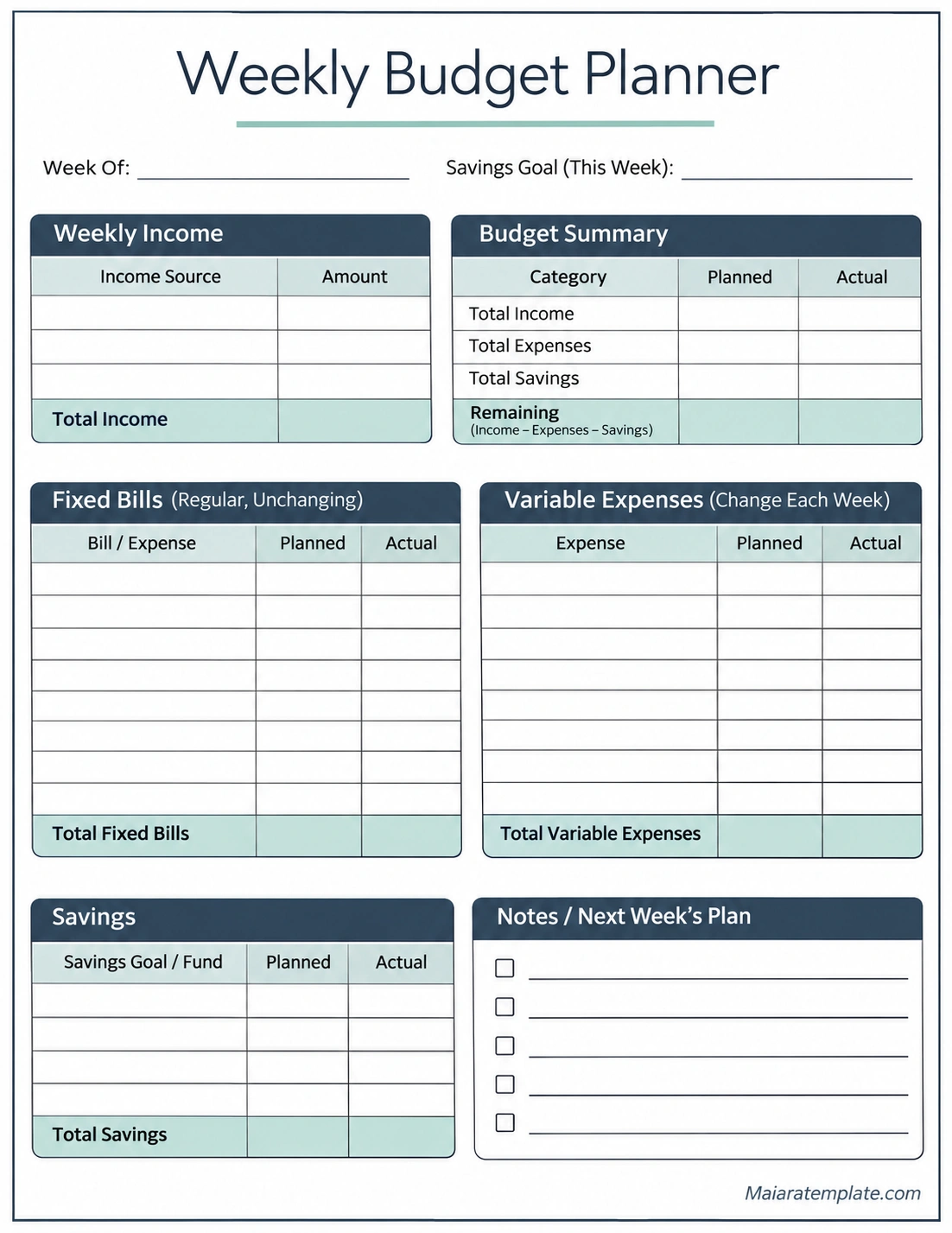
This all-in-one weekly budget planner is a great starting point for anyone who wants to organize income, bills, variable expenses, and savings in one worksheet. It includes separate sections for planned and actual amounts, making it easier to review your financial progress.
Use this template at the beginning of each week to assign spending limits and update the amounts as transactions occur.
2. Weekly Budget Review Template
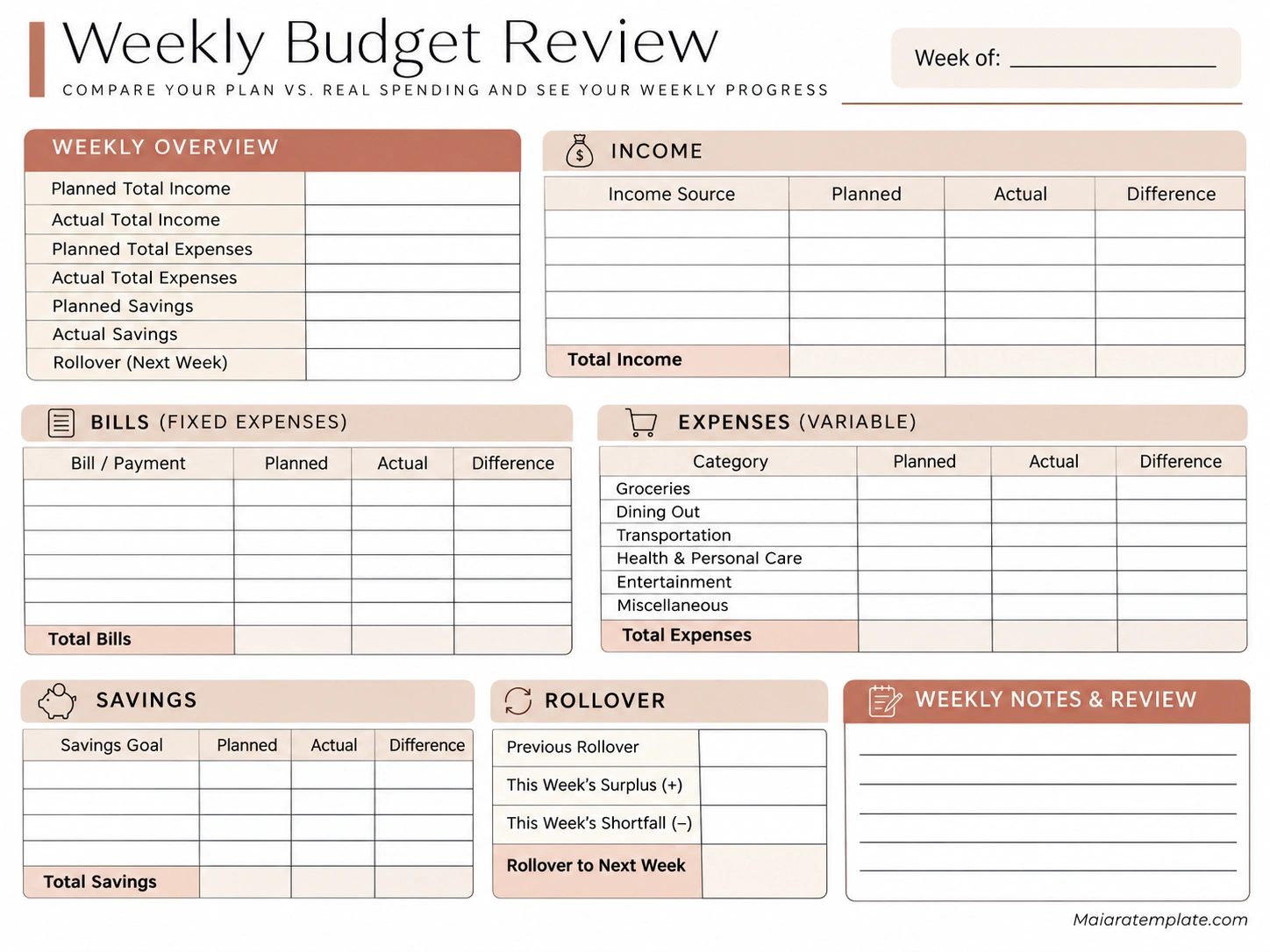
A weekly budget review worksheet helps you evaluate how well you followed your spending plan. It compares planned amounts with actual income and expenses, allowing you to identify differences before they become larger financial problems.
This template is especially useful at the end of each week. Review your spending categories, calculate your remaining balance, and record any surplus or shortfall that should carry into the next budgeting period.
3. Paycheck Budget Worksheet
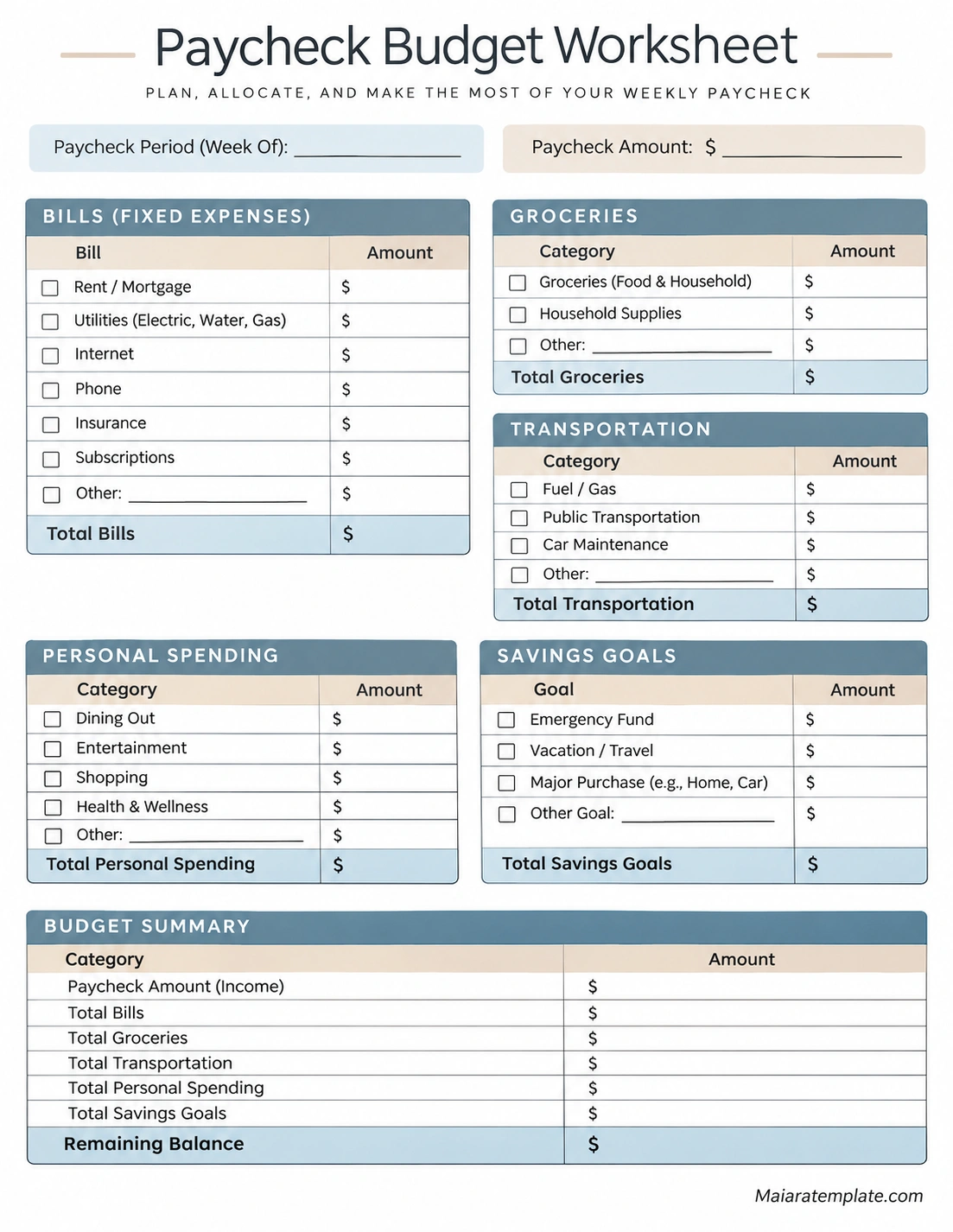
If you receive your income every week or every two weeks, a paycheck budget worksheet can help you decide how to distribute your money before spending it.
Start by entering your paycheck amount. Then allocate money toward essential bills, groceries, transportation, personal spending, and savings. The remaining balance shows how much money is available after your planned allocations.
This method can be particularly helpful for students, employees, and households that depend on regular paychecks.
4. Weekly Spending Tracker
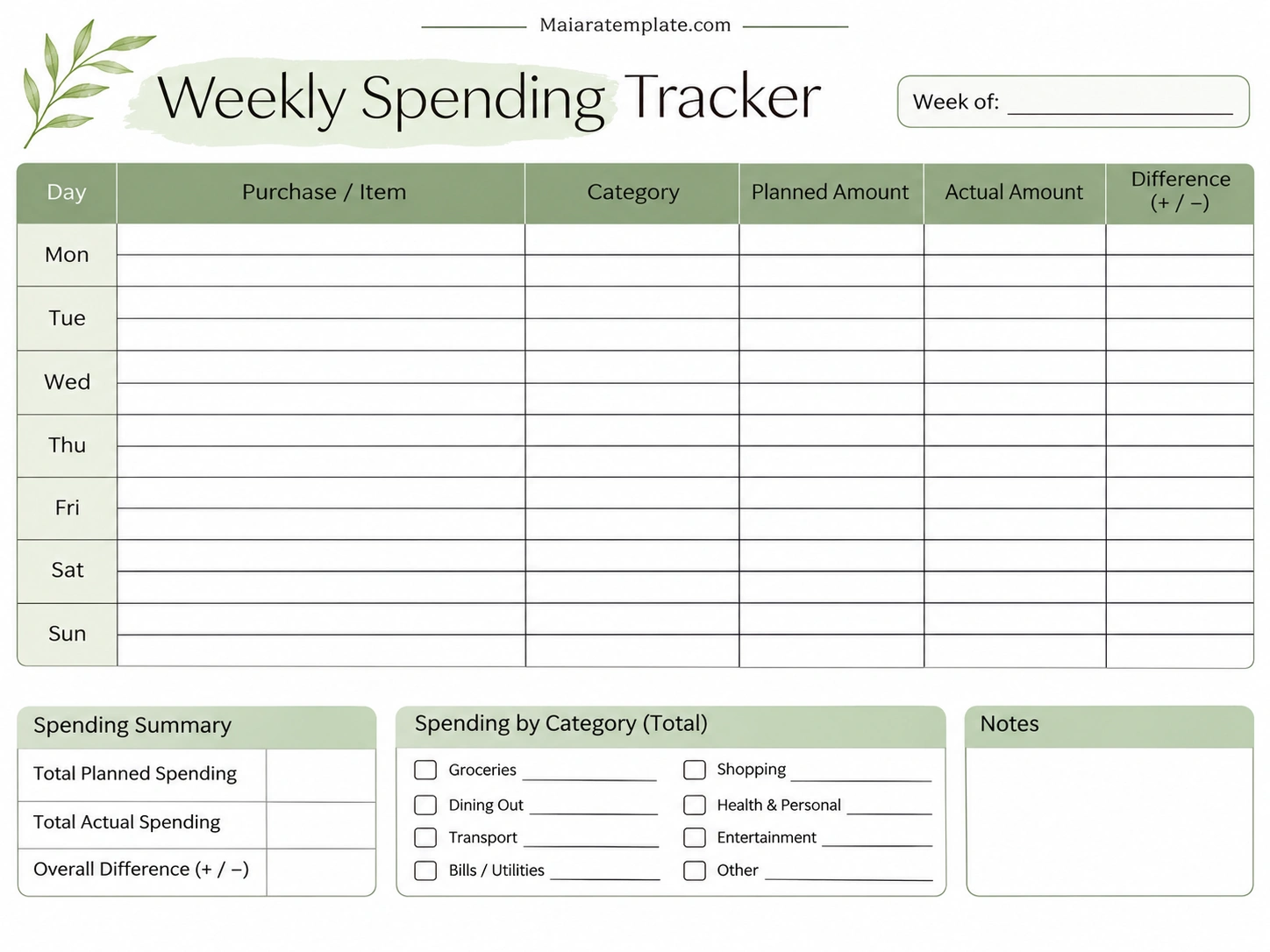
A weekly spending tracker focuses on recording everyday purchases. Rather than relying on memory, you can write down each transaction and assign it to the appropriate category.
Track expenses from Monday through Sunday, including groceries, dining out, transportation, shopping, and entertainment. At the end of the week, compare your actual spending with your original budget.
Keeping a daily spending record helps you recognize unnecessary purchases and understand which categories need more attention.
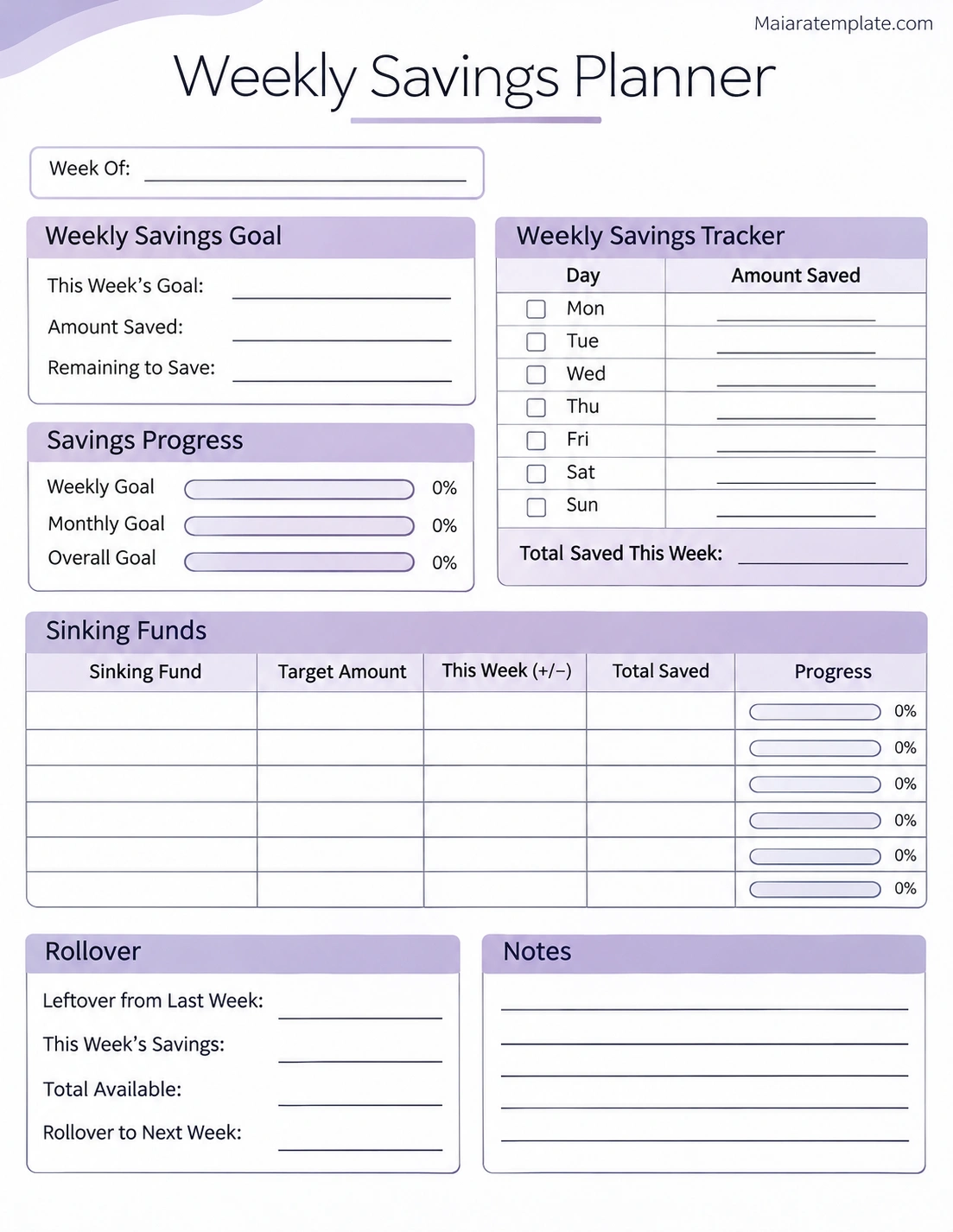
5. Weekly Savings Planner
Budgeting is not only about controlling expenses. It is also about making consistent progress toward your financial goals.
A weekly savings planner allows you to set a savings target, record how much you save each day, and monitor your progress. You can use it for an emergency fund, vacation, education, or another personal financial goal.
Consider setting aside a small amount every week rather than waiting until the end of the month. Consistent contributions can make long-term savings goals feel more achievable.
How to Use a Weekly Budget Planner
Using a weekly budget worksheet does not need to be complicated. Follow these simple steps to create a practical spending plan that works with your income and lifestyle.
Step 1: Calculate Your Available Income
Begin by identifying how much money you have available for the upcoming week. Include your paycheck, side income, or other money you can realistically use during this period.
If you receive a monthly salary, divide your available income into weekly amounts while accounting for upcoming bills and payment dates. Avoid treating your entire monthly income as money available to spend immediately.
Step 2: List Your Fixed Expenses
Write down regular payments that must be covered, such as rent, electricity, internet, insurance, and subscriptions. Include the actual payment dates so you know which bills need to be paid during the current week.
Step 3: Set Limits for Variable Expenses
Next, assign spending limits to flexible categories. These may include:
- Groceries and household supplies.
- Transportation and fuel.
- Dining out and coffee.
- Shopping and personal care.
- Entertainment and leisure activities.
Use your previous spending habits as a starting point. Setting realistic limits is more effective than choosing amounts that are too restrictive to maintain.
Step 4: Set Aside Money for Savings
Choose a savings amount that fits your current financial situation. Treat savings as an intentional part of your budget rather than waiting to see whether money is left over.
Even a small weekly contribution can help you develop a consistent savings habit over time.
Step 5: Record Your Actual Expenses
Throughout the week, update your weekly spending tracker whenever you make a purchase. Record the date, description, category, and amount.
Updating your worksheet regularly makes it easier to recognize overspending before your weekly budget runs out.
Step 6: Review Your Results
At the end of the week, compare your planned amounts with your actual spending. Identify categories where you stayed within your limits and areas where you spent more than expected.
Use these observations to improve your next weekly budget instead of simply repeating the same spending plan.
Benefits of Using a Weekly Budget Sheet
A weekly budget sheet offers several practical advantages, especially if you want to develop better financial habits without managing a complicated budgeting system.
- Better spending awareness: Recording transactions helps you understand where your money goes.
- More manageable financial goals: Breaking monthly goals into weekly targets makes them easier to follow.
- Improved cash flow: Planning around your payday helps ensure that money is available for upcoming expenses.
- Early overspending detection: Weekly reviews help you identify problems before they affect your monthly finances.
- Consistent savings habits: Regular savings targets encourage you to make progress toward future goals.
- Greater financial organization: Keeping income, bills, expenses, and savings in one place makes budgeting easier.
Tips for Creating a Realistic Weekly Budget
A successful budget should reflect your actual lifestyle and financial responsibilities. Use these practical tips to make your weekly budgeting routine easier to maintain.
Use Previous Spending Records
Review your bank statements, receipts, or previous spending trackers to estimate how much you typically spend. Historical information can help you create more realistic weekly spending limits.
Prioritize Essential Expenses
Cover necessary expenses before allocating money to optional purchases. Housing, utilities, groceries, transportation, and other important obligations should receive priority in your budget.
Leave Room for Unexpected Costs
Unexpected expenses can happen at any time. Whenever possible, include a small miscellaneous category or emergency allowance in your weekly spending plan.
Keep Your Budget Simple
You do not need dozens of spending categories to manage your money effectively. Start with a few important categories and add more only when they provide useful information.
Review Your Budget Every Week
Consistency is more important than perfection. Spend a few minutes reviewing your worksheet at the beginning and end of each week. Adjust your spending limits as your income and expenses change.
Weekly Budget Planner vs. Monthly Budget Planner
Both weekly and monthly budgeting methods can help you manage money, but they serve slightly different purposes.
A monthly budget provides a broader overview of your financial situation, including recurring bills, long-term savings, and monthly income. A weekly budget focuses on shorter spending periods and provides more frequent opportunities to review daily expenses.
For many people, combining both methods works well. Use a monthly budget to establish your overall financial plan, then divide flexible spending into weekly targets.
For example, if your monthly grocery budget is $600, you could start with a weekly target of approximately $150. You can then adjust the amount based on your shopping schedule and the number of weeks in the budgeting period.
Frequently Asked Questions About Weekly Budget Planners
What should be included in a weekly budget planner?
A weekly budget planner should include income, fixed bills, variable expenses, savings goals, actual spending, and a remaining balance. You can also add notes and rollover amounts to make your financial records more useful.
How do I create a weekly budget with a monthly paycheck?
Start with your monthly take-home income and account for all recurring bills and financial obligations. Then divide the money available for flexible spending into weekly targets. Keep enough money reserved for bills that are due later in the month.
Is a weekly budget better than a monthly budget?
Neither method is automatically better for everyone. A weekly budget provides more frequent spending checks, while a monthly budget offers a broader financial overview. Combining both approaches can provide a balanced budgeting system.
How much money should I save each week?
The right amount depends on your income, expenses, debts, and financial goals. Start with an affordable amount that you can contribute consistently. You can gradually increase your weekly savings target as your financial situation improves.
Can students use a weekly budget planner?
Yes. Students can use a weekly budget worksheet to organize allowance money, part-time income, food expenses, transportation, school supplies, and entertainment. It is also a practical way to learn basic money management skills.
What is the difference between a weekly budget template and a spending tracker?
A weekly budget template helps you plan how much money you intend to spend in different categories. A spending tracker records what you actually spend. Using both together makes it easier to compare your financial plan with your real spending habits.
Should unused money roll over to the next week?
Yes, if your financial obligations for the current week are covered. You can move unused money toward next week’s budget, increase your savings, or allocate it to another financial goal. However, avoid rolling over overspending without adjusting your future budget.
Start Managing Your Money One Week at a Time
Building better financial habits does not require a complicated budgeting system. A simple weekly budget planner can help you organize your income, control everyday expenses, and make consistent progress toward your savings goals.
Start by choosing a printable weekly budget template that matches your needs. Record your income, plan essential expenses, set realistic spending limits, and review your results at the end of each week.
Remember that effective budgeting is about consistency, not perfection. Small improvements in how you manage your money each week can make a meaningful difference in your overall financial well-being.
Download and print your favorite weekly budget worksheet from Maiaratemplate.com, and make your next week a little more organized.
Download: Weekly Budget Planner Template
