Managing a household food budget can be challenging, especially when grocery prices continue to change and family schedules become increasingly busy. Without a clear plan, it is easy to overspend on groceries, purchase unnecessary ingredients, or waste food that never gets used. A Family Meal Budget Planner can make these tasks easier by bringing meal planning, grocery shopping, and food expense tracking together in one organized worksheet.
Whether you want to manage weekly grocery expenses or create a monthly household food budget, a printable meal budget planner provides a simple way to stay organized. You can plan meals in advance, prepare shopping lists, estimate food costs, and compare your actual spending against your budget.
In this guide, you will learn how to use a family meal budget planner, organize grocery expenses, create affordable meal plans, and develop practical habits that help your household save money.
What Is a Family Meal Budget Planner?
A Family Meal Budget Planner is a printable worksheet designed to help households organize meals and manage food-related expenses. It combines a meal planning calendar with a grocery shopping list and a budget tracker.
Instead of planning meals, shopping for groceries, and recording expenses separately, families can use one organized system to manage their food budget.
Most family meal budget worksheets include several useful sections:
- Meal planning calendar: Organizes breakfast, lunch, and dinner for each day.
- Grocery shopping list: Records ingredients and household food items that need to be purchased.
- Estimated grocery costs: Helps calculate expected shopping expenses before visiting the store.
- Actual spending tracker: Records how much money was actually spent.
- Budget summary: Compares planned expenses with actual grocery spending.
- Notes and meal ideas: Provides space for recipes, reminders, and preparation notes.
These sections work together to make household food management more predictable. They also help families identify unnecessary purchases and make better grocery shopping decisions.
Benefits of Using a Family Meal Budget Planner
Planning family meals is not only about deciding what to cook. It is also about making thoughtful decisions about ingredients, grocery expenses, and food preparation. A structured budget planner can provide several benefits.
1. Control Weekly Grocery Expenses
One of the biggest advantages is having a clear spending limit before shopping. When you establish a grocery budget, you can estimate how much each shopping trip should cost.
For example, if your household has a weekly grocery budget of $150, you can divide the amount into categories such as produce, dairy, meat, pantry staples, and frozen foods.
This approach makes it easier to recognize when one category is consuming too much of your available budget.
2. Reduce Unnecessary Food Purchases
Shopping without a prepared list often leads to impulse purchases. You may purchase ingredients you already have at home or buy items that do not fit your planned meals.
A family grocery shopping list helps prevent these problems. Before visiting the store, check your refrigerator, freezer, and pantry. Then write down only the ingredients you actually need.
3. Minimize Food Waste
Food waste can quietly increase household expenses. Ingredients purchased without a specific purpose may expire before anyone uses them.
Meal planning helps you use ingredients more efficiently. For instance, leftover roasted chicken can become sandwich filling for lunch or an ingredient in the following evening’s soup.
Planning meals around ingredients you already own is another practical way to reduce unnecessary spending.
4. Save Time During Busy Weekdays
Deciding what to cook every day can become stressful, especially when family members have different schedules. A weekly meal planner removes much of that daily decision-making.
By planning meals in advance, you know which ingredients to prepare, what needs to be purchased, and what can be cooked ahead of time.
5. Build Better Household Spending Habits
Tracking food expenses helps families understand their spending patterns. Over time, you can identify which grocery categories cost the most and where adjustments may be possible.
This information makes it easier to create a realistic household food budget that supports your family’s needs.
What to Include in Your Family Meal Budget Planner
A useful meal and grocery budget worksheet should contain enough space to organize meals, record shopping needs, and monitor expenses. The following sections are especially helpful.
Weekly Meal Planning Schedule
A weekly meal planning table allows you to organize breakfast, lunch, and dinner from Monday through Sunday.
Use this section to write down simple meals that match your family’s preferences and available ingredients.
- Choose affordable meals for each day.
- Include ingredients you already have at home.
- Schedule leftovers to reduce food waste.
- Plan more time-consuming recipes for less busy days.
Grocery Shopping Checklist
A categorized shopping list makes grocery shopping more organized. Instead of writing everything in one long list, group ingredients according to their categories.
- Produce: Fruits, vegetables, and fresh herbs.
- Dairy and eggs: Milk, cheese, yogurt, and eggs.
- Meat and seafood: Chicken, beef, fish, and other protein sources.
- Pantry staples: Rice, pasta, flour, cooking oil, and canned goods.
- Frozen foods: Frozen vegetables, fruits, and other frozen ingredients.
- Other items: Beverages, snacks, and household essentials.
Estimated and Actual Grocery Costs
Recording estimated and actual prices is an important part of managing your food budget.
Before shopping, enter the estimated cost of each grocery category. After purchasing everything, record the actual amount spent.
This comparison helps you understand whether your shopping plan was realistic and whether you stayed within your spending limit.
Monthly Food Expense Summary
For households that prefer monthly budgeting, a summary section can provide a broader picture of food expenses.
Include your total grocery spending, weekly food budgets, additional food expenses, and final monthly spending. This information can help you prepare a more accurate budget for the following month.
How to Use a Family Meal Budget Planner
Using a printable family meal budget worksheet is straightforward. Follow these steps to create an organized meal planning routine.
Step 1: Set a Realistic Food Budget
Start by deciding how much your household can comfortably spend on food each week or month.
Consider the number of family members, eating habits, dietary preferences, and local grocery prices. Review your previous grocery receipts if you need help estimating a reasonable amount.
A realistic budget should cover essential food needs without creating unnecessary financial pressure.
Step 2: Check Your Existing Food Supplies
Before creating a shopping list, review your refrigerator, freezer, and pantry.
Make a note of ingredients that need to be used soon. Prioritize these items when planning your meals to avoid purchasing duplicates.
Step 3: Plan Meals for the Week
Write down breakfast, lunch, and dinner for each day. Choose meals that share ingredients whenever possible.
For example, buying a larger package of chicken may allow you to prepare chicken soup, grilled chicken, and chicken sandwiches throughout the week.
Using ingredients across multiple recipes can reduce food costs and simplify grocery shopping.
Step 4: Prepare a Categorized Shopping List
Once your meals are planned, list all the ingredients required to prepare them.
Group the items by grocery category and check your existing supplies before adding anything to the list. Include quantities to avoid purchasing more than necessary.
Step 5: Estimate Your Grocery Expenses
Research or estimate the prices of the items on your shopping list. Add the expected costs together and compare the result with your available grocery budget.
If the estimated total exceeds your budget, consider replacing expensive ingredients with more affordable alternatives.
Step 6: Record Actual Spending
After shopping, enter the actual amounts spent in your budget tracker. Compare these figures with your original estimates.
If you spent more than expected, identify the categories responsible for the difference. This information can help you make better decisions during your next shopping trip.
Practical Tips to Save Money on Family Meals
A budget planner becomes more effective when combined with simple grocery shopping and meal preparation habits.
Choose Affordable Ingredients
Build your meal plan around affordable, versatile ingredients such as rice, beans, potatoes, oats, seasonal vegetables, and eggs. These ingredients can be used in many different recipes without requiring expensive specialty products.
Plan Meals Around Weekly Grocery Deals
Check grocery promotions and seasonal produce prices before deciding on your weekly menu. However, only purchase discounted items when you genuinely need them and can use them before they spoil.
Prepare Meals in Larger Portions
Cooking larger portions can save both time and money. Prepare meals that can be safely refrigerated or frozen and reused later in the week.
Always follow appropriate food storage and reheating guidelines to maintain food safety.
Use Leftovers Creatively
Instead of throwing away leftover ingredients, turn them into another meal. Extra vegetables can become soup, leftover rice can be used for fried rice, and cooked chicken can be added to salads or wraps.
Compare Grocery Prices
Compare prices between grocery stores and pay attention to unit prices rather than package prices alone. A larger package is not always the better value if part of it will go unused.
Limit Unplanned Shopping Trips
Frequent trips to the grocery store can increase spending because they create more opportunities for impulse purchases. Organize your shopping list and try to complete most grocery shopping in one planned trip each week.
Weekly vs. Monthly Family Meal Budget Planning
Both weekly and monthly meal budgeting methods can work well. The best choice depends on your household’s shopping habits and financial preferences.
Weekly Meal Budget Planning
A weekly budget planner is useful for families who prefer frequent adjustments and fresh meal planning.
Its main advantages include:
- Easier control over short-term grocery expenses.
- More flexibility when meal preferences change.
- Better opportunities to use fresh ingredients.
- Simple weekly spending comparisons.
Monthly Meal Budget Planning
A monthly food budget planner provides a broader overview of household spending. It is especially useful for families who receive income monthly and want to allocate food expenses in advance.
Its main advantages include:
- Better visibility of total monthly food expenses.
- Easier planning for recurring grocery purchases.
- More organized allocation of weekly food budgets.
- Improved tracking of monthly spending patterns.
You can also combine both methods by setting a monthly food budget and dividing it into smaller weekly spending limits.
Printable Family Meal Budget Planner Templates
A printable family meal budget planner makes it easier to organize your household food expenses without relying on complicated budgeting software. You can print the worksheets, fill them out by hand, and keep them in a household planner or kitchen binder.
Choose the worksheet that best matches your planning needs.
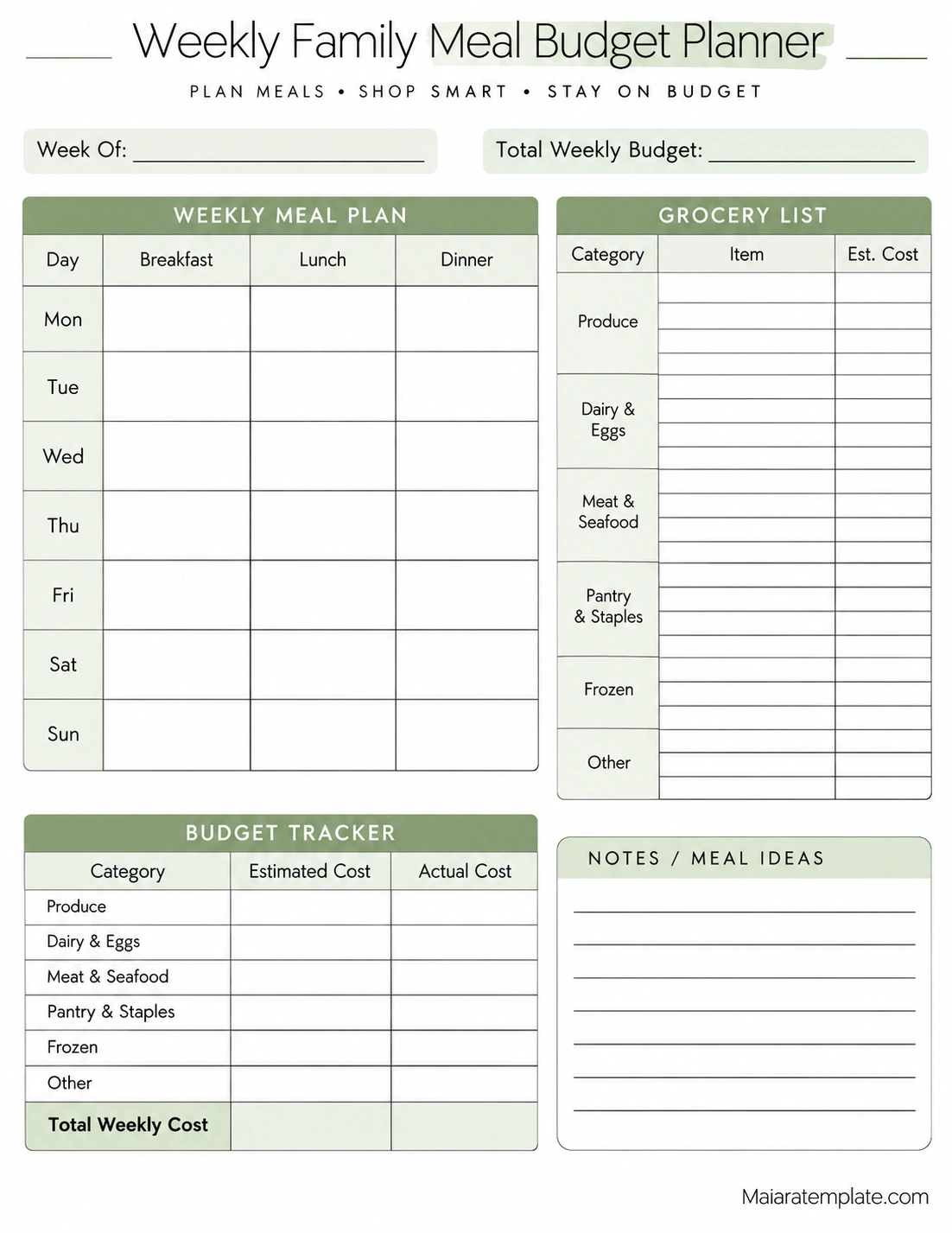
Weekly Family Meal Budget Planner Template
This weekly worksheet combines a seven-day meal schedule, categorized grocery list, and spending tracker. It is suitable for families who want to organize their meals and monitor grocery expenses one week at a time.
Use it to plan breakfast, lunch, and dinner, estimate shopping costs, and compare actual grocery spending with your weekly budget.
Monthly Family Meal Budget Planner Template
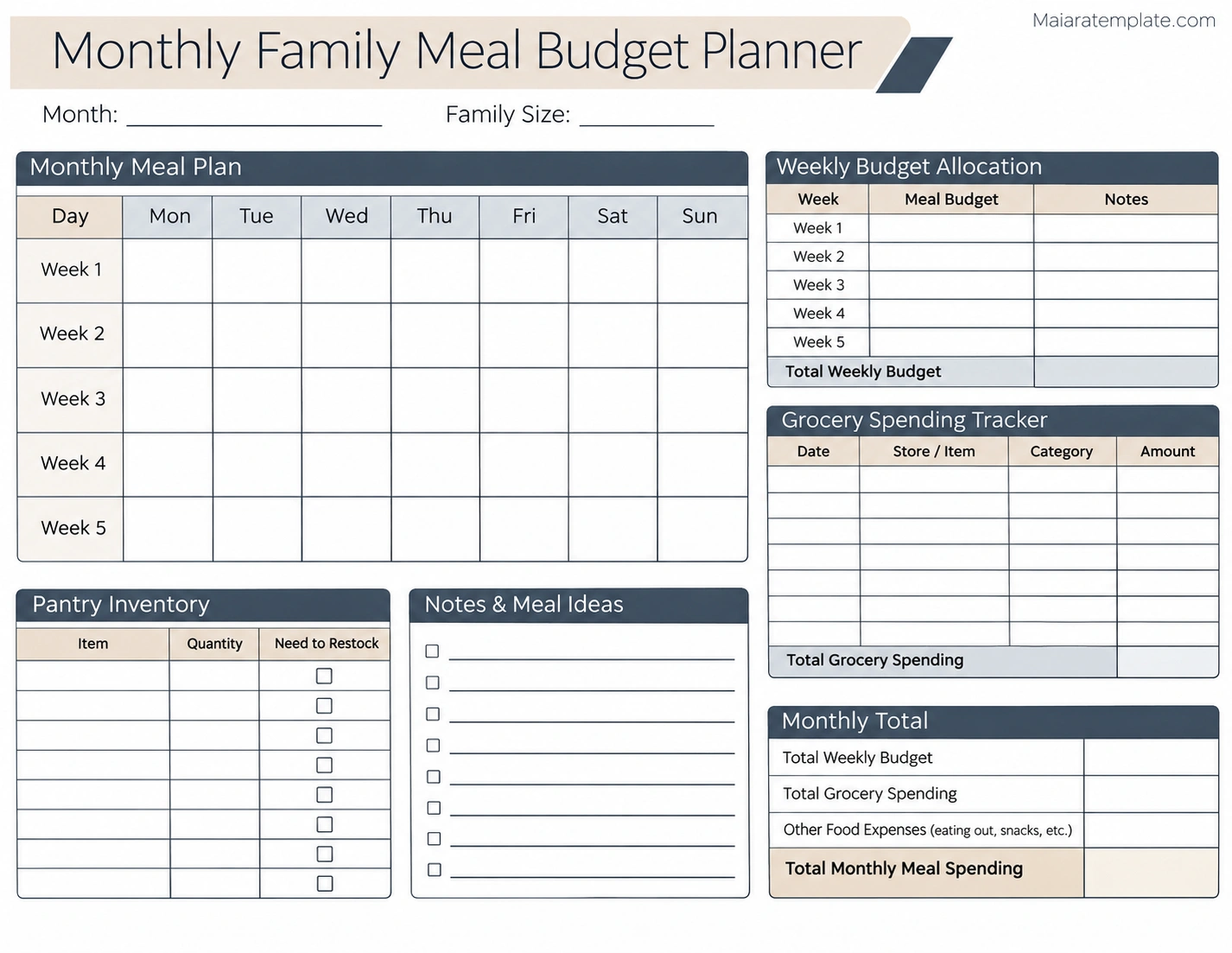
If you prefer planning household food expenses over a longer period, a monthly worksheet can help you monitor spending more effectively.
This template provides space for monthly meal planning, weekly budget allocation, pantry inventory, grocery spending, and a monthly expense summary.
Family Grocery List and Food Spending Tracker
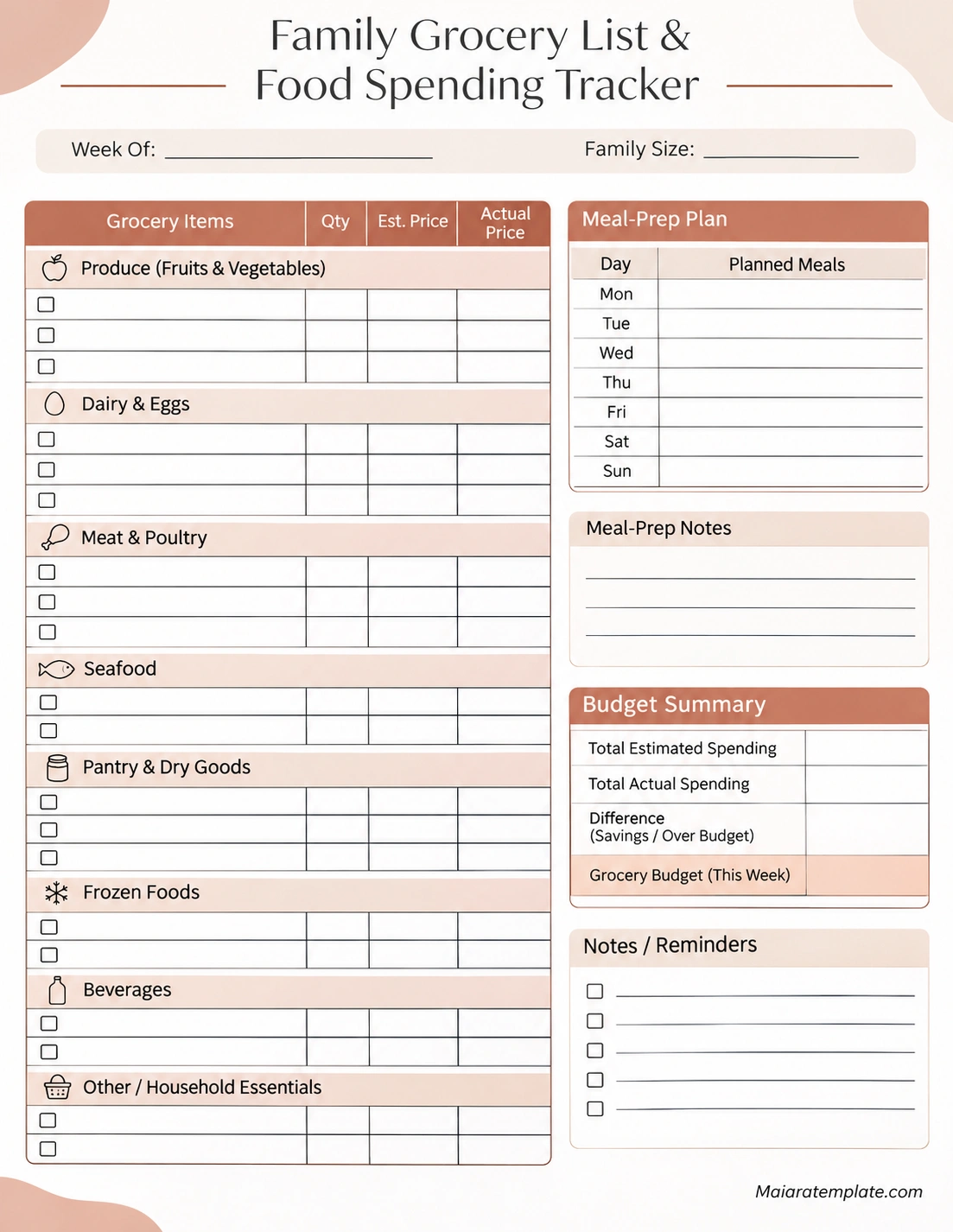
For families who want to focus on shopping organization, a dedicated grocery list and spending tracker can be particularly useful.
It includes categorized shopping sections, quantity fields, estimated prices, actual prices, and a meal preparation schedule. This makes it easier to monitor grocery purchases while staying within your weekly food budget.
Frequently Asked Questions About Family Meal Budget Planners
What is the purpose of a family meal budget planner?
A family meal budget planner helps households organize weekly or monthly meals, prepare grocery shopping lists, estimate food expenses, and track actual spending. Its main purpose is to make meal planning more organized while helping families control their food budgets.
How do I create a family meal budget?
Start by reviewing your household income and previous grocery expenses. Determine a realistic amount for food spending, divide it into weekly limits if necessary, and organize meals around affordable ingredients. Track your actual expenses regularly to identify areas where you can save.
Is a weekly or monthly meal budget better?
Both methods are useful. Weekly budgeting offers greater flexibility and makes grocery expenses easier to monitor in the short term. Monthly budgeting provides a broader overview of household food spending. Many families find that combining monthly limits with weekly meal plans works best.
How much should a family spend on groceries each week?
There is no universal grocery budget for every family. The appropriate amount depends on household size, location, food preferences, dietary requirements, and local grocery prices. Review your current spending and establish a realistic budget that fits your financial situation.
How can I reduce grocery expenses without sacrificing meal quality?
Plan meals around affordable seasonal ingredients, compare grocery prices, use leftovers, prepare meals at home, and avoid unnecessary purchases. You can also choose versatile ingredients that work in several recipes throughout the week.
What should be included in a printable meal budget worksheet?
A useful worksheet should include a weekly or monthly meal schedule, grocery shopping list, estimated costs, actual spending, budget summary, and notes section. These features help families organize food purchases and monitor expenses in one place.
Can I use a family meal budget planner for monthly grocery shopping?
Yes. A monthly planner is useful for organizing recurring grocery purchases, allocating weekly food budgets, and tracking total monthly expenses. You can also use it alongside a weekly meal planning worksheet for more detailed organization.
How often should I update my meal budget planner?
Ideally, update your weekly planner before grocery shopping and record actual expenses immediately after purchasing groceries. Review your monthly spending at the end of each month to identify patterns and adjust your next budget.
Conclusion
Managing household food expenses does not have to be complicated. With a Family Meal Budget Planner, you can organize weekly meals, prepare smarter grocery lists, reduce food waste, and keep track of your household food spending.
The key is to create a realistic budget, plan meals around ingredients you already have, and record your grocery expenses consistently. Small improvements in these everyday habits can make a meaningful difference over time.
Whether you prefer a weekly meal planner, a monthly food budget worksheet, or a dedicated grocery spending tracker, using a printable template can help make household meal planning simpler, more organized, and more manageable.
