A Travel Budget is a simple financial plan that helps you estimate, organize, and track the costs of a trip before and during your journey. Instead of spending without a clear idea of how much the trip will cost, a travel budget gives you a structured overview of expenses such as transportation, accommodation, food, activities, travel insurance, and miscellaneous purchases.
Creating a travel budget can make it easier to decide what you can comfortably afford and where you may need to adjust your plans. It also helps prevent unexpected expenses from turning into financial stress. By comparing estimated costs with actual spending, you can see whether you are staying within your planned amount and identify areas where you may be overspending.
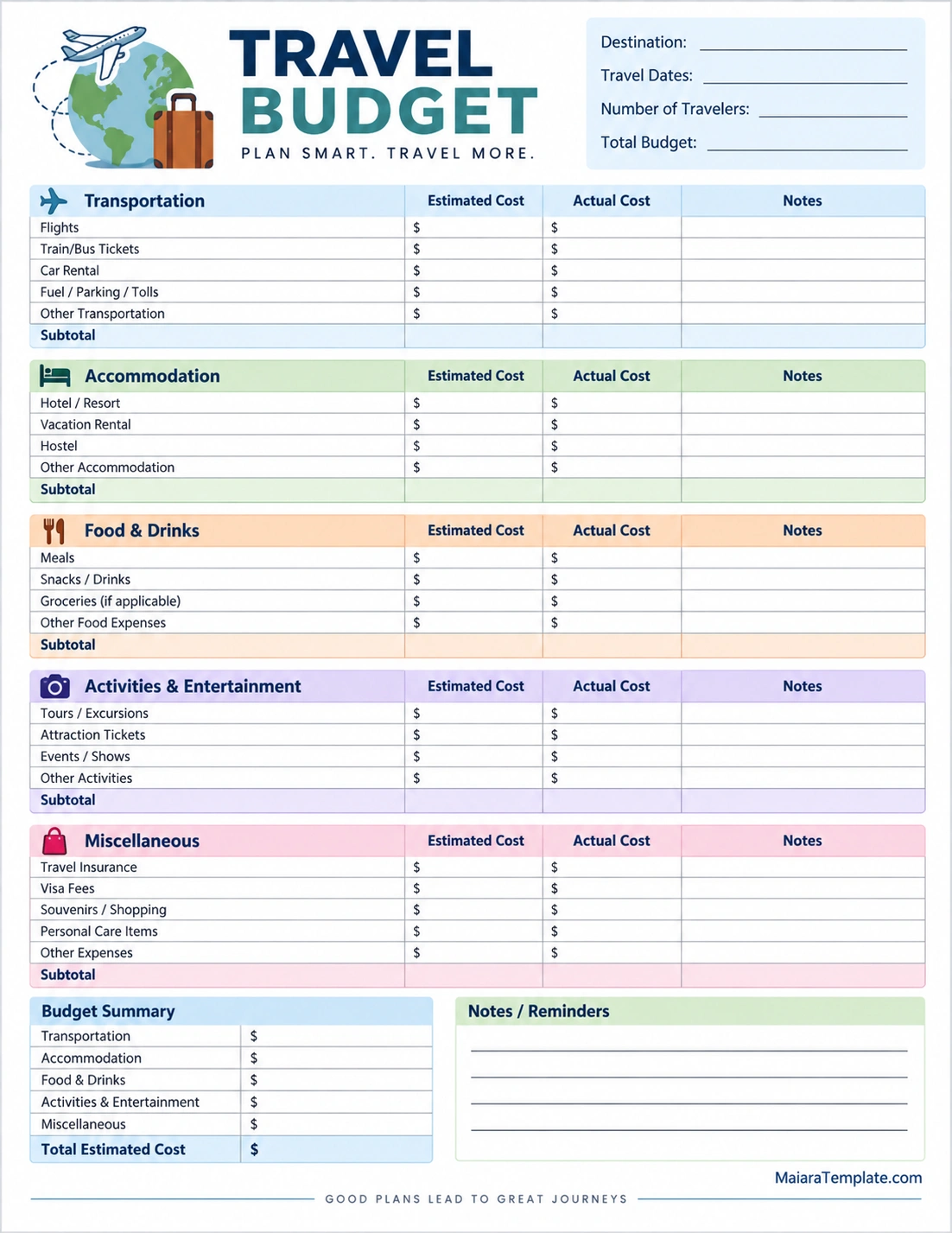
A Travel Budget Template can make this process even easier by organizing common travel expenses in one place. Whether you are planning a weekend getaway, a family vacation, an international trip, or a business journey, a structured budget can help you make informed spending decisions from the planning stage through the end of the trip.
What Is a Travel Budget?
A travel budget is a planned estimate of how much money you expect to spend on a trip. It can cover both major expenses and smaller costs that are easy to overlook when planning a vacation or business trip.
The purpose is not necessarily to predict every expense exactly. Instead, a budget provides a reasonable spending framework that helps you understand the overall financial requirements of your trip.
A typical travel budget may include:
- Flights or other transportation
- Hotel or vacation accommodation
- Meals and drinks
- Activities and entertainment
- Car rental and fuel
- Travel insurance
- Visa or travel fees
- Shopping and souvenirs
- Emergency or miscellaneous expenses
The categories can be adjusted depending on the destination, length of the trip, number of travelers, and purpose of travel.
Why Is a Travel Budget Important?
Travel expenses can add up quickly because a trip usually involves several different types of purchases. A budget helps bring those expenses together so you can see the bigger financial picture.
Helps Prevent Overspending
When you establish spending limits before a trip, it becomes easier to recognize when an expense may put your plans over budget. This allows you to make adjustments before the total cost becomes difficult to manage.
Creates a Clear Financial Plan
A travel budget gives you a practical overview of where your money is expected to go. Instead of having separate estimates for flights, hotels, meals, and activities, you can organize them into one plan.
Supports Better Spending Decisions
Knowing your expected travel costs can help you compare options. For example, you might decide whether to choose a more expensive hotel with a convenient location or a less expensive property farther from major attractions.
Highlights Potential Shortfalls
Planning ahead can reveal when your expected expenses are higher than the amount you have available. This gives you an opportunity to change the itinerary, reduce optional expenses, or increase the amount set aside for the trip.
Provides a Record of Actual Spending
Tracking actual expenses alongside estimates lets you see how closely your spending matched your original plan. This can be especially useful when planning similar trips in the future.
What Should Be Included in a Travel Budget?
A useful travel budget should include the major expense categories relevant to your trip. The categories below provide a starting point.
Transportation
Transportation is often one of the largest travel expenses. Depending on your destination, include flights, trains, buses, taxis, rideshares, car rentals, fuel, parking, tolls, and other transportation costs.
For air travel, remember that the initial ticket price may not represent the entire transportation cost. Baggage fees, seat selection, airport transfers, and other charges may need to be included when applicable.
Accommodation
Include the expected cost of hotels, resorts, vacation rentals, hostels, or other lodging. When comparing accommodation options, consider additional charges that may affect the final price.
Depending on the destination and property, these may include taxes, resort fees, cleaning fees, parking, or other applicable charges.
Food and Drinks
Estimate how much you expect to spend on breakfast, lunch, dinner, snacks, drinks, groceries, and other food-related expenses.
One practical approach is to estimate an average daily food allowance and multiply it by the number of travel days. You can then adjust the estimate according to your destination and planned dining habits.
Activities and Entertainment
Travel often includes attractions, tours, excursions, events, museums, shows, recreational activities, or admission fees. List the activities you already expect to purchase and leave some room for optional experiences.
Miscellaneous Expenses
Miscellaneous expenses are easy to overlook. This category can include travel insurance, visa fees, souvenirs, shopping, personal care items, tips, laundry, internet access, and other incidental costs.
How to Create a Travel Budget
Creating a travel budget becomes easier when you build it in stages rather than trying to calculate the entire trip at once.
Determine Your Total Budget
Start by deciding how much you are comfortable allocating to the trip. This gives you a financial limit against which individual expenses can be compared.
List the Major Expenses
Write down the costs that are already known or can be estimated relatively easily. Transportation and accommodation are often good places to start because they can represent a significant portion of the total trip cost.
Estimate Daily Expenses
Next, estimate costs that occur throughout the trip, such as meals, local transportation, and activities. Consider the number of travelers and the number of days involved.
Add Miscellaneous Costs
Include smaller expenses that might otherwise be forgotten. Even when individual costs are relatively small, several miscellaneous purchases can have a noticeable effect on the final total.
Review the Total
Add all estimated categories together and compare the result with your available travel budget. If the estimated total is too high, identify which expenses are flexible and adjust them before finalizing your plans.
Estimated Cost vs. Actual Cost
One of the most useful features of a Travel Budget Template is the ability to compare estimated costs with actual expenses.
Before traveling, enter the amount you expect to spend. During or after the trip, record what you actually paid. The comparison can reveal where your original estimates were accurate and where real-world spending differed.
For example, you may estimate a certain amount for meals but discover that restaurant prices are higher than expected. Conversely, you may spend less than planned on transportation and have additional room for other expenses.
This comparison makes the budget useful not only for controlling current spending but also for improving future travel planning.
How to Budget for a Vacation
A vacation budget should consider both fixed and variable expenses. Fixed expenses are costs that are relatively predictable, such as prepaid accommodation or transportation. Variable expenses can change depending on your daily choices.
Start by identifying the expenses that must be paid. Then estimate flexible spending categories such as food, activities, shopping, and local transportation.
It can also be helpful to separate essential expenses from optional expenses. If the trip begins to exceed the planned amount, optional categories may provide opportunities to reduce spending without affecting essential arrangements.
How to Budget for an International Trip
International travel may require additional categories that do not apply to a domestic trip. Consider expenses such as passports, visas, travel insurance, international transportation, currency exchange, airport transfers, and communication costs.
Exchange rates can also affect the final cost of purchases. When estimating an international travel budget, use a reasonable exchange-rate assumption and allow some flexibility for fluctuations.
Researching typical local prices before departure can also help create more realistic estimates for accommodation, meals, transportation, and activities.
How to Build an Emergency Travel Fund
A travel budget should not necessarily allocate every available dollar to planned expenses. Setting aside an additional amount for unexpected costs can provide useful financial flexibility.
Potential unexpected expenses may include transportation changes, replacement items, medical or emergency needs, additional accommodation, or other unforeseen circumstances.
The appropriate amount depends on the trip and your personal circumstances. The important principle is to recognize that not every travel expense can be predicted in advance.
Travel Budget for Families
Family travel can involve more variables because costs may increase with the number of travelers. A family budget can include separate estimates for transportation, accommodation, meals, activities, and child-related expenses when relevant.
Consider whether children require additional admission tickets, meals, transportation, equipment, or other travel-related purchases. Planning these costs in advance can make the overall budget more realistic.
Families can also use a shared printable budget to make the financial plan easy to review before and during the trip.
Travel Budget for Business Trips
Business travel requires a slightly different approach because expenses may need to be documented for reimbursement or accounting purposes.
A business travel budget can include:
- Airfare or other transportation
- Accommodation
- Meals
- Ground transportation
- Conference or event fees
- Business-related supplies
- Communication expenses
- Client or business meeting expenses
- Other approved travel costs
Keep receipts and supporting documentation according to your company’s travel and expense policies. A structured budget can make it easier to compare planned costs with actual expenses.
Tips for Staying Within Your Travel Budget
Creating a budget is only the first step. The next challenge is using it throughout the trip.
Track Expenses Regularly
Record expenses as they occur rather than trying to remember everything at the end of the trip. Frequent tracking makes it easier to identify problems early.
Set Category Limits
Instead of looking only at the total trip budget, establish reasonable limits for individual categories. This can help prevent one category from consuming too much of the available budget.
Prioritize Experiences
Decide which activities are most important before traveling. Having priorities can make it easier to choose between optional activities when the budget is limited.
Leave Room for Flexibility
A rigid budget can be difficult to follow when circumstances change. Leave some room for unexpected or spontaneous expenses while maintaining an overall spending limit.
Review the Budget During the Trip
Do not wait until you return home to discover that you have exceeded your planned spending. Review the budget regularly and make adjustments when necessary.
Using a Printable Travel Budget Template
A printable Travel Budget Template can provide a simple way to organize trip finances without relying entirely on digital tools. A worksheet can be printed before departure and used to record estimates, actual expenses, and notes.
A useful template may include separate sections for transportation, accommodation, food and drinks, activities, and miscellaneous expenses. Having estimated and actual cost columns makes it easy to compare your original plan with real spending.
You can also customize the worksheet for the specific trip. Add categories for visas, excursions, local transportation, shopping, or other expenses that are particularly relevant to your destination.
Common Travel Budgeting Mistakes
Even a well-intentioned budget can become inaccurate when certain expenses are overlooked. Watch for these common mistakes:
- Budgeting only for flights and hotels
- Forgetting taxes and additional fees
- Underestimating daily food expenses
- Ignoring local transportation costs
- Forgetting travel insurance or visa fees
- Failing to include an emergency allowance
- Not tracking actual spending during the trip
- Setting unrealistic spending limits
- Forgetting expenses for children or additional travelers
- Failing to account for currency exchange when traveling internationally
How to Use Your Travel Budget After the Trip
Your travel budget can remain useful even after you return home. Compare the estimated and actual costs for each category and identify the largest differences.
If you spent considerably more on one category, consider why. Perhaps prices were higher than expected, or perhaps you chose options that were not included in the original plan.
Keep these observations for future trips. Over time, your previous travel budgets can become useful references for estimating similar journeys more accurately.
Final Thoughts on Travel Budgets
A Travel Budget provides a practical framework for planning, controlling, and tracking the financial side of a trip. By organizing transportation, accommodation, food, activities, and miscellaneous expenses, you can gain a clearer understanding of what your journey is likely to cost.
The goal of budgeting is not to eliminate flexibility or enjoyment. Instead, a good budget helps you make spending decisions with a better understanding of your available resources. It can highlight potential shortfalls before the trip and help you recognize overspending while you are still traveling.
Whether you are planning a personal vacation, a family getaway, or a business trip, a Travel Budget Template can provide a simple and organized way to record estimated and actual expenses. With a realistic plan and regular expense tracking, you can spend more confidently while keeping your overall travel costs under control.
Download: Travel Budget Template

- Printable Weekly Cleaning Schedule Template - September 17, 2026
- Free Printable Travel Budget Template - September 17, 2026
- Printable Weekly Lesson Planner Template - September 17, 2026
