A Weekly Cleaning Schedule is a practical way to organize household cleaning tasks throughout the week. Instead of trying to clean the entire home in one exhausting session, a weekly schedule breaks chores into smaller, manageable tasks that can be completed consistently.
A structured cleaning routine can help prevent dirt, dust, clutter, and grime from building up. It also makes it easier to remember important household chores that might otherwise be forgotten. With a clear plan, you can know what needs to be cleaned each day and avoid spending your entire weekend catching up on housework.
A Weekly Cleaning Schedule Template can make the process even simpler. By listing cleaning tasks and assigning them to specific days, you can create a routine that fits your home, available time, and personal preferences.
What Is a Weekly Cleaning Schedule?
A weekly cleaning schedule is a planned list of household cleaning tasks organized across seven days. Instead of treating cleaning as one large job, the schedule distributes chores throughout the week.
The exact schedule can vary depending on the size of your home, number of household members, lifestyle, pets, and preferred cleaning routine. Some people may clean certain areas every day, while other tasks may only need to be completed once a week or less frequently.
A typical weekly cleaning schedule may include tasks such as:
- Dusting furniture and surfaces
- Vacuuming or sweeping floors
- Mopping hard floors
- Cleaning kitchen countertops
- Cleaning sinks and faucets
- Cleaning bathrooms
- Changing bed linens
- Taking out the trash
- Doing laundry
- Organizing clutter
The goal is to create a realistic routine that keeps the home consistently tidy without making cleaning feel overwhelming.
Why Use a Weekly Cleaning Schedule?
Regular cleaning is easier to manage when household chores are organized into a predictable routine. A weekly schedule provides structure while allowing enough flexibility to adapt to changing circumstances.
Prevents Cleaning Tasks From Piling Up
When cleaning is postponed repeatedly, small tasks can eventually become a much larger job. A weekly schedule distributes chores so that dirt, clutter, and mess do not have as much opportunity to accumulate.
Reduces Cleaning-Related Stress
Knowing what needs to be done can eliminate the need to constantly decide which chore should come next. A written plan provides a simple reference point when you have limited time or energy.
Creates a Consistent Routine
Cleaning becomes easier to maintain when it is connected to a regular routine. Assigning tasks to particular days can turn household chores into predictable habits rather than occasional large projects.
Helps Maintain a Healthier Home
Regular cleaning helps remove dust, food residue, dirt, and other unwanted buildup from frequently used areas. Keeping kitchens, bathrooms, floors, and high-touch surfaces clean can contribute to better household hygiene.
Protects Home Surfaces
Regular maintenance can also help prevent accumulated grime from becoming difficult to remove. Cleaning surfaces according to their care requirements may help keep floors, countertops, fixtures, and other household materials in better condition.
What Should Be Included in a Weekly Cleaning Schedule?
A useful weekly cleaning schedule should include the chores that matter most for your household. It does not need to contain every possible cleaning task.
Kitchen Cleaning
The kitchen often requires frequent attention because food preparation creates crumbs, spills, grease, and other residue. Common kitchen tasks include wiping countertops, cleaning appliances, washing or cleaning the sink, sweeping floors, and taking out the trash.
Living Room Cleaning
Living rooms can accumulate dust and clutter quickly because they are often used throughout the day. Include tasks such as dusting surfaces, vacuuming floors, organizing items, and cleaning frequently used areas.
Bathroom Cleaning
Bathrooms benefit from regular cleaning because moisture and frequent use can contribute to buildup. Common tasks include cleaning the toilet, sink, mirror, shower, tub, and floor.
Bedroom Cleaning
Bedroom chores may include making the bed, changing linens, dusting furniture, vacuuming or cleaning floors, and organizing clothing or other personal items.
Other Areas
Do not forget areas such as entryways, laundry spaces, hallways, home offices, and other frequently used parts of the home. These can be added to a general section of your weekly household cleaning checklist.
How to Create a Weekly Cleaning Schedule
Creating a cleaning schedule does not have to be complicated. The key is to build a routine around the actual needs of your home and the amount of time you can realistically dedicate to cleaning.
List All Regular Cleaning Tasks
Start by making a complete list of the cleaning chores you normally perform. Include both frequently repeated tasks and chores that only need to be done periodically.
Once everything is written down, separate essential weekly chores from tasks that can be completed less frequently.
Estimate How Long Each Task Takes
Consider approximately how much time each chore requires. This helps prevent you from assigning an unrealistic number of tasks to a single day.
Divide Tasks Across the Week
Spread the chores across Monday through Sunday according to your schedule. You might focus on one area each day or combine a few small chores from different rooms.
Assign More Time-Consuming Tasks Carefully
Tasks such as deep bathroom cleaning, mopping several rooms, or changing multiple sets of bed linens may require more time. Schedule them on days when you have enough time available.
Leave Some Flexibility
A cleaning schedule should support your household rather than create additional stress. If an unexpected event prevents you from completing a task, move it to another suitable day rather than abandoning the entire routine.
Example of a Weekly Cleaning Routine
There is no single correct way to organize a weekly cleaning schedule. The following example provides a simple starting point that can be adjusted to suit your home.
Monday: Kitchen
Start the week by cleaning the kitchen. Wipe countertops and appliances, clean the sink, sweep or mop the floor, and remove accumulated trash.
Tuesday: Living Areas
Focus on the living room and other common areas. Dust furniture, vacuum floors, organize clutter, and tidy frequently used surfaces.
Wednesday: Bathrooms
Clean the bathrooms by sanitizing appropriate surfaces, cleaning the toilet and sink, wiping mirrors, and cleaning the shower or tub.
Thursday: Bedrooms
Focus on bedrooms by changing bed linens, dusting furniture, vacuuming or cleaning floors, and putting away clothing or clutter.
Friday: Floors and General Areas
Use Friday to catch up on floors, entryways, hallways, or other areas that need attention before the weekend.
Saturday: Laundry and Larger Tasks
If Saturday provides more available time, use it for laundry, organizing, or cleaning tasks that take longer than ordinary daily chores.
Sunday: Light Reset
Keep Sunday relatively light. Tidy common areas, put items back in their proper places, and prepare the home for the upcoming week.
Daily Cleaning vs. Weekly Cleaning
A weekly schedule does not mean that every cleaning task should only happen once per week. Some chores are better handled daily, while others can be scheduled weekly or less frequently.
Daily tasks might include washing dishes, wiping kitchen surfaces after use, making beds, and quickly putting away clutter. Weekly tasks may include vacuuming thoroughly, changing bed linens, cleaning bathrooms, and dusting furniture.
Less frequent tasks can include cleaning windows, deep-cleaning appliances, organizing storage areas, or performing other maintenance chores.
The best approach is to combine daily habits with a broader weekly cleaning routine.
How to Make Cleaning More Manageable
Use Short Cleaning Sessions
You do not necessarily need several hours at once to make progress. Short, focused cleaning sessions can help keep individual tasks manageable.
Clean From Top to Bottom
When cleaning a room, starting with higher surfaces and working downward can help prevent dust or debris from falling onto areas that have already been cleaned.
Work From Dry to Wet
Dusting and removing dry debris before wet cleaning can make some cleaning routines more efficient. Adjust the method according to the surface and manufacturer’s care instructions.
Keep Cleaning Supplies Organized
Having commonly used cleaning supplies available can reduce the time spent searching for products and tools. Store cleaning products safely and follow their labels for proper use.
Focus on High-Use Areas
Not every part of the home requires the same cleaning frequency. Prioritize kitchens, bathrooms, entryways, and other areas that receive heavy daily use.
Weekly Cleaning Schedule for Busy Households
A busy household may not have enough time for lengthy cleaning sessions. In that situation, prioritize the tasks that have the greatest impact on cleanliness and hygiene.
Consider creating a short daily cleaning routine and assigning one larger task to each day. For example, Monday could focus on the kitchen, Tuesday on bathrooms, and Wednesday on bedrooms.
Household members can also share responsibilities. Dividing tasks according to age, availability, and ability can make the overall workload more manageable.
Weekly Cleaning Schedule for Families
Families can use a shared cleaning schedule to make household responsibilities clearer. A visible checklist can show which chores need to be completed and when.
Children can participate in age-appropriate household tasks, while adults can handle chores requiring specialized equipment or cleaning products. The exact division of responsibilities should reflect the needs and circumstances of the household.
A shared schedule can also reduce the possibility that everyone assumes someone else has already completed a particular chore.
How a Printable Weekly Cleaning Schedule Helps
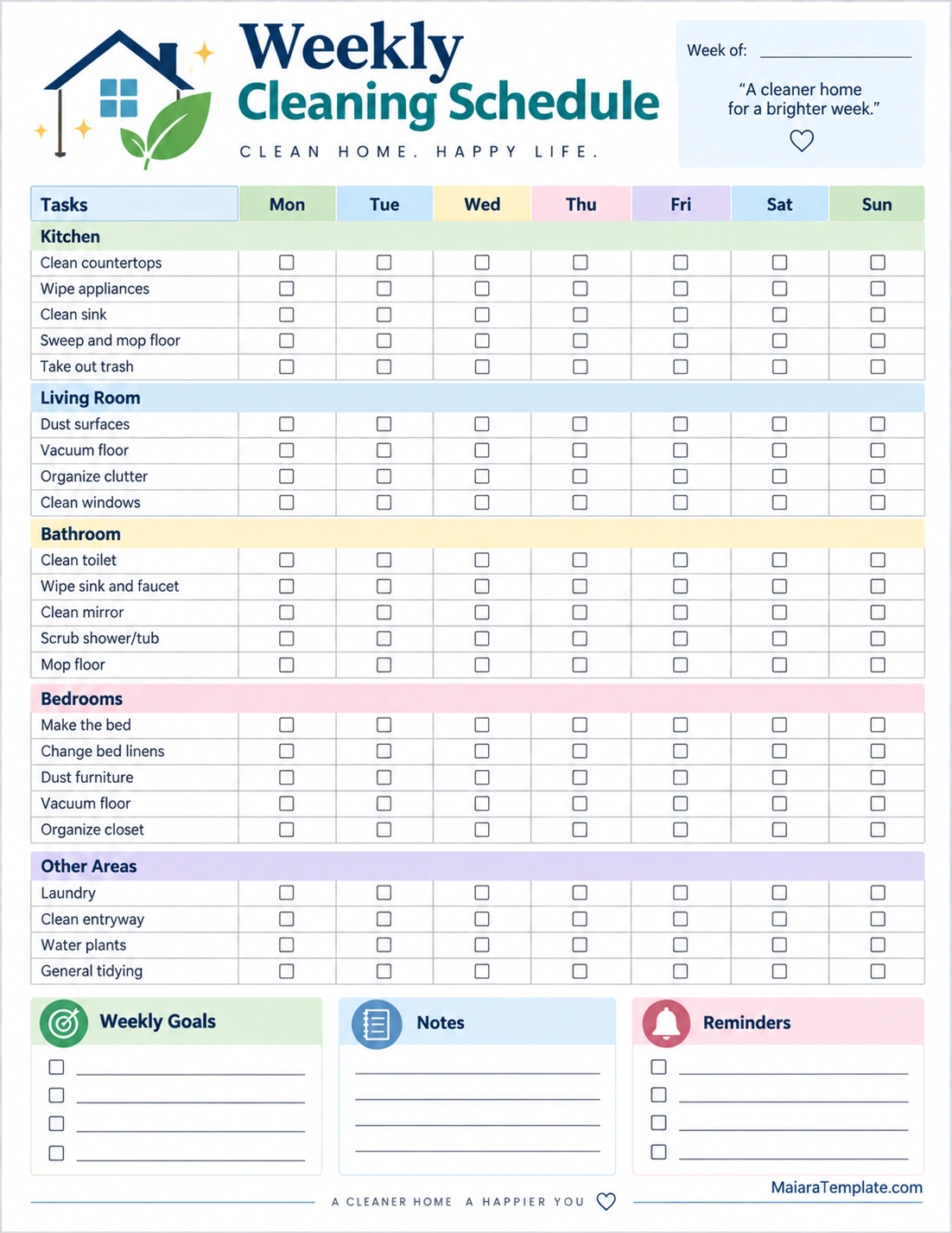
A printable Weekly Cleaning Schedule Template provides a simple visual overview of household chores. Instead of keeping the entire routine in your head, you can place the schedule somewhere convenient and check off tasks as they are completed.
A useful template can include separate sections for areas such as the kitchen, living room, bathroom, bedrooms, and other parts of the home. Daily columns and checkboxes make it easy to see what has been completed and what still needs attention.
You can also customize a printable cleaning schedule by adding your own tasks, removing chores that do not apply to your home, or changing the frequency of specific cleaning activities.
Common Weekly Cleaning Schedule Mistakes
A cleaning schedule should make household maintenance easier, but an unrealistic plan can have the opposite effect. Avoid these common mistakes:
- Scheduling too many chores on one day
- Trying to deep-clean the entire home every week
- Ignoring the actual needs of your household
- Creating a schedule that leaves no room for unexpected events
- Forgetting frequently used areas
- Assigning responsibilities without considering available time
- Failing to adjust the schedule when it stops working
The purpose of a cleaning schedule is to create a sustainable routine. It does not need to be perfect to be effective.
How to Maintain Your Cleaning Routine
Consistency is more important than perfection. A schedule becomes useful when it is realistic enough to follow over the long term.
Review your cleaning routine after several weeks. Notice which tasks are easy to maintain and which ones are repeatedly postponed. If a particular day contains too many chores, redistribute them across the week.
You can also adjust the schedule seasonally. For example, some homes may require additional attention during periods of increased outdoor activity, while other times of the year may require more attention to indoor spaces.
Final Thoughts on Weekly Cleaning Schedules
A Weekly Cleaning Schedule provides a simple framework for keeping household chores organized and manageable. By dividing cleaning into smaller tasks throughout the week, you can reduce the chance of dirt and clutter accumulating into a much larger job.
A consistent routine can also make it easier to maintain frequently used areas, support household hygiene, and protect surfaces through regular care. The schedule does not have to be complicated. It simply needs to reflect the cleaning needs of your home and the time you realistically have available.
Whether you manage your chores digitally or use a printable Weekly Cleaning Schedule Template, having a clear plan can make household cleaning more predictable. With a practical routine, shared responsibilities, and enough flexibility to adapt, maintaining a clean and organized home can become a much more manageable part of everyday life.
Download: Weekly Cleaning Schedule Template

- Printable Weekly Cleaning Schedule Template - September 17, 2026
- Free Printable Travel Budget Template - September 17, 2026
- Printable Weekly Lesson Planner Template - September 17, 2026
