Planning a wedding is an exciting experience, but managing all the expenses can quickly become overwhelming. From choosing a venue and booking a photographer to arranging flowers, catering, and transportation, every decision affects your overall budget. A budget planner for wedding helps you organize these costs, monitor payments, and keep your wedding spending under control.
Whether you are planning an intimate celebration or a large wedding, having a clear financial plan makes the process easier. Instead of keeping track of quotes, receipts, and payment deadlines in different places, you can organize everything in one convenient wedding budget worksheet.
In this guide, you will learn what a wedding budget planner includes, how to use one effectively, which expenses to consider, and how to avoid common budgeting mistakes.
What Is a Wedding Budget Planner?
A wedding budget planner is a spreadsheet or printable worksheet designed to help couples organize their wedding finances. It provides a structured place to record the total budget, estimate expenses, track actual costs, and monitor payments to vendors.
Most wedding budget templates include several expense categories, making it easier to understand where your money is going. You can also compare estimated costs with actual spending to identify potential budget problems before they become difficult to manage.
A wedding financial planner is particularly useful when multiple people contribute to the celebration. Both partners and family members can understand the available funds and agree on spending priorities.
What Should a Wedding Budget Planner Include?
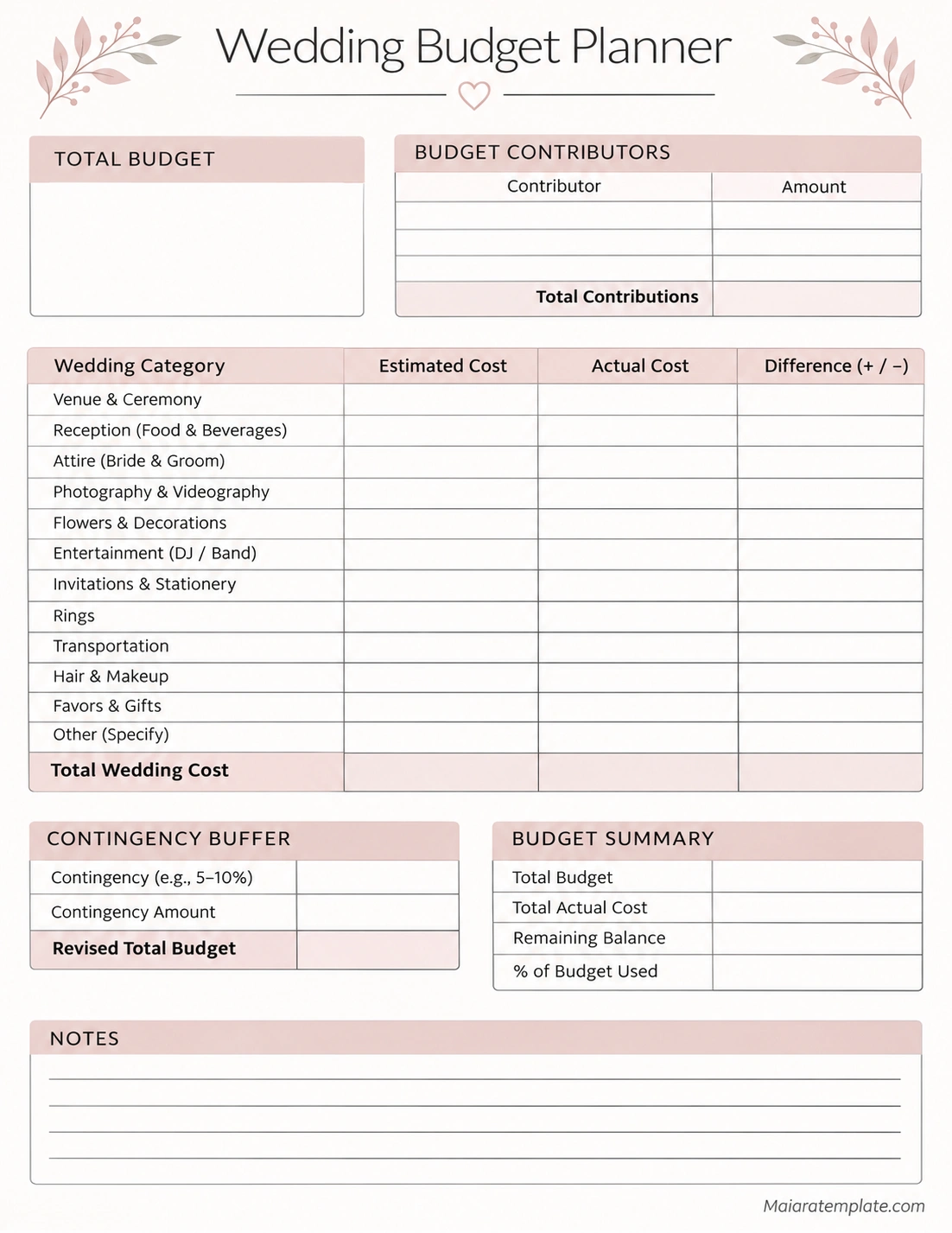
A useful wedding expense tracker should cover the most important financial details. The following sections can help you create a complete and organized wedding budget.
1. Total Wedding Budget and Contributors
Start by determining how much money is available for the wedding. Include personal savings, contributions from parents, and any other financial support.
Recording each contribution helps establish a realistic spending limit. It also prevents confusion about how much money is available throughout the planning process.
2. Wedding Expense Categories
Breaking your budget into categories makes individual expenses easier to manage. Common wedding expenses include:
- Venue and ceremony: Reception venue, ceremony location, rental fees, and permits.
- Catering: Food, beverages, desserts, and service charges.
- Photography and videography: Wedding photography packages, video coverage, and editing.
- Attire: Wedding dresses, suits, shoes, accessories, and alterations.
- Beauty: Hair styling, makeup, and preparation services.
- Flowers and decorations: Bouquets, centerpieces, lighting, and floral arrangements.
- Entertainment: DJs, live bands, musicians, and sound equipment.
- Stationery: Invitations, menus, seating cards, and thank-you cards.
- Transportation: Wedding cars, guest transportation, and parking arrangements.
- Other expenses: Wedding favors, gifts, legal documents, and miscellaneous purchases.
3. Estimated and Actual Costs
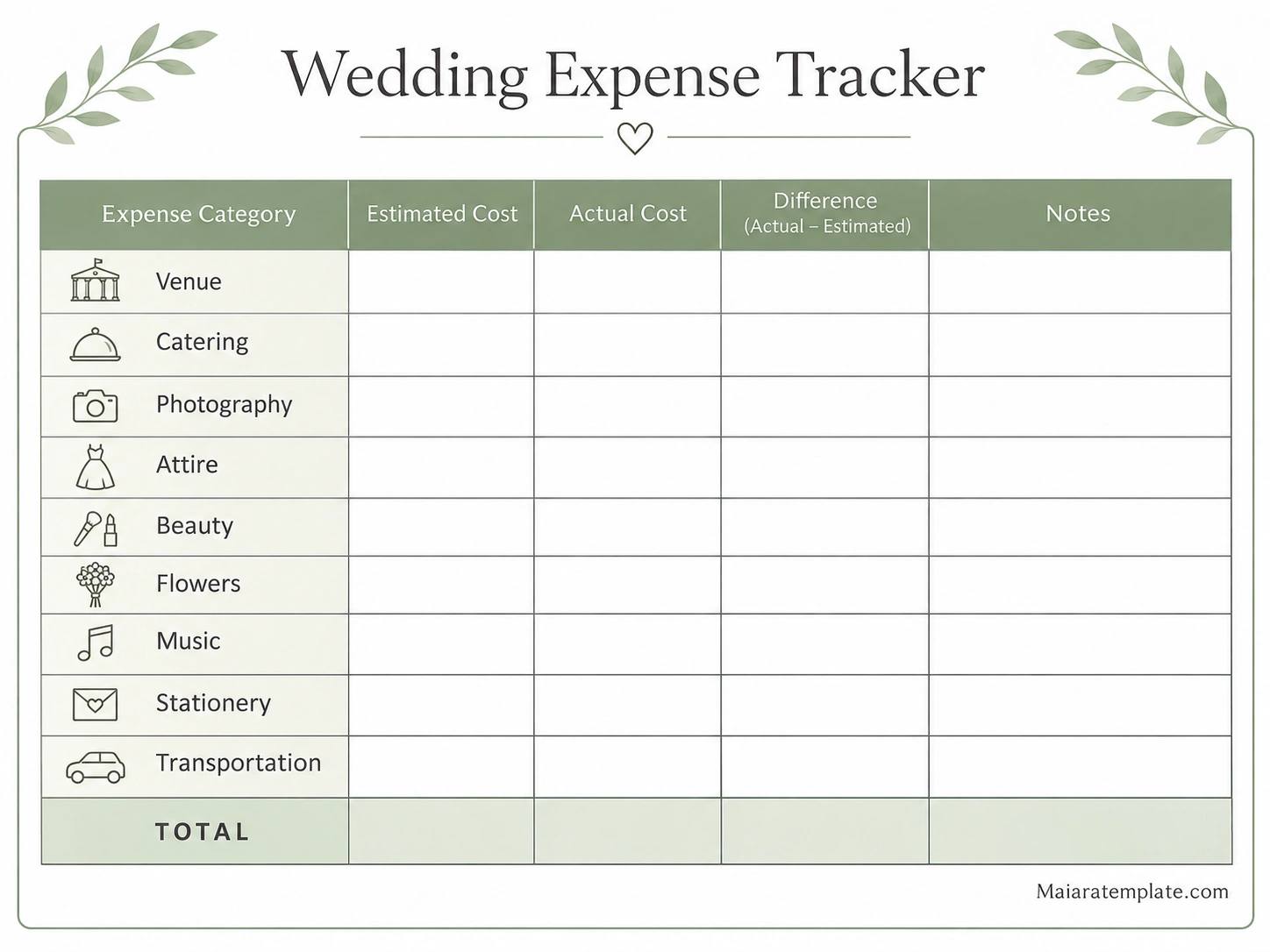
One of the most important features of a wedding budget spreadsheet is the ability to compare estimated expenses with actual costs.
For example, you might initially estimate $3,000 for photography. After receiving a vendor quote, the final package may cost $3,400. Recording both amounts immediately helps you identify the $400 difference and adjust other spending categories if necessary.
This comparison makes it easier to avoid overspending and maintain a realistic financial plan.
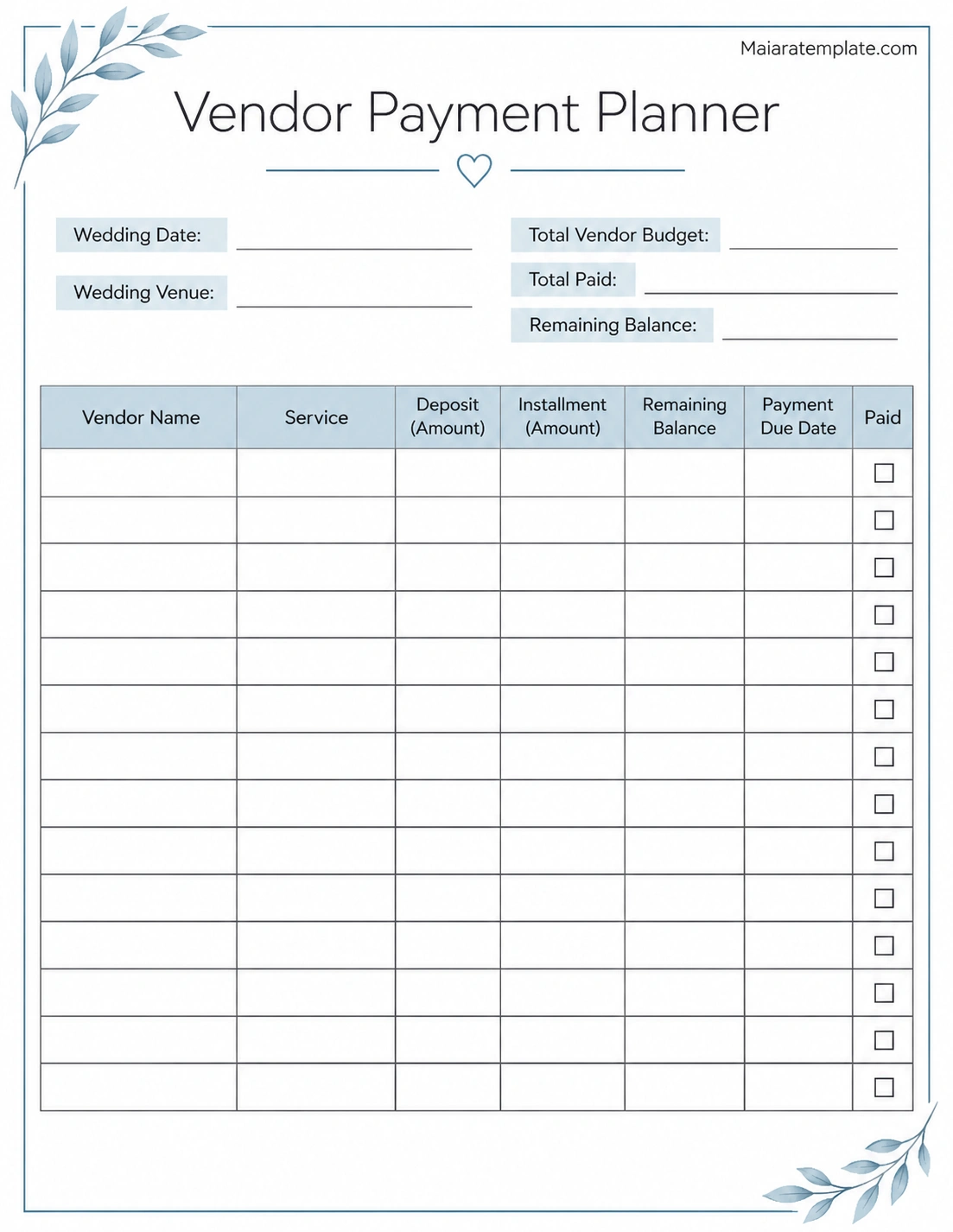
4. Vendor Payment Tracker
Many wedding vendors require an initial deposit followed by one or more installment payments. Your planner should include the vendor’s name, deposit amount, installment amounts, remaining balance, and payment due dates.
Keeping these details together reduces the risk of missed payments and unexpected financial pressure as the wedding date approaches.
5. Contingency Budget
Unexpected expenses are common during wedding planning. Additional rental equipment, delivery charges, overtime fees, and last-minute purchases can increase your total costs.
Consider setting aside approximately 5% to 10% of your overall budget as a contingency reserve. This additional amount provides flexibility when unexpected expenses arise.
How to Use a Wedding Budget Planner
Having a printable wedding budget worksheet is only the first step. Using it consistently is what makes it valuable. Follow these steps to organize your wedding finances from the beginning.
Step 1: Establish Your Total Budget
Before contacting vendors or choosing decorations, determine your maximum spending limit. Discuss how much each person can contribute and record the available amount in your wedding budget tracker.
Be realistic about what you can afford. Your wedding budget should reflect your financial situation rather than expectations based on someone else’s celebration.
Step 2: Prioritize Your Wedding Expenses
Decide which elements are most important to you and your partner. Some couples prioritize photography and venue quality, while others prefer to spend more on catering or entertainment.
Assign larger portions of your budget to your priorities and look for opportunities to save on less important items.
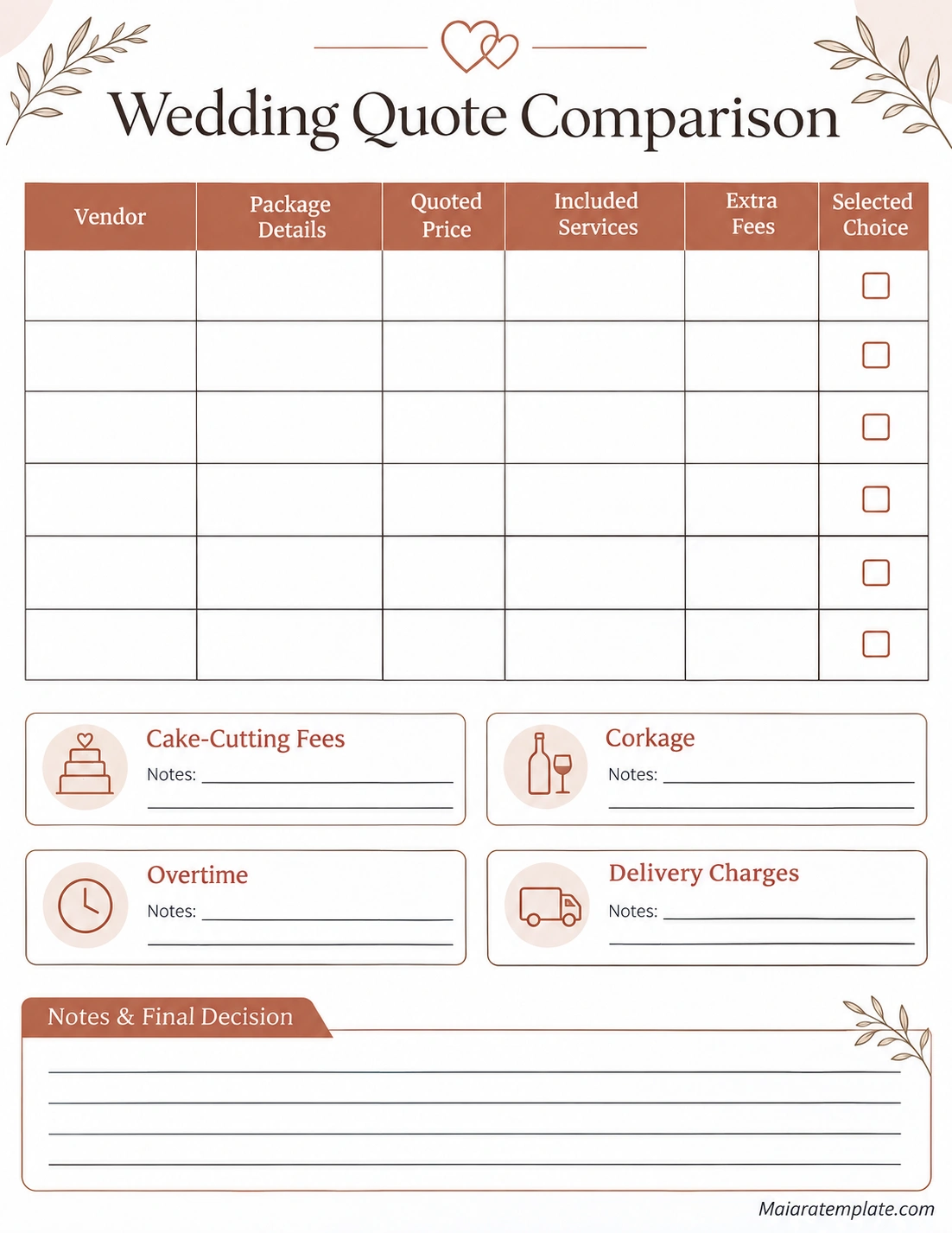
Step 3: Research and Compare Vendor Quotes
Contact several vendors before making important booking decisions. Compare their packages, included services, payment terms, and additional fees.
Do not automatically choose the lowest price. Consider the quality, experience, availability, and overall value of each vendor.
Step 4: Record Every Expense
Whenever you make a purchase or receive a new invoice, update your wedding expense sheet. Include small purchases because several inexpensive items can add up to a significant amount.
Record the estimated cost, actual cost, and any difference between the two. Review these numbers regularly to understand whether your spending is staying within the original plan.
Step 5: Track Vendor Payments and Deadlines
Once you book a vendor, immediately record the deposit, remaining balance, and payment schedule. Set calendar reminders several days before each due date.
Always review your contracts to understand cancellation policies, refund conditions, and additional payment requirements.
How Guest Count Affects Your Wedding Budget
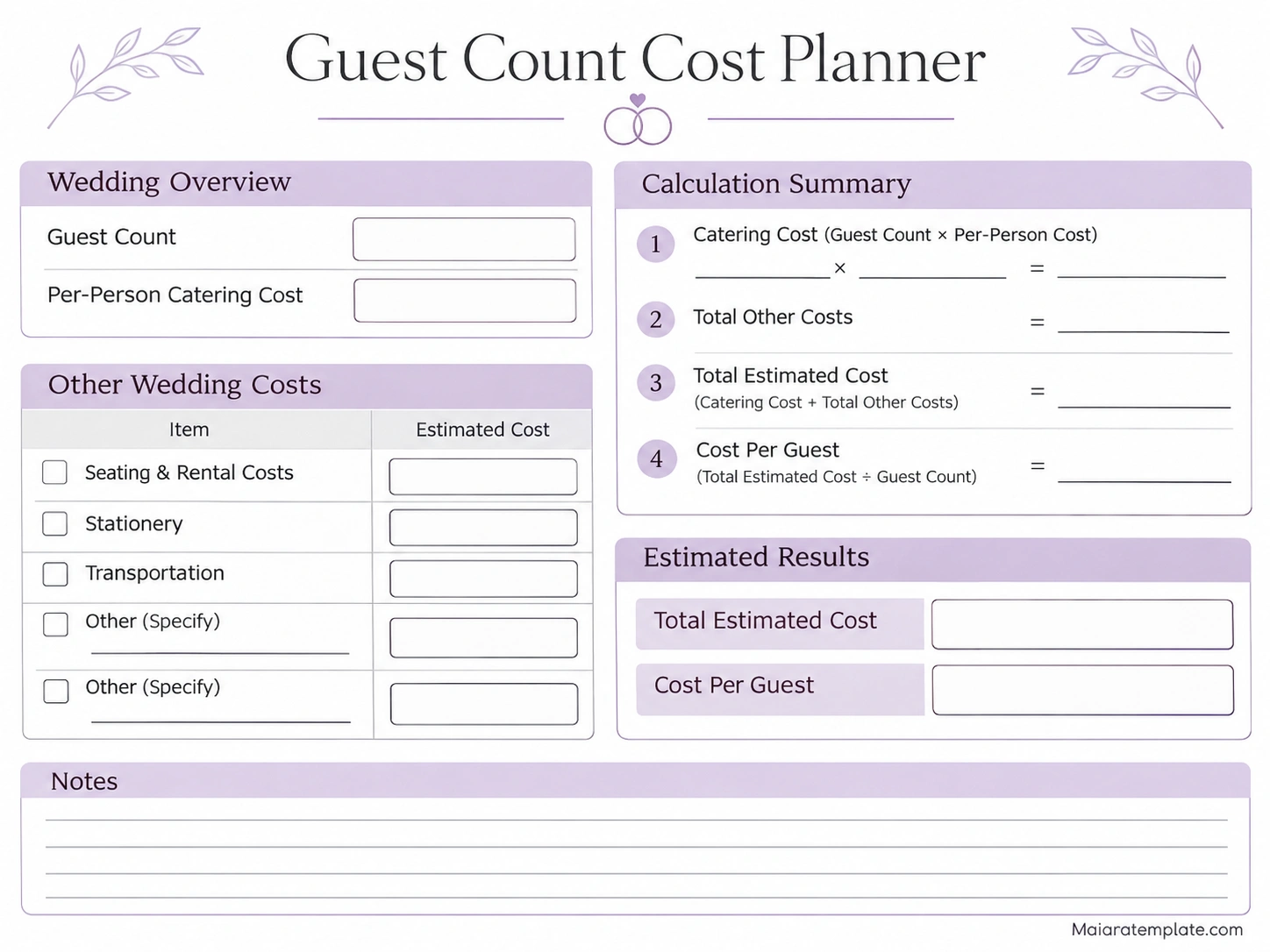
The number of guests can have a major impact on your overall wedding expenses. Catering, seating, table rentals, invitations, wedding favors, and transportation may all increase as your guest list grows.
For example, if catering costs $75 per person, inviting 100 guests would require an estimated $7,500 for food and beverages. Increasing the guest count to 120 would raise that estimate to $9,000.
That is an additional $1,500 before considering other guest-related expenses.
Use a guest count cost planner to estimate these changes before finalizing your invitation list.
Practical Tips to Stay Within Your Wedding Budget
Even with a detailed financial plan, wedding expenses can change during the planning process. These practical tips can help you maintain control.
- Set spending limits: Establish a maximum amount for each expense category before making purchases.
- Prioritize essential services: Focus on the elements that matter most to you and your partner.
- Compare multiple vendors: Request detailed quotes and check what each package includes.
- Watch for hidden fees: Ask about service charges, delivery fees, overtime, taxes, and additional rental costs.
- Review your budget weekly: Update your expenses and check your remaining balance regularly.
- Avoid unnecessary upgrades: Consider whether additional services genuinely improve your wedding experience.
- Protect your contingency fund: Keep emergency savings separate from your regular spending allowance.
Common Wedding Budgeting Mistakes to Avoid
Many couples encounter similar financial challenges when organizing their wedding. Understanding these mistakes can help you prepare more effectively.
- Forgetting small expenses: Accessories, tips, printing, and transportation can add up quickly.
- Underestimating vendor costs: Initial quotes may not include every service or additional fee.
- Ignoring payment deadlines: Missing installment dates can create unnecessary stress and contractual problems.
- Spending the entire budget too early: Keep some funds available for unexpected expenses.
- Not updating actual costs: An outdated wedding budget spreadsheet cannot provide an accurate picture of your finances.
Frequently Asked Questions About Wedding Budget Planners
1. What is the purpose of a wedding budget planner?
A wedding budget planner helps couples organize their total spending limit, estimate expenses, compare actual costs, and track vendor payments. It provides a clear overview of wedding finances and helps prevent unnecessary overspending.
2. How much should I set aside for unexpected wedding expenses?
A contingency reserve of approximately 5% to 10% of your total wedding budget is a useful starting point. The appropriate amount depends on your wedding size, location, and the complexity of your arrangements.
3. What expenses should be included in a wedding budget spreadsheet?
Include venue rental, catering, photography, videography, wedding attire, beauty services, flowers, decorations, entertainment, stationery, transportation, and miscellaneous expenses. You should also include taxes, service charges, and a contingency reserve.
4. When should I start using a wedding budget tracker?
Start using your wedding budget tracker as soon as you begin planning. Recording your financial limits and estimated expenses early helps you make informed decisions before committing to vendor contracts.
5. Is a printable wedding budget planner better than a spreadsheet?
Both options are useful. A printable wedding budget worksheet is convenient for handwriting expenses and discussing plans together. A digital spreadsheet is better for automatic calculations, frequent updates, and sharing information. Choose the format that best matches your planning habits.
6. How often should I update my wedding budget?
Update your wedding expense tracker whenever you receive a quote, make a payment, or purchase something for the wedding. Reviewing it at least once a week helps you identify potential problems early.
Final Thoughts
Planning a wedding budget does not have to be complicated. With a practical budget planner for wedding, you can organize expenses, compare vendor quotes, monitor payments, and keep track of your financial progress.
The most important thing is to establish a realistic spending limit and update your records throughout the planning process. Remember to prioritize what matters most, account for unexpected costs, and review your budget regularly.
A well-organized wedding budget planner gives you greater financial clarity and helps you focus on creating a memorable celebration without unnecessary financial stress.
Download: Budget Planner for Wedding
